
Alambadi Cow Breed in India | Complete Guide
Learn about the Alambadi Cow Breed in India, including origin, characteristics, milk yield, farming value, care, adaptability, and benefits.
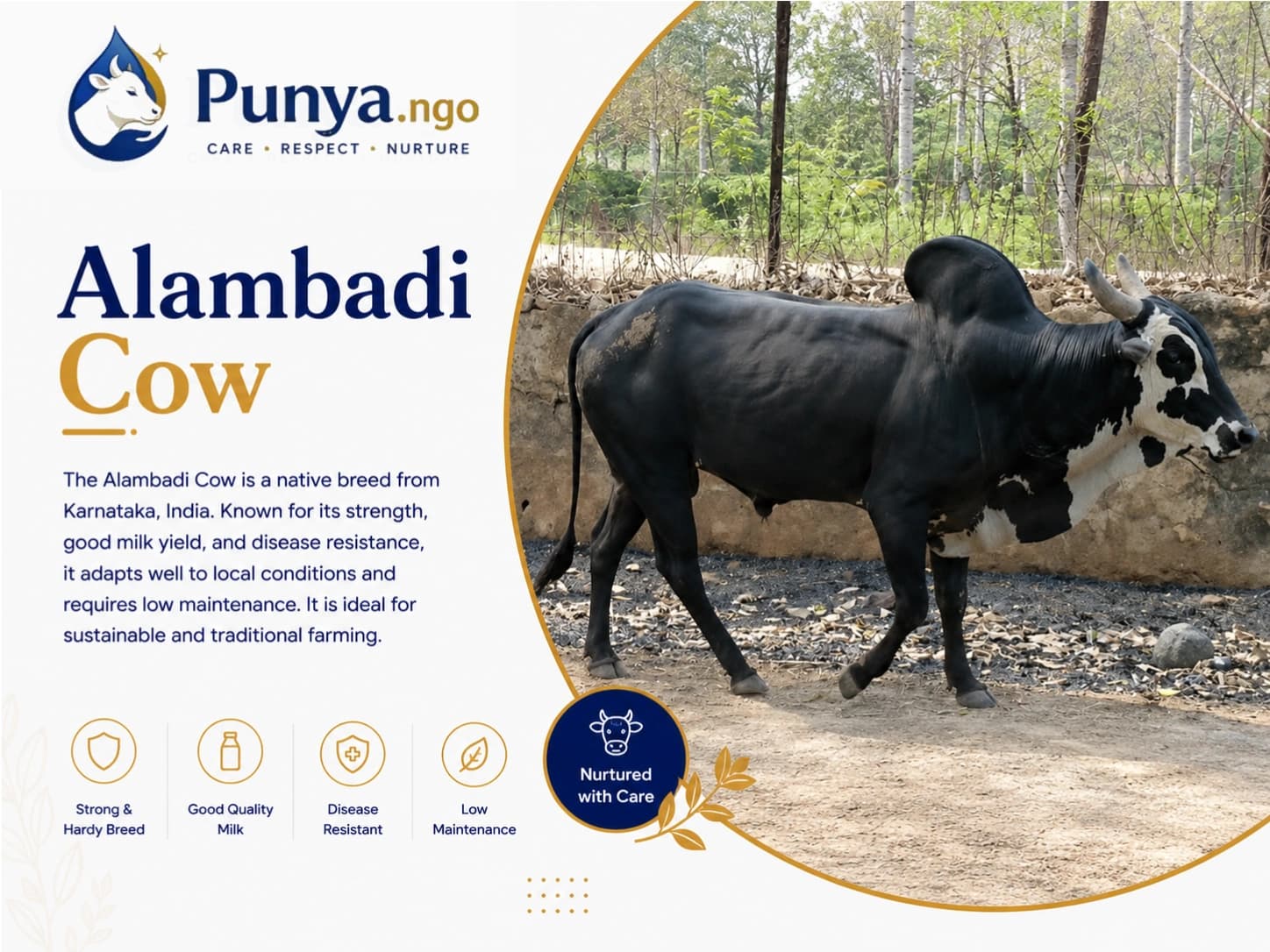
Alambadi Cow Breed in India: Origin, Characteristics, Milk Production, and Farming Value
Alambadi Cow Breed in India is a hardy indigenous cattle breed native to the southern part of India, particularly the hilly and forested regions of Tamil Nadu. Known for its strength, endurance, heat tolerance, and adaptability, this desi cow breed has traditionally been valued more for draught work than for high milk production.
The breed plays an important role in rural farming systems where resilience, low maintenance requirements, and the ability to thrive under challenging conditions are often more important than maximizing milk yield.
Takeaway: The Alambadi Cow Breed in India is a resilient indigenous breed valued for strength, adaptability, and suitability to traditional farming systems.
What is Alambadi Cow Breed in India?
The Alambadi Cow Breed in India is an indigenous cattle breed recognized for its ability to survive and perform in dry, rugged, and semi-forest environments. It belongs to the group of traditional Indian cattle breeds that evolved naturally over generations under local climatic conditions.
Farmers have historically used Alambadi cattle for agricultural work, transportation, and breeding purposes. While the breed does produce milk, it is generally considered a utility breed rather than a specialized dairy breed.
Takeaway: Alambadi cattle are primarily a utility-oriented indigenous breed known for work efficiency and adaptability rather than high milk production.
Origin and Native Region
The Alambadi breed originates from the border regions of northern Tamil Nadu and adjoining areas near Karnataka. It is traditionally associated with forested and hilly landscapes where cattle often graze over large distances.
Native Distribution
| Feature | Details |
|---|---|
| Breed Name | Alambadi |
| Breed Type | Indigenous Indian cattle |
| Primary State | Tamil Nadu |
| Traditional Region | Dharmapuri, Krishnagiri, Erode belt |
| Utility | Draught and agricultural work |
| Climate Suitability | Dry, hot, semi-arid, hilly regions |
| Management System | Extensive and semi-intensive |
The breed developed naturally in environments where survival depended on endurance, disease resistance, and efficient use of limited resources.
Takeaway: The Alambadi breed evolved in Tamil Nadu's rugged landscapes, making it naturally suited to challenging farming environments.
Physical Characteristics
The Alambadi Cow Breed in India has a distinct appearance that reflects its working ability and adaptation to harsh terrain.
Key Physical Features
- Medium to large body size
- Strong and muscular build
- Well-developed legs suitable for long-distance movement
- Prominent hump in males
- Long face with alert expression
- Medium to long horns, often curving backward
- Dark coat colors are common, including black, brown, grey, and mixed shades
- Strong hooves adapted to rough terrain
The breed's physical structure allows it to travel long distances in search of fodder while maintaining good stamina.
Takeaway: Strong legs, muscular structure, and durable hooves make Alambadi cattle well suited for field work and grazing-based systems.
Milk Production and Dairy Value
Milk production is not the primary purpose of the Alambadi Cow Breed in India, but cows provide sufficient milk for household consumption and calf rearing.
Milk Yield
Milk yield can vary depending on:
- Feeding quality
- Management practices
- Genetic factors
- Environmental conditions
In general, Alambadi cattle produce modest amounts of milk compared with specialized dairy breeds.
Dairy Farming Value
The breed may not compete with commercial dairy breeds in terms of milk volume, but it offers advantages such as:
- Lower maintenance costs
- Better adaptability
- Ability to perform under low-input systems
- Good reproductive efficiency under traditional conditions
For small and marginal farmers, these traits can sometimes offset lower milk yield.
Takeaway: Alambadi cattle provide moderate milk production but offer value through low maintenance and adaptability.
Temperament and Behavior
The Alambadi Cow Breed in India is generally alert, active, and energetic.
Behavioral Traits
- Strong survival instincts
- High grazing ability
- Good stamina
- Responsive working temperament
- Protective maternal behavior
Because of their active nature, these cattle often perform best when given adequate grazing opportunities and space to move.
Takeaway: Alambadi cattle are energetic and hardworking animals that thrive in open grazing environments.
Climate Adaptability
One of the strongest advantages of the Alambadi Cow Breed in India is its exceptional climate adaptability.
Adaptation Strengths
- Excellent heat tolerance
- Ability to withstand dry conditions
- Suitable for semi-arid regions
- Efficient utilization of local fodder resources
- Good endurance during seasonal feed shortages
This adaptability makes the breed valuable in regions where intensive dairy breeds may struggle.
Takeaway: Alambadi cattle are naturally adapted to hot climates and resource-limited farming systems.
Feeding and Management
Proper feeding and management help maintain the productivity and health of Alambadi cattle.
Feeding Requirements
Typical diet may include:
- Natural pasture grazing
- Dry fodder
- Green fodder when available
- Crop residues
- Mineral supplementation
- Clean drinking water
Management Practices
Housing
- Well-ventilated shelter
- Dry flooring
- Protection from heavy rain
Health Care
- Regular vaccination
- Deworming schedule
- Routine veterinary checkups
Breeding Management
- Selection of healthy breeding animals
- Proper record keeping
- Avoidance of indiscriminate crossbreeding
Takeaway: Simple but consistent feeding and health management help maintain the breed's natural strengths.
Advantages of Alambadi Cow Breed in India
The breed offers several practical benefits for farmers.
Major Advantages
- Strong draught capability
- Excellent endurance
- Good disease resistance under local conditions
- Adaptation to hot climate
- Efficient grazing ability
- Lower maintenance requirements
- Suitable for low-input farming systems
- Valuable genetic resource among Indian cattle
These qualities make the breed especially useful in traditional and sustainable agriculture.
Takeaway: The breed's biggest strengths are resilience, endurance, and low-cost management.
Limitations or Practical Considerations
No cattle breed is perfect for every farming objective.
Limitations
- Lower milk yield than commercial dairy breeds
- Limited suitability for intensive dairy operations
- Requires grazing space for optimal performance
- Mechanization has reduced demand for draught animals in some areas
Farmers focused primarily on maximizing milk production may prefer specialized dairy breeds.
Takeaway: Alambadi cattle excel in utility and adaptability but are not ideal for high-output dairy farming.
Best Use Cases for Farmers
The Alambadi Cow Breed in India is particularly suitable for:
Ideal Farming Situations
- Rural farming systems
- Organic farming operations
- Low-input livestock management
- Mixed crop-livestock farming
- Semi-arid and hilly regions
- Conservation of indigenous cattle genetics
Farmers seeking a hardy and self-sustaining breed often find Alambadi cattle more practical than highly demanding dairy breeds.
Takeaway: Alambadi cattle are best suited for sustainable farming systems where resilience matters more than maximum milk output.
Comparison with Similar Indian Cow Breeds
Alambadi vs Hallikar
| Feature | Alambadi | Hallikar |
|---|---|---|
| Origin | Tamil Nadu | Karnataka |
| Primary Utility | Draught work | Draught work |
| Heat Tolerance | Excellent | Excellent |
| Grazing Ability | High | High |
| Milk Production | Moderate to low | Moderate to low |
| Terrain Adaptation | Hilly and forest regions | Dry plains and semi-arid areas |
Both breeds are respected indigenous cattle, but Alambadi cattle are particularly known for their adaptation to rugged and forested landscapes.
Takeaway: Compared with Hallikar cattle, Alambadi cattle are especially suited to hilly and forest-based grazing systems.
Conclusion
The Alambadi Cow Breed in India represents an important part of India's indigenous cattle heritage. While it is not a high-yield dairy breed, it offers qualities that remain highly valuable in modern agriculture: endurance, adaptability, heat tolerance, and low maintenance requirements.
For farmers operating in dry, hilly, or resource-limited regions, Alambadi cattle can provide dependable utility and long-term sustainability. As interest in indigenous breeds continues to grow, preserving and promoting the Alambadi breed remains important for maintaining India's rich livestock diversity.
Takeaway: The Alambadi Cow Breed in India remains a practical choice for farmers seeking a resilient, climate-adapted indigenous cattle breed.
FAQs
1. What is the Alambadi Cow Breed in India known for?
It is known for its strength, endurance, heat tolerance, and suitability for traditional farming and draught work.
2. Which state is the Alambadi breed mainly found in?
The breed is primarily found in Tamil Nadu, especially in hilly and forested regions.
3. Is the Alambadi breed good for dairy farming?
It provides moderate milk production but is generally considered a utility breed rather than a specialized dairy breed.
4. Can Alambadi cattle tolerate hot weather?
Yes. The breed is highly adapted to hot and dry climatic conditions.
5. What do Alambadi cows eat?
They commonly feed on pasture grasses, green fodder, crop residues, dry fodder, and mineral supplements.
6. Are Alambadi cattle suitable for small farmers?
Yes. Their low maintenance requirements and adaptability make them suitable for small and marginal farmers.
7. How does Alambadi compare with Hallikar cattle?
Both are strong indigenous draught breeds, but Alambadi cattle are especially adapted to rugged and forested landscapes.
8. Why is conservation of the Alambadi breed important?
Conservation helps preserve valuable indigenous genetics, climate resilience, and traditional livestock biodiversity in India.