
Kehrigarh Cow Breed in India | Facts, Milk Yield & Uses
Learn about the Kehrigarh Cow Breed in India, including origin, characteristics, milk production, farming value, adaptability, and management.
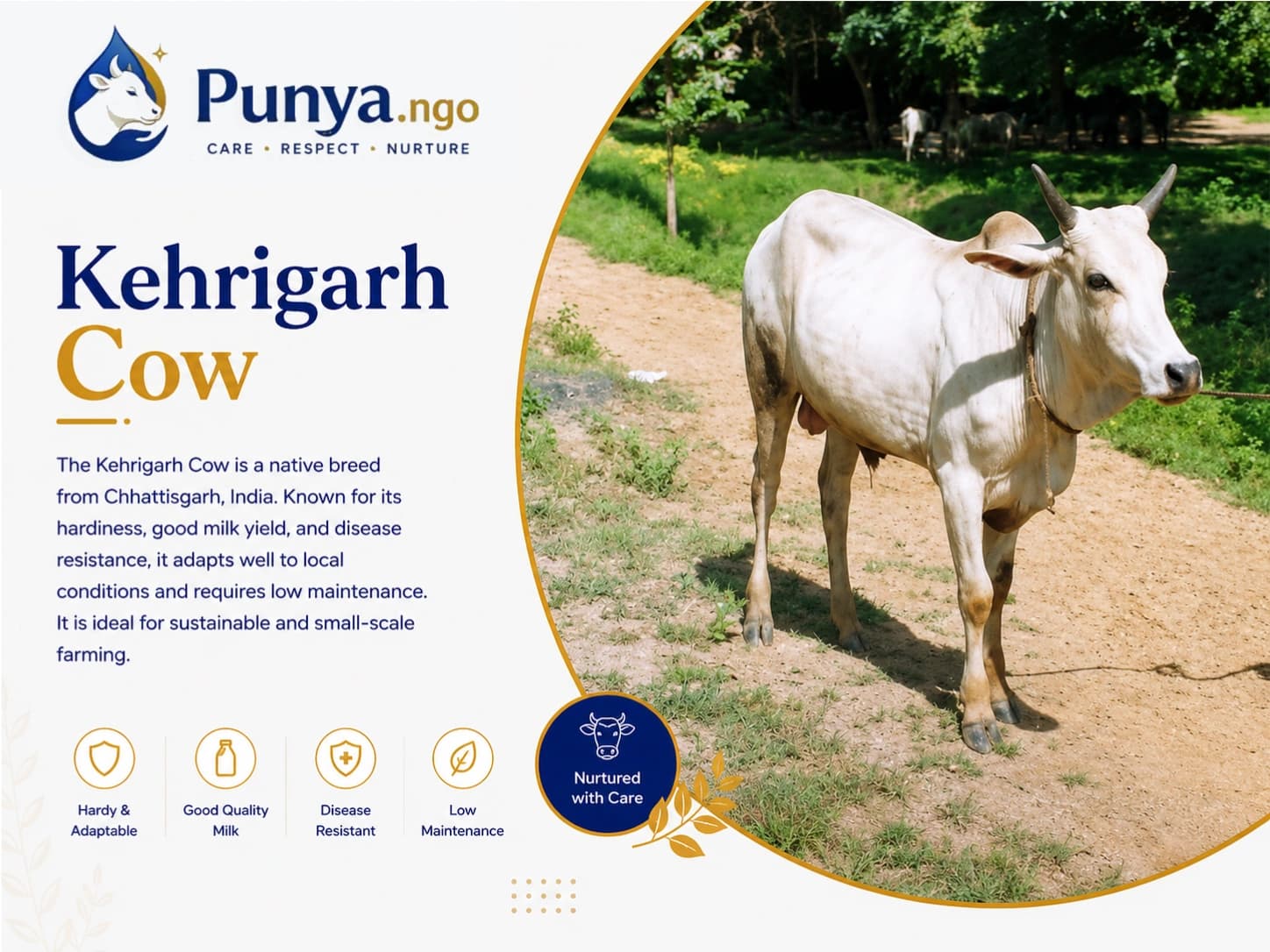
Kehrigarh Cow Breed in India: Origin, Characteristics, Milk Production, and Farming Value
The Kehrigarh Cow Breed in India is an indigenous cattle breed native to Uttar Pradesh. Traditionally associated with rural agriculture, this breed is known for its adaptability, hardiness, and usefulness in low-input farming systems. While it is not considered a high-yield dairy breed, it remains valuable for farmers who prioritize resilience, climate adaptability, and practical utility over maximum milk production.
For generations, Kehrigarh cattle have supported agricultural households by providing moderate milk, contributing to farm work, and thriving under local conditions where many specialized breeds may require greater management and resources.
Takeaway: The Kehrigarh Cow Breed in India is best known for its adaptability, rural utility, and suitability for traditional farming systems.
What is Kehrigarh Cow Breed in India?
The Kehrigarh Cow Breed in India is a native Indian cattle breed that originated in the northern plains of the country. It belongs to the group of indigenous cattle that evolved naturally under local environmental conditions and farming practices.
Unlike highly specialized dairy breeds, the Kehrigarh breed developed as a practical multipurpose animal capable of supporting farmers through moderate milk production and agricultural work.
Quick Overview
| Feature | Details |
|---|---|
| Breed Type | Indigenous Indian cattle breed |
| Origin | Uttar Pradesh |
| Primary Utility | Draft work and milk production |
| Farming System | Traditional and mixed farming |
| Heat Tolerance | Good |
| Temperament | Calm and manageable |
| Maintenance Level | Moderate to low |
| Adaptability | High |
Takeaway: Kehrigarh cattle are valued for their practical usefulness and ability to perform well under local farming conditions.
Origin and Native Region
The Kehrigarh Cow Breed in India derives its name from the Kheri region of Uttar Pradesh, particularly around the Lakhimpur Kheri district. This region has historically been an agricultural zone where farmers depended on hardy livestock capable of handling seasonal weather changes and field work.
The breed developed over generations through natural selection and farmer preference for animals that could survive on locally available resources while remaining productive.
Native Environment
- Fertile Gangetic plains
- Warm summers
- Monsoon-dependent agriculture
- Traditional crop-livestock farming systems
- Rural village-based livestock management
The breed's long history in this region has contributed significantly to its environmental adaptability.
Takeaway: The Kehrigarh breed evolved specifically for the agricultural and climatic conditions of northern Uttar Pradesh.
Physical Characteristics
The Kehrigarh Cow Breed in India possesses several physical traits that reflect its history as a working and utility-oriented cattle breed.
Key Physical Features
- Medium-sized body
- Strong and compact frame
- Well-developed legs
- Good walking ability
- Durable hooves
- Moderate body weight
- Alert and active appearance
Body Structure
Kehrigarh cattle are generally built for endurance rather than extreme milk production. Their physical structure allows them to remain productive under field conditions and long periods of movement.
Appearance
While some variation exists among animals, the breed typically exhibits traits associated with indigenous Indian cattle, including a sturdy frame and strong skeletal structure.
Takeaway: The breed's physical build emphasizes strength, endurance, and functionality rather than specialized dairy traits.
Milk Production and Dairy Value
Milk production from the Kehrigarh Cow Breed in India is generally considered moderate. The breed is primarily suited for household milk requirements and small-scale dairy farming rather than intensive commercial dairy operations.
Milk Yield Factors
Milk production depends on several variables:
- Genetics
- Feeding quality
- Water availability
- Health status
- Lactation stage
- Overall management
Because farming practices vary considerably between regions and households, actual milk yield can differ significantly.
Dairy Farming Perspective
For farmers seeking maximum milk output, breeds such as Sahiwal and Gir usually outperform Kehrigarh cattle. However, Kehrigarh cows often compensate through lower maintenance requirements and better adaptation to traditional farming conditions.
Milk Quality
Like many indigenous breeds, Kehrigarh cows produce milk that is appreciated in rural communities for household consumption and local dairy use.
Takeaway: The breed offers moderate milk production and fits best within low-input, sustainable dairy systems.
Temperament and Behavior
One of the practical strengths of the Kehrigarh Cow Breed in India is its manageable temperament.
Common Behavioral Traits
- Calm disposition
- Easy handling
- Good adaptability
- Cooperative nature
- Suitable for family-operated farms
A predictable temperament is particularly important for small farmers who may not have advanced livestock handling facilities.
Work Ethic
Historically, farmers selected animals that could remain productive and manageable while participating in daily agricultural activities.
Takeaway: The breed's calm and cooperative behavior makes routine management easier and safer.
Climate Adaptability
The Kehrigarh Cow Breed in India is naturally adapted to the environmental conditions of northern India.
Heat Tolerance
The breed performs well during hot summers and can withstand elevated temperatures better than many exotic cattle breeds.
Adaptability to Local Conditions
Kehrigarh cattle are capable of performing under:
- Open grazing systems
- Semi-intensive farming
- Traditional village management
- Mixed crop-livestock operations
Environmental Resilience
Generations of adaptation have enabled the breed to utilize local resources efficiently while maintaining productivity.
Takeaway: Climate adaptability is one of the breed's strongest and most valuable characteristics.
Feeding and Management
Proper nutrition and management directly influence the productivity and health of the Kehrigarh Cow Breed in India.
Feeding Requirements
Green Fodder
- Napier grass
- Berseem
- Maize fodder
- Seasonal green forage
Dry Fodder
- Wheat straw
- Paddy straw
- Crop residues
Concentrates
- Grain mixtures
- Oilseed cakes
- Mineral supplements
Water Management
Continuous access to clean drinking water is essential, particularly during hot weather.
Health Management
Farmers should follow:
- Regular vaccination schedules
- Deworming programs
- Parasite control measures
- Veterinary checkups
- Clean housing practices
Takeaway: Balanced nutrition and preventive healthcare are the foundation of successful Kehrigarh cattle management.
Advantages of Kehrigarh Cow Breed in India
1. Strong Climate Adaptation
The breed performs well in the environmental conditions of northern India.
2. Good Heat Tolerance
Kehrigarh cattle remain productive even during high temperatures.
3. Lower Input Requirements
Compared to specialized dairy breeds, management costs can be relatively lower.
4. Suitable for Rural Farming
The breed integrates well into traditional farming systems.
5. Indigenous Genetic Resource
It contributes to India's valuable livestock biodiversity.
6. Sustainable Farming Support
The breed aligns well with low-input and environmentally sustainable agriculture.
Takeaway: Adaptability, resilience, and practicality are the primary strengths of the Kehrigarh breed.
Limitations or Practical Considerations
No cattle breed is ideal for every farming situation, and the Kehrigarh Cow Breed in India has some limitations.
Moderate Milk Production
The breed cannot compete with elite dairy breeds in terms of milk output.
Limited Breed Availability
Pure Kehrigarh animals may be difficult to find outside their native region.
Lower Commercial Visibility
The breed receives less attention than more famous Indian dairy breeds.
Breeding Challenges
Conservation and breed purity can become concerns when populations decline.
Takeaway: Farmers focused solely on maximizing milk production may prefer specialized dairy breeds.
Best Use Cases for Farmers
The Kehrigarh Cow Breed in India is particularly suitable for specific farming situations.
Small and Marginal Farmers
Farmers seeking a hardy and manageable indigenous breed often find Kehrigarh cattle useful.
Mixed Farming Systems
The breed complements crop production and livestock integration.
Low-Input Agriculture
Kehrigarh cattle can perform effectively where resources are limited.
Rural Household Dairy Needs
Moderate milk production is often sufficient for household consumption and local sales.
Takeaway: The breed is most valuable for practical farming systems where adaptability matters more than maximum production.
Comparison with Similar Indian Cow Breeds
| Feature | Kehrigarh | Sahiwal | Gir |
|---|---|---|---|
| Origin | Uttar Pradesh | Punjab Region | Gujarat |
| Milk Production | Moderate | High | High |
| Heat Tolerance | Good | Excellent | Excellent |
| Adaptability | High | High | High |
| Maintenance Cost | Relatively Low | Moderate | Moderate |
| Commercial Dairy Value | Limited | Strong | Strong |
Practical Comparison
Compared with the Sahiwal breed, Kehrigarh cattle generally produce less milk. However, they remain attractive to farmers seeking indigenous cattle that fit traditional farming environments and require relatively lower management intensity.
Takeaway: Kehrigarh is primarily a utility-oriented indigenous breed, while Sahiwal and Gir are more dairy-focused.
Conclusion
The Kehrigarh Cow Breed in India represents an important part of India's indigenous cattle heritage. Developed in the agricultural landscapes of Uttar Pradesh, this breed has earned recognition for its adaptability, resilience, and usefulness in traditional farming systems.
Although it is not a high-yield dairy breed, its strengths lie in climate tolerance, manageable temperament, and ability to thrive under local conditions. For farmers who prioritize sustainability, practical utility, and low-input livestock management, the Kehrigarh breed remains a relevant and valuable choice.
Preserving indigenous breeds such as Kehrigarh is also important for maintaining genetic diversity and supporting resilient agricultural systems for future generations.
Takeaway: The Kehrigarh Cow Breed in India remains a dependable indigenous breed that offers long-term value in sustainable and traditional farming systems.
FAQs
1. What is the Kehrigarh Cow Breed in India?
The Kehrigarh cow is an indigenous cattle breed native to Uttar Pradesh and traditionally used for agricultural and rural farming purposes.
2. Where does the Kehrigarh breed originate?
The breed originates from the Lakhimpur Kheri region of Uttar Pradesh.
3. Is the Kehrigarh cow a dairy breed?
Yes, but it is generally considered a moderate milk-producing breed rather than a high-yield dairy breed.
4. What is the primary use of Kehrigarh cattle?
Traditionally, they have been used for agricultural work, rural utility, and household milk production.
5. Is the Kehrigarh breed heat tolerant?
Yes. The breed is naturally adapted to hot climatic conditions and performs well in northern Indian environments.
6. Is the Kehrigarh cow suitable for small farmers?
Yes. Its adaptability and manageable maintenance requirements make it suitable for small-scale farming.
7. How does Kehrigarh compare with Sahiwal cattle?
Sahiwal cattle generally produce more milk, while Kehrigarh cattle are valued for their practicality and adaptability.
8. Why is conservation of the Kehrigarh breed important?
Conservation helps preserve indigenous cattle genetics, biodiversity, and region-specific livestock traits for future agricultural sustainability.