
Kenkatha Cow Breed in India | Complete Guide
Learn about the Kenkatha Cow Breed in India, including origin, characteristics, milk yield, adaptability, advantages, and farming value.
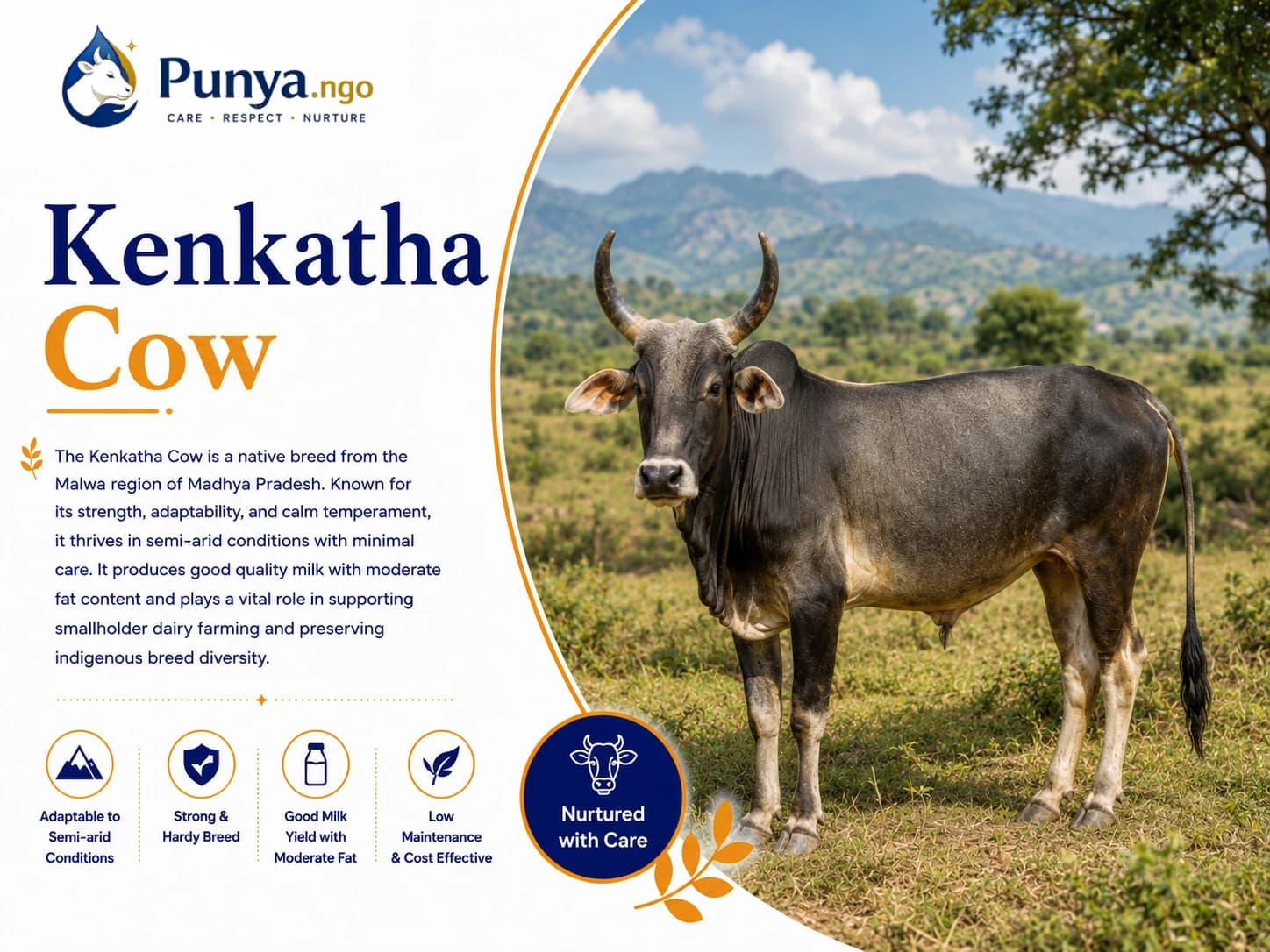
Kenkatha Cow Breed in India: Origin, Characteristics, Milk Production, and Farming Value
Kenkatha Cow Breed in India is a hardy indigenous cattle breed known for its strength, adaptability, and usefulness in rural farming systems. Native to parts of Uttar Pradesh and Madhya Pradesh, this desi cow breed has traditionally been valued more for draught work than for high milk production. Its ability to survive under limited resources, tolerate harsh climatic conditions, and remain productive in challenging environments makes it an important breed for small and marginal farmers.
Takeaway: The Kenkatha Cow Breed in India is a resilient indigenous breed valued primarily for strength, adaptability, and low-maintenance farming.
What is Kenkatha Cow Breed in India?
The Kenkatha Cow Breed in India is an indigenous cattle breed primarily found in the Bundelkhand region. It belongs to the group of Indian cattle that evolved under local environmental conditions and farming practices.
Historically, farmers relied on Kenkatha cattle for agricultural operations such as ploughing, cart pulling, and transportation. Although milk production is relatively modest, the breed remains useful in traditional mixed-farming systems.
Quick Facts About Kenkatha Cow Breed
| Feature | Details |
|---|---|
| Breed Type | Indigenous Indian cattle |
| Primary Utility | Draught work |
| Native Region | Uttar Pradesh and Madhya Pradesh |
| Milk Production | Low to moderate |
| Climate Suitability | Hot and semi-arid regions |
| Heat Tolerance | High |
| Management Requirement | Low |
| Farming System | Smallholder and rural farming |
Takeaway: Kenkatha is primarily a utility and draught breed rather than a specialized dairy breed.
Origin and Native Region
The Kenkatha Cow Breed in India originates from the Bundelkhand region, particularly around areas influenced by the Ken River, from which the breed derives its name.
The breed is commonly associated with districts in southern Uttar Pradesh and adjoining parts of Madhya Pradesh. Over generations, local farmers selectively maintained animals that could withstand drought, heat, rough grazing conditions, and demanding farm work.
The breed developed naturally within these environments, making it highly suited to local agricultural systems.
Takeaway: The breed evolved in the Bundelkhand region and is naturally adapted to the area's climate and farming conditions.
Physical Characteristics
The Kenkatha Cow Breed in India has a compact and sturdy appearance that reflects its working ability.
Key Physical Traits
- Medium to small body size
- Strong and muscular frame
- Deep chest and well-developed limbs
- Compact body structure
- Short and strong legs
- Small to medium horns
- Alert facial expression
- Generally grey, silver-grey, or iron-grey coat coloration
- Darker shades often appear on the neck, shoulders, and hindquarters
The breed's body structure allows it to move efficiently across uneven terrain and perform agricultural tasks for extended periods.
Takeaway: Strong limbs, a compact body, and durable physical structure make Kenkatha cattle excellent working animals.
Milk Production and Dairy Value
Milk production is not the primary strength of the Kenkatha Cow Breed in India. Compared with specialized dairy breeds, its milk yield remains relatively low.
However, the breed still contributes to household dairy needs in many rural areas.
Dairy Characteristics
- Produces sufficient milk for calf rearing and household use
- Lower feed requirements than many high-yield dairy breeds
- Suitable for low-input farming systems
- Can maintain productivity under challenging conditions
Farmers focused mainly on commercial milk production may prefer dedicated dairy breeds, while mixed-farming households often appreciate the breed's overall utility.
Takeaway: Kenkatha cattle are not high milk producers, but they offer dependable performance under low-input conditions.
Temperament and Behavior
The Kenkatha Cow Breed in India is generally known for its active, alert, and hardworking nature.
Behavioral Traits
- Intelligent and responsive
- Strong working instinct
- Adapted to human handling
- Energetic during field work
- Good endurance levels
Proper training from an early age often improves work efficiency and handling ease.
Takeaway: The breed combines alertness, endurance, and practicality for traditional farming operations.
Climate Adaptability
One of the biggest strengths of the Kenkatha Cow Breed in India is its environmental adaptability.
Adaptation Advantages
- Excellent heat tolerance
- Performs well in hot climates
- Resistant to seasonal stress
- Can utilize sparse grazing resources
- Suitable for semi-arid and drought-prone regions
Because the breed evolved under challenging climatic conditions, it requires fewer environmental adjustments than many exotic cattle breeds.
Takeaway: High heat tolerance and adaptability make Kenkatha cattle well-suited to harsh Indian climates.
Feeding and Management
The Kenkatha Cow Breed in India is appreciated for its ability to thrive under simple management systems.
Feeding Requirements
- Crop residues
- Dry fodder
- Seasonal green fodder
- Grazing resources
- Mineral supplementation when available
- Clean drinking water
Management Practices
- Regular vaccination
- Parasite control
- Proper shelter during extreme weather
- Balanced nutrition during pregnancy and lactation
- Routine health monitoring
Even with relatively basic feeding programs, the breed can maintain satisfactory performance.
Takeaway: Kenkatha cattle are economical to maintain and fit well into resource-limited farming systems.
Advantages of Kenkatha Cow Breed in India
The Kenkatha Cow Breed in India offers several practical advantages.
Major Benefits
- High heat tolerance
- Strong draught capability
- Low maintenance requirements
- Adaptability to poor grazing conditions
- Good disease resistance under local conditions
- Suitable for small-scale farming
- Lower feeding costs compared to many intensive breeds
- Long-standing suitability for rural agriculture
These qualities continue to make the breed relevant in regions where mechanization is limited or expensive.
Takeaway: The breed's strength lies in resilience, affordability, and utility rather than maximum milk output.
Limitations or Practical Considerations
Every breed has limitations, and the Kenkatha Cow Breed in India is no exception.
Considerations for Farmers
- Lower milk yield compared to specialized dairy breeds
- Limited suitability for intensive commercial dairying
- Smaller body size than some draught breeds
- Economic returns depend heavily on local farming needs
Farmers should evaluate their primary objective before choosing the breed.
Takeaway: Kenkatha cattle are best suited for utility-focused farming rather than large-scale milk production.
Best Use Cases for Farmers
The Kenkatha Cow Breed in India performs best in specific agricultural situations.
Ideal Farming Scenarios
- Small and marginal farms
- Mixed crop-livestock systems
- Semi-arid regions
- Resource-constrained rural households
- Traditional agricultural operations
- Farmers seeking low-maintenance cattle
Its combination of endurance and adaptability often provides value where high-input breeds may struggle.
Takeaway: The breed is most effective in low-cost, sustainable farming environments.
Comparison with Similar Indian Cow Breeds
Kenkatha vs Malvi Cow Breed
| Feature | Kenkatha | Malvi |
|---|---|---|
| Primary Use | Draught work | Draught and dual-purpose |
| Milk Yield | Lower | Generally higher |
| Heat Tolerance | High | High |
| Maintenance Cost | Low | Moderate |
| Body Size | Small to Medium | Medium |
| Rural Suitability | Excellent | Excellent |
While both breeds are adapted to Indian conditions, Malvi cattle generally offer somewhat better milk production, whereas Kenkatha cattle are especially valued for endurance and survival under tougher conditions.
Takeaway: Compared with Malvi cattle, Kenkatha emphasizes hardiness and low-input survival more than dairy performance.
Conclusion
The Kenkatha Cow Breed in India represents the practical strengths of indigenous Indian cattle. It may not compete with specialized dairy breeds in terms of milk yield, but it offers reliability, heat tolerance, low maintenance requirements, and strong working ability. For farmers operating in semi-arid regions or low-input agricultural systems, Kenkatha cattle remain a valuable and sustainable livestock option.
Its long history in the Bundelkhand region demonstrates how local breeds can continue to serve modern farming when matched with the right production goals.
Takeaway: Kenkatha cattle are best appreciated as resilient, economical, and utility-focused indigenous cattle suited to traditional and sustainable farming systems.
FAQs About Kenkatha Cow Breed in India
1. What is the primary use of the Kenkatha Cow Breed in India?
The breed is primarily used for draught work and agricultural operations.
2. Where is the Kenkatha Cow Breed found?
It is mainly found in the Bundelkhand region of Uttar Pradesh and Madhya Pradesh.
3. Is Kenkatha a good dairy breed?
It provides modest milk production but is not considered a specialized dairy breed.
4. How does Kenkatha perform in hot climates?
The breed has excellent heat tolerance and performs well in hot and semi-arid regions.
5. Is the Kenkatha breed suitable for small farmers?
Yes, its low maintenance requirements make it suitable for small and marginal farmers.
6. What color is a typical Kenkatha cow?
Most animals are grey, silver-grey, or iron-grey with darker shades on certain body parts.
7. What makes Kenkatha cattle different from high-yield dairy breeds?
Kenkatha cattle prioritize adaptability, endurance, and utility rather than maximum milk production.
8. Why is the Kenkatha Cow Breed important in rural farming?
Its ability to work efficiently, survive on limited resources, and adapt to difficult climates makes it valuable in rural agricultural systems.