
Malvi Cow Breed in India | Complete Guide
Learn about the Malvi Cow Breed in India, including origin, milk production, characteristics, adaptability, farming value, feeding, and management.
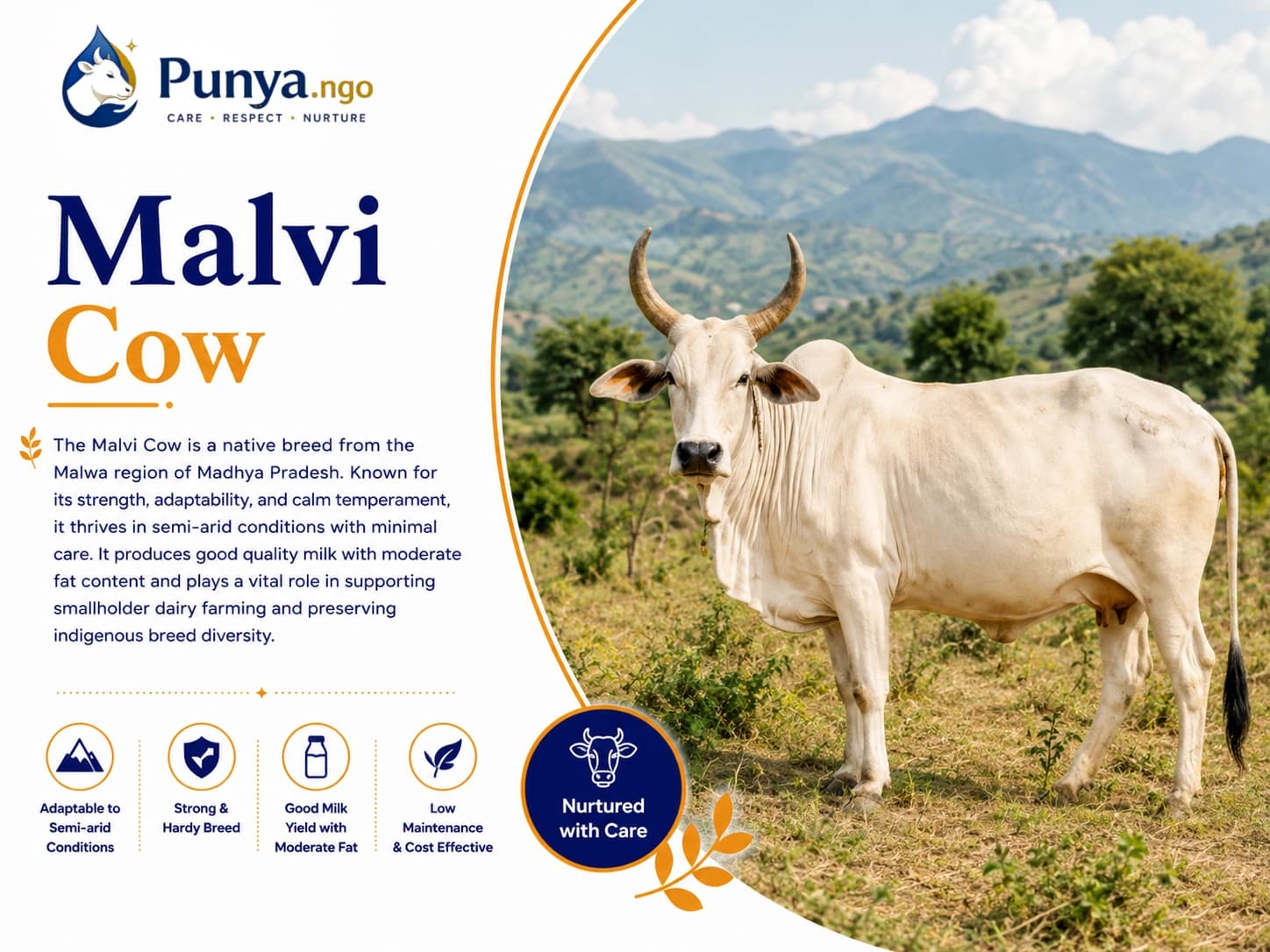
Malvi Cow Breed in India: Origin, Milk Production, Characteristics and Farming Value
The Malvi Cow Breed in India is an indigenous cattle breed primarily found in the Malwa region of Central India. Known for its strength, adaptability, and ability to thrive in challenging conditions, this breed has long supported rural farming communities. While it is not considered a high-yield dairy breed, its resilience, low maintenance requirements, and usefulness in traditional agriculture make it an important part of India's cattle heritage.
Takeaway: The Malvi Cow Breed in India is valued for adaptability, endurance, and practical utility in rural farming systems.
What is Malvi Cow Breed in India?
The Malvi Cow Breed in India is a traditional desi cow breed that has historically been used for both agricultural work and moderate milk production. It belongs to the group of indigenous Indian cattle that evolved through natural adaptation to local environmental conditions.
Farmers appreciate this breed because it can perform well under relatively low-input farming systems while remaining healthy and productive.
Takeaway: The Malvi Cow Breed in India is a hardy indigenous breed known for its balanced utility and adaptability.
Origin and Native Region
The Malvi Cow Breed in India originates from the Malwa Plateau, a region known for its agricultural significance and semi-arid climate.
The breed is commonly found in:
- Madhya Pradesh
- Rajasthan
- Neighboring regions influenced by the Malwa ecosystem
Over generations, local farmers selected cattle that could withstand heat, work efficiently in fields, and survive on locally available feed resources.
Native Region Overview
| Feature | Details |
|---|---|
| Origin | Malwa Plateau |
| Primary States | Madhya Pradesh, Rajasthan |
| Breed Category | Indigenous Indian Cattle |
| Traditional Role | Draught and Milk |
| Farming System | Mixed and Rural Farming |
Takeaway: The Malwa region shaped the breed's durability, climate adaptability, and farming value.
Physical Characteristics
The Malvi Cow Breed in India has a strong and practical body structure that reflects its working heritage.
Key Physical Features
- Medium-sized body
- Strong and muscular frame
- Well-developed legs
- Prominent hump in males
- Strong hooves
- Moderate dewlap
- Compact body structure
Coat Color
Most animals are:
- White
- Light grey
- Silver grey
Bulls often display darker shades around the neck, shoulders, and forequarters.
Appearance
The breed is recognized for its alert expression, stamina, and ability to travel long distances without excessive fatigue.
Takeaway: Malvi cattle possess a sturdy build designed for endurance and agricultural utility.
Milk Production and Dairy Value
Milk production in the Malvi Cow Breed in India is generally moderate. It is not primarily bred for commercial dairy farming but can provide a dependable milk supply under traditional management systems.
Milk Yield Factors
Milk yield depends on:
- Genetics
- Nutrition
- Health status
- Farm management
- Environmental conditions
For many rural households, the milk produced is sufficient for family consumption and small-scale local sales.
Dairy Farming Value
Benefits include:
- Lower maintenance costs
- Adaptability to local feeding systems
- Sustainable productivity under village conditions
Unlike specialized dairy breeds, Malvi cows often perform reliably without requiring intensive management.
Takeaway: The breed offers moderate milk production with relatively low production costs.
Temperament and Behavior
The Malvi Cow Breed in India is generally known for its manageable and cooperative nature.
Behavioral Characteristics
- Calm temperament
- Alert and responsive
- Easy to handle
- Suitable for traditional farming
- Good working behavior
Animals that receive regular human interaction often become easier to manage during feeding, milking, and routine healthcare activities.
Farmer-Friendly Nature
Their balanced temperament makes them suitable for family-operated farms and small agricultural holdings.
Takeaway: Malvi cattle are generally easy to manage and well suited to rural farm environments.
Climate Adaptability
One of the most valuable qualities of the Malvi Cow Breed in India is its ability to adapt to challenging climatic conditions.
Heat Tolerance
The breed performs well in:
- High summer temperatures
- Semi-arid regions
- Areas with seasonal feed shortages
Environmental Adaptation
Malvi cattle are commonly successful in:
- Dryland agriculture
- Traditional grazing systems
- Mixed crop-livestock farms
- Rural farming environments
This adaptability often reduces stress and management challenges compared with less adapted breeds.
Takeaway: Strong heat tolerance and environmental adaptability are among the breed's greatest strengths.
Feeding and Management
Proper feeding and management significantly influence the performance of the Malvi Cow Breed in India.
Feeding Requirements
A balanced feeding program should include:
- Green fodder
- Dry fodder
- Crop residues
- Mineral supplements
- Clean drinking water
Seasonal fodder planning is important to maintain health and productivity throughout the year.
Management Practices
Recommended practices include:
- Regular vaccination
- Deworming schedules
- Clean housing
- Proper ventilation
- Adequate shade
- Routine health monitoring
Preventive care generally leads to better long-term productivity and lower veterinary expenses.
Takeaway: Good nutrition and preventive healthcare are essential for maximizing the breed's potential.
Advantages of Malvi Cow Breed in India
The breed offers several practical advantages for Indian farmers.
Major Benefits
- Excellent heat tolerance
- Strong adaptation to local climates
- Lower maintenance requirements
- Useful for draught work
- Moderate milk production
- Suitable for rural farming systems
- Efficient use of local feed resources
- Good stamina and endurance
These qualities contribute to the breed's continued relevance in traditional agriculture.
Takeaway: The breed's biggest strengths are resilience, adaptability, and cost-effective management.
Limitations or Practical Considerations
Every cattle breed has strengths and limitations.
Practical Limitations
- Milk production is lower than specialized dairy breeds.
- Not ideal for intensive commercial dairy operations.
- Performance varies between individual animals.
- Productivity depends on proper feeding and management.
Farmers should choose the breed according to their production goals rather than expectations of maximum milk yield.
Takeaway: Malvi cattle are practical and resilient but are not designed for high-volume dairy production.
Best Use Cases for Farmers
The Malvi Cow Breed in India is particularly suitable for farmers who prioritize sustainability and adaptability.
Ideal Farming Situations
Small and Marginal Farmers
Lower maintenance requirements make the breed easier to manage with limited resources.
Mixed Farming Systems
The breed integrates well with crop cultivation and livestock-based agriculture.
Semi-Arid Regions
Its natural heat tolerance supports consistent performance in hot climates.
Household Dairy Production
Families can benefit from moderate milk production while maintaining manageable costs.
Takeaway: The breed is best suited for practical, low-input, and sustainable farming systems.
Comparison with Similar Indian Cow Breeds
The Malvi Cow Breed in India is often compared with other indigenous cattle breeds.
| Feature | Malvi | Gir | Tharparkar |
|---|---|---|---|
| Origin | Malwa Region | Gujarat | Rajasthan-Sindh Region |
| Milk Production | Moderate | High | Moderate to High |
| Heat Tolerance | Excellent | Excellent | Excellent |
| Draught Utility | Strong | Moderate | Moderate |
| Maintenance Needs | Low | Moderate | Moderate |
| Rural Farming Suitability | High | High | High |
Compared with the Gir breed, Malvi cattle generally produce less milk but often require fewer resources in traditional farming systems.
Takeaway: Malvi offers a balanced combination of utility, adaptability, and low-input management.
Conclusion
The Malvi Cow Breed in India remains an important indigenous cattle breed because of its adaptability, strength, and practical value in rural agriculture. Developed in the Malwa region, the breed is well suited to semi-arid environments and traditional farming systems.
Although it does not compete with specialized dairy breeds in terms of milk production, it offers advantages that many farmers value more: resilience, lower maintenance costs, climate adaptability, and dependable performance.
For farmers seeking a sustainable desi cow breed that can thrive under local conditions, the Malvi Cow Breed in India continues to be a reliable and practical choice.
Takeaway: The Malvi breed stands out as a hardy, climate-resilient, and farmer-friendly indigenous cattle breed suited to real-world farming conditions.
FAQs About Malvi Cow Breed in India
1. What is the Malvi Cow Breed in India known for?
The breed is known for heat tolerance, endurance, draught capability, and adaptability to semi-arid climates.
2. Where does the Malvi breed originate?
The breed originates from the Malwa Plateau region of Madhya Pradesh and Rajasthan.
3. Is the Malvi breed good for dairy farming?
It can support small-scale dairy farming, although milk production is generally moderate compared to specialized dairy breeds.
4. Is Malvi an indigenous Indian cattle breed?
Yes, it is a recognized indigenous breed that evolved through adaptation to local environmental conditions.
5. What color is a typical Malvi cow?
Most animals are white, light grey, or silver grey, while bulls may have darker shades around the neck and shoulders.
6. Can Malvi cattle tolerate hot climates?
Yes, the breed is known for excellent heat tolerance and performs well in semi-arid regions.
7. Is the breed suitable for rural farming?
Yes, its adaptability, stamina, and lower maintenance needs make it highly suitable for rural farming systems.
8. What is the primary utility of Malvi cattle?
Traditionally, the breed has been used for draught work, transportation, and moderate milk production.