
Nagori Cow Breed in India | Complete Guide
Learn about the Nagori Cow Breed in India, including origin, characteristics, milk production, farming uses, advantages, and management practices.
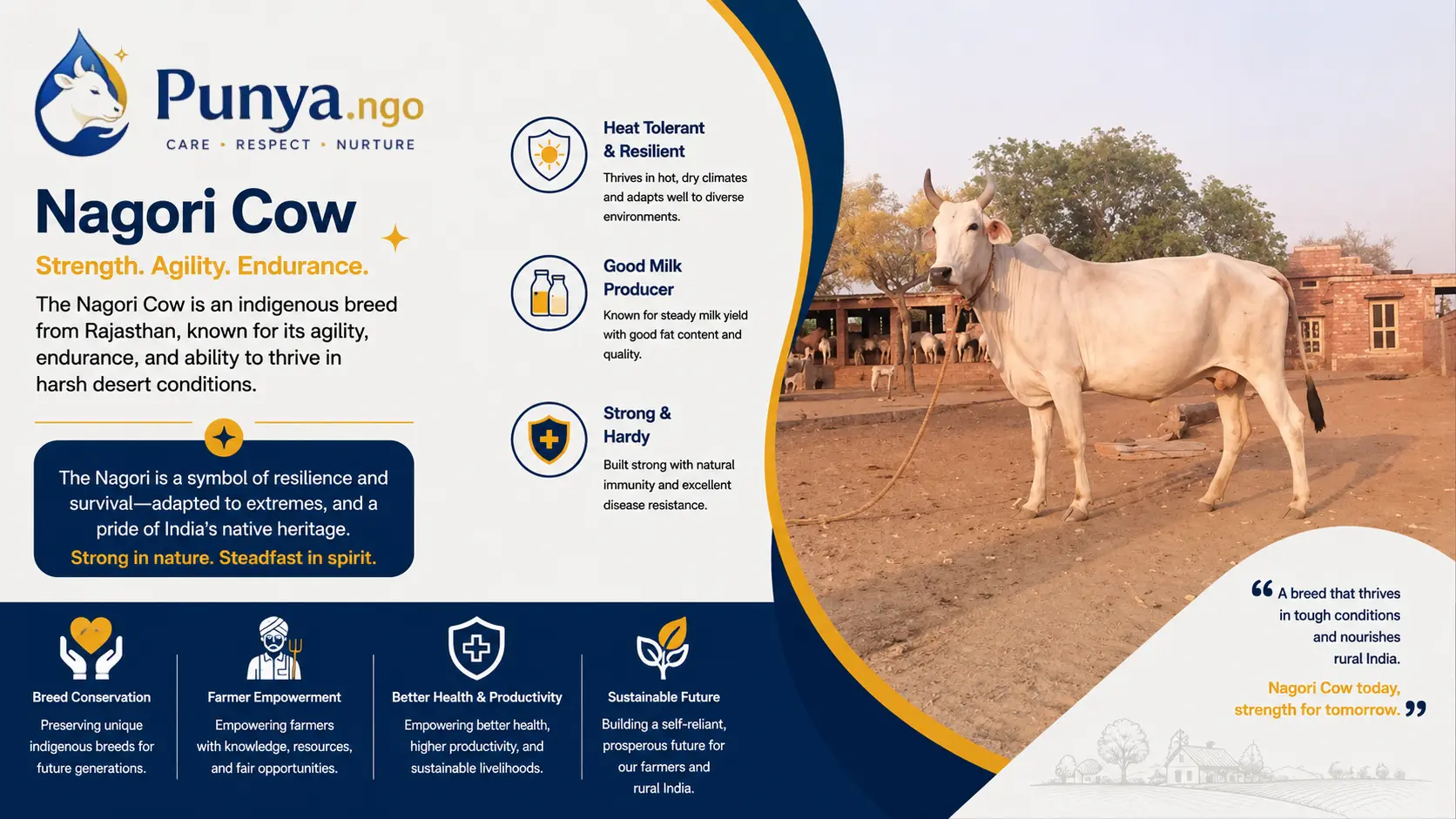
Nagori Cow Breed in India: Origin, Characteristics, Uses, and Farming Value
The Nagori Cow Breed in India is a well-known indigenous cattle breed primarily valued for its exceptional draught power, endurance, and adaptability to arid environments. Originating from Rajasthan, this breed has played an important role in traditional agriculture for generations. While it is not considered a high milk-producing breed, its strength, resilience, and ability to work under harsh climatic conditions make it highly valuable for rural farming systems.
For farmers looking for hardy Indian cattle that can thrive in hot and dry regions, the Nagori breed remains a practical and dependable choice.
Takeaway: The Nagori Cow Breed in India is best known for strength, endurance, and suitability for traditional farming rather than high milk production.
What is Nagori Cow Breed in India?
The Nagori Cow Breed in India is an indigenous cattle breed belonging to the northwestern region of the country. It is classified primarily as a draught breed, meaning it has historically been used for agricultural work, transportation, and pulling carts.
The breed is particularly admired for its speed, stamina, and ability to perform heavy work over long distances. Farmers in dry regions have relied on Nagori cattle for generations because of their reliability and low maintenance requirements.
Takeaway: Nagori cattle are primarily working animals developed for strength and agricultural utility.
Origin and Native Region
The Nagori breed originated in the Nagaur district of Rajasthan. The breed takes its name from this region and is closely associated with the semi-arid landscapes of western Rajasthan.
Native Areas
- Nagaur district
- Jodhpur region
- Bikaner region
- Adjacent parts of Rajasthan
These areas experience high temperatures, limited rainfall, and challenging environmental conditions. Over time, the breed naturally adapted to survive and perform efficiently in these circumstances.
Breed Development
Local livestock keepers selectively bred cattle with superior working ability, stamina, and adaptability. This gradual selection helped establish the distinctive characteristics seen in modern Nagori cattle.
Takeaway: The breed developed in Rajasthan's dry regions, where endurance and adaptability were essential traits.
Physical Characteristics
The Nagori Cow Breed in India possesses a strong and athletic appearance that reflects its working heritage.
| Characteristic | Description |
|---|---|
| Breed Type | Indigenous draught breed |
| Origin | Rajasthan |
| Body Size | Medium to large |
| Build | Lean, muscular, and athletic |
| Color | Generally white to light gray |
| Head | Long and narrow |
| Horns | Medium-sized and curved |
| Legs | Strong and well-developed |
| Heat Tolerance | High |
| Primary Utility | Draught and farm work |
Distinctive Features
- Tall and active body structure
- Deep chest and powerful limbs
- Strong hooves suitable for rough terrain
- Alert expression and energetic movement
- Light-colored coat that helps reflect heat
These traits contribute to the breed's reputation as one of India's respected working cattle breeds.
Takeaway: Nagori cattle are built for mobility, endurance, and efficient work in demanding environments.
Milk Production and Dairy Value
Although the Nagori Cow Breed in India is not primarily raised for dairy farming, cows do produce milk sufficient for calf rearing and limited household consumption.
Milk Yield
Milk production is generally considered moderate to low compared to specialized dairy breeds.
Factors influencing milk yield include:
- Nutrition quality
- Health management
- Lactation stage
- Environmental conditions
Dairy Importance
For commercial dairy operations, farmers often prefer dedicated dairy breeds. However, in mixed farming systems, Nagori cows can contribute useful milk while also providing working animals.
Takeaway: Milk production exists but is not the main strength of the Nagori breed.
Temperament and Behavior
Nagori cattle are generally known for their active and hardworking nature.
Behavioral Traits
- Energetic
- Alert
- Responsive
- Intelligent
- Strong work ethic
With proper handling from an early age, these animals become manageable and cooperative. Their willingness to work has contributed significantly to their popularity among traditional farming communities.
Takeaway: Nagori cattle combine energy and intelligence with a strong willingness to work.
Climate Adaptability
One of the biggest strengths of the Nagori Cow Breed in India is its ability to thrive in hot and dry climates.
Adaptation Advantages
- Excellent heat tolerance
- Efficient utilization of available fodder
- Ability to travel long distances
- Resistance to environmental stress
- Good survival under limited resource conditions
These qualities make the breed particularly suitable for Rajasthan and similar semi-arid regions across India.
Takeaway: Nagori cattle are naturally adapted to harsh climates where many other breeds may struggle.
Feeding and Management
Proper feeding and management are essential for maintaining the health and performance of Nagori cattle.
Feeding Requirements
A balanced feeding program should include:
- Green fodder
- Dry fodder
- Crop residues
- Mineral supplements
- Clean drinking water
Management Practices
Housing
- Well-ventilated shelters
- Protection from extreme weather
- Dry flooring
Health Care
- Routine vaccinations
- Deworming schedules
- Regular veterinary checkups
Breeding Management
- Selection of healthy breeding animals
- Avoidance of indiscriminate crossbreeding
- Preservation of desirable breed traits
Takeaway: Simple but consistent management helps maintain the breed's strength and productivity.
Advantages of Nagori Cow Breed in India
Key Advantages
Exceptional Draught Power
Nagori cattle are widely recognized for their ability to perform demanding farm work efficiently.
High Endurance
They can work for extended periods under hot climatic conditions.
Climate Resilience
Their adaptation to dry regions reduces environmental stress.
Low Maintenance
Compared to some specialized breeds, Nagori cattle generally require modest management inputs.
Rural Farming Utility
They fit well into mixed agricultural systems where animal power remains valuable.
Takeaway: The breed's greatest strengths are endurance, resilience, and agricultural usefulness.
Limitations or Practical Considerations
No cattle breed is perfect for every farming objective.
Considerations for Farmers
Moderate Milk Production
Farmers focused entirely on dairy farming may find specialized dairy breeds more suitable.
Mechanization Impact
The increasing use of tractors and farm machinery has reduced demand for draught cattle in some regions.
Breed Conservation Needs
Maintaining purebred populations requires careful breeding practices.
Takeaway: Nagori cattle excel as working animals but may not be the best choice for intensive dairy operations.
Best Use Cases for Farmers
The Nagori Cow Breed in India performs best under certain farming conditions.
Ideal Situations
- Traditional agriculture
- Mixed crop-livestock farming
- Semi-arid farming regions
- Small and medium farms
- Sustainable rural farming systems
- Farmers seeking hardy indigenous cattle
The breed continues to provide value where animal power remains economically relevant.
Takeaway: Nagori cattle are most useful in traditional and resource-efficient farming environments.
Comparison with Similar Indian Cow Breeds
Nagori vs Hallikar
| Feature | Nagori | Hallikar |
|---|---|---|
| Native State | Rajasthan | Karnataka |
| Main Utility | Draught work | Draught work |
| Climate Preference | Arid and semi-arid | Tropical regions |
| Endurance | Very high | High |
| Milk Production | Moderate to low | Moderate to low |
| Body Type | Tall and athletic | Compact and muscular |
Both breeds are respected working cattle, but Nagori cattle are particularly renowned for endurance in hot and dry conditions.
Takeaway: While both breeds are valued for farm work, Nagori cattle are especially suited to Rajasthan's harsh climate.
Conclusion
The Nagori Cow Breed in India remains one of the country's notable indigenous cattle breeds, particularly for farmers who value strength, endurance, and adaptability. Developed in the challenging landscapes of Rajasthan, the breed has earned a reputation for reliable agricultural performance and resilience under difficult conditions.
Although it is not a specialized dairy breed, its contribution to traditional farming systems continues to be significant. For farmers operating in dry regions or seeking hardy Indian cattle with strong working ability, the Nagori breed remains a practical and time-tested choice.
Takeaway: The Nagori Cow Breed in India stands out for endurance, climate adaptability, and agricultural utility rather than high milk yield.
FAQs
1. What is the primary use of the Nagori Cow Breed in India?
The breed is primarily used for draught work, including ploughing fields and transportation.
2. Where does the Nagori breed originate?
The breed originated in the Nagaur district of Rajasthan.
3. Is Nagori a good dairy breed?
Nagori cattle produce milk, but they are mainly valued for work rather than commercial dairy farming.
4. Can Nagori cattle tolerate high temperatures?
Yes. The breed is known for excellent heat tolerance and adaptability to dry climates.
5. What color are Nagori cattle usually?
They are commonly white, light gray, or pale gray in appearance.
6. Are Nagori cattle suitable for small farmers?
Yes. Their hardiness and relatively simple management requirements make them useful for many small and medium-scale farmers.
7. How does Nagori compare with Hallikar cattle?
Both are strong draught breeds, but Nagori cattle are especially adapted to Rajasthan's arid conditions.
8. Why is breed conservation important for Nagori cattle?
Conservation helps preserve valuable indigenous genetics, climate resilience, and traditional agricultural heritage.