
Ponwar Cow Breed in India | Origin, Milk Yield & Farming Value
Learn about the Ponwar Cow Breed in India, its origin, characteristics, milk production, adaptability, advantages, and farming value.
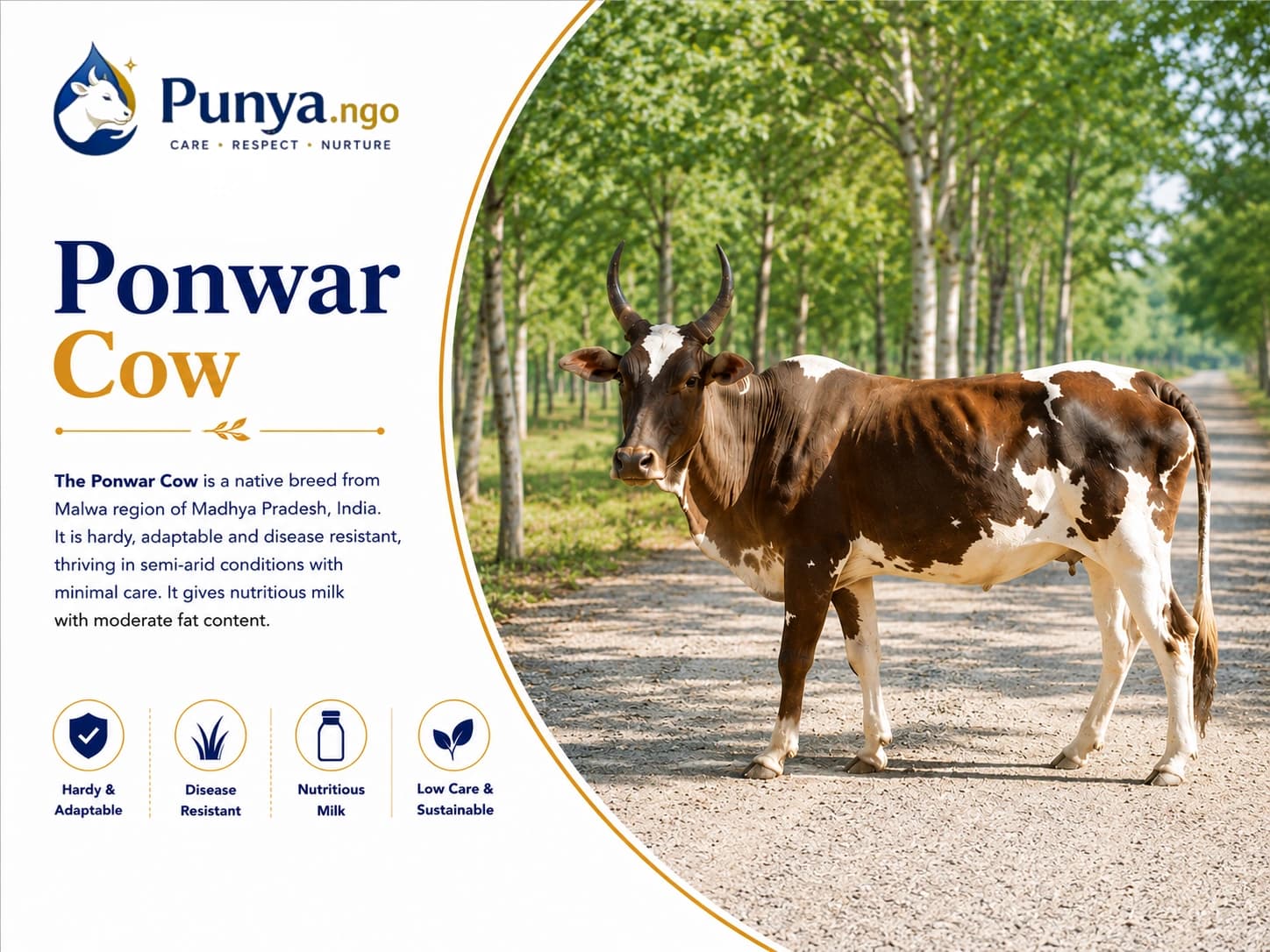
Ponwar Cow Breed in India: Origin, Characteristics, Milk Yield and Farming Value
The Ponwar Cow Breed in India is an indigenous cattle breed native to the Terai region of northern India, especially Uttar Pradesh. Known for its hardiness, adaptability, and ability to thrive under traditional farming conditions, this breed has supported rural communities for generations. Although it is not a specialized dairy breed, its resilience, grazing ability, and low-maintenance nature make it valuable for sustainable livestock farming.
The Ponwar Cow Breed in India is an important part of India's indigenous cattle heritage. Developed under local environmental conditions, these cattle are well suited to rural farming systems where durability and adaptability are often more important than maximum milk production.
What is Ponwar Cow Breed in India?
The Ponwar Cow Breed in India is a native Indian cattle breed primarily found in the Terai belt of Uttar Pradesh. It belongs to the group of indigenous cattle that have traditionally been used for agricultural work, breeding, and household milk needs.
Unlike commercial dairy breeds that are selected mainly for high milk yield, Ponwar cattle are valued for their utility, endurance, and ability to perform under challenging environmental conditions.
Quick Overview
| Feature | Details |
|---|---|
| Breed Name | Ponwar |
| Category | Indigenous Indian Cattle Breed |
| Native State | Uttar Pradesh |
| Primary Utility | Draught and Rural Utility |
| Milk Production | Low to Moderate |
| Climate Suitability | Humid and Sub-Tropical Regions |
| Heat Tolerance | Good |
| Disease Resistance | Strong |
| Farming System | Traditional and Smallholder Farms |
Takeaway: The Ponwar Cow Breed in India is valued primarily for adaptability, endurance, and utility rather than high milk production.
Origin and Native Region
The Ponwar Cow Breed in India originated in the Terai region along the Indo-Nepal border. The breed is particularly associated with northern districts of Uttar Pradesh where humid weather, dense vegetation, and seasonal flooding are common.
Over many generations, local farmers preserved and developed the breed because it could survive and remain productive in conditions where less adapted cattle might struggle.
The breed evolved naturally through traditional selection rather than intensive scientific breeding programs.
Takeaway: Ponwar cattle are deeply connected to the Terai ecosystem and agricultural traditions of northern Uttar Pradesh.
Physical Characteristics
The Ponwar Cow Breed in India has a distinctive appearance that reflects its adaptability and working ability.
Key Physical Traits
- Medium-sized body frame
- Compact and sturdy build
- Generally black or dark brown coat color
- White patches may appear on the face, legs, or body
- Strong and durable legs
- Well-developed hump in bulls
- Moderately sized horns
- Alert and active appearance
- Lean, athletic body structure
These features help the breed move efficiently across uneven terrain and perform well under extensive grazing systems.
Takeaway: Ponwar cattle possess a strong, agile body designed for endurance and survival in challenging environments.
Milk Production and Dairy Value
Milk production in the Ponwar Cow Breed in India is generally considered low to moderate compared to dedicated dairy breeds.
The breed is not commonly raised for large-scale commercial milk production. However, it can provide sufficient milk for household consumption and small-scale farming operations.
Milk yield depends on several factors:
- Nutrition quality
- Feeding practices
- Genetic potential
- Animal health
- Lactation stage
- Farm management
Many farmers appreciate indigenous breeds because they often remain productive even under low-input conditions.
Takeaway: Ponwar cows can support household dairy needs, but they are not designed for intensive dairy farming.
Temperament and Behavior
The Ponwar Cow Breed in India is known for being active, alert, and energetic.
Common behavioral traits include:
- Strong grazing instincts
- High alertness
- Active movement
- Good adaptability to open environments
- Protective herd behavior
Because of their energetic nature, Ponwar cattle often respond best to experienced handling and traditional livestock management methods.
Takeaway: Ponwar cattle are intelligent and active animals that perform best under patient and consistent management.
Climate Adaptability
Climate adaptability is one of the biggest strengths of the Ponwar Cow Breed in India.
The breed has evolved under conditions that include:
- High humidity
- Warm temperatures
- Seasonal rainfall
- Flood-prone environments
- Variable grazing resources
Adaptability Benefits
- Good heat tolerance
- Efficient use of local fodder
- Strong grazing ability
- Better survival under low-input systems
- Suitable for extensive farming
These characteristics make the breed particularly useful in regions where environmental conditions can be challenging.
Takeaway: The Ponwar Cow Breed in India is naturally adapted to humid and sub-tropical climates.
Feeding and Management
The Ponwar Cow Breed in India performs well when managed using locally available feed resources and sound livestock practices.
Feeding Requirements
- Green fodder
- Dry fodder
- Crop residues
- Open grazing
- Mineral mixtures
- Clean drinking water
Management Practices
- Timely vaccination
- Regular deworming
- Adequate shelter
- Breeding management
- Balanced nutrition
Although the breed is hardy, proper care improves health, productivity, and longevity.
Takeaway: Consistent feeding and preventive healthcare significantly improve the overall performance of Ponwar cattle.
Advantages of Ponwar Cow Breed in India
The breed offers several practical benefits for farmers.
Major Advantages
- Excellent adaptation to local climates
- Strong heat tolerance
- Good grazing ability
- Low maintenance requirements
- Suitable for traditional farming systems
- Strong disease resistance
- Performs well under low-input conditions
- Valuable for rural livestock systems
These strengths make the breed particularly attractive for farmers seeking sustainable livestock options.
Takeaway: The greatest strength of the Ponwar Cow Breed in India is its resilience and ability to thrive with limited resources.
Limitations or Practical Considerations
Like all cattle breeds, the Ponwar Cow Breed in India has some limitations.
Practical Considerations
- Lower milk yield than specialized dairy breeds
- Limited suitability for commercial dairy farms
- Active temperament may require experienced handling
- Less awareness outside native regions
- Conservation efforts are needed to maintain breed purity
Farmers focused mainly on maximizing milk production may find specialized dairy breeds more suitable.
Takeaway: Ponwar cattle are best suited for utility and sustainability rather than high-output dairy production.
Best Use Cases for Farmers
The Ponwar Cow Breed in India is particularly suitable for:
Ideal Farming Situations
- Small and marginal farms
- Mixed farming systems
- Low-input livestock operations
- Traditional agriculture
- Humid and sub-tropical regions
- Farmers seeking hardy indigenous cattle
The breed fits naturally into farming systems where adaptability and low maintenance are important priorities.
Takeaway: Ponwar cattle are most valuable in traditional and resource-efficient farming environments.
Comparison with Similar Indian Cow Breeds
A useful comparison can be made between the Ponwar Cow Breed in India and the Sahiwal breed.
| Feature | Ponwar | Sahiwal |
|---|---|---|
| Origin | Uttar Pradesh | Punjab |
| Primary Use | Utility and Draught | Dairy Production |
| Milk Yield | Low to Moderate | High |
| Heat Tolerance | Excellent | Excellent |
| Maintenance Needs | Lower | Moderate |
| Commercial Dairy Suitability | Limited | High |
| Grazing Ability | Strong | Good |
While Sahiwal cattle are preferred for milk production, Ponwar cattle are appreciated for their adaptability and ability to thrive under traditional farming conditions.
Takeaway: Sahiwal is better for dairy farming, while Ponwar is better suited for low-input and traditional farming systems.
Conclusion
The Ponwar Cow Breed in India is a valuable indigenous cattle breed known for its resilience, adaptability, and importance in rural farming systems. Native to the Terai region of Uttar Pradesh, it thrives in humid climate and performs well under traditional management conditions. Although it is not a high-yield dairy breed, its strong grazing ability, heat tolerance, and low-maintenance nature continue to make it relevant for many farmers. Preserving breeds like Ponwar is important for maintaining India's livestock biodiversity and supporting sustainable agriculture.
FAQs
1. What is the Ponwar Cow Breed in India known for?
It is known for its hardiness, adaptability, grazing ability, and suitability for traditional farming systems.
2. Where is the Ponwar Cow Breed in India found?
The breed is mainly found in the Terai region of Uttar Pradesh near the Indo-Nepal border.
3. Is the Ponwar Cow Breed in India a good dairy breed?
It produces low to moderate amounts of milk and is not considered a specialized dairy breed.
4. What climate suits Ponwar cattle?
Ponwar cattle perform well in warm, humid, and sub-tropical climatic conditions.
5. Are Ponwar cows suitable for small farmers?
Yes. Their adaptability and low maintenance requirements make them suitable for small and marginal farmers.
6. What do Ponwar cattle eat?
They commonly consume green fodder, dry fodder, crop residues, grazing vegetation, and mineral supplements.
7. Are Ponwar cattle disease resistant?
Yes. Like many indigenous cattle breeds, they are generally considered more resilient under local conditions.
8. Why is the Ponwar Cow Breed in India important?
It supports rural farming systems, preserves indigenous cattle genetics, and contributes to sustainable livestock farming.