
Ramayana & Mahabharata The Sacred Importance of Cows in Hindu Itihasa
Discover the sacred role of cows in the Ramayana & Mahabharata The Sacred Importance of Cows in Hindu Itihasa, Gau Daan, and their spiritual significance.
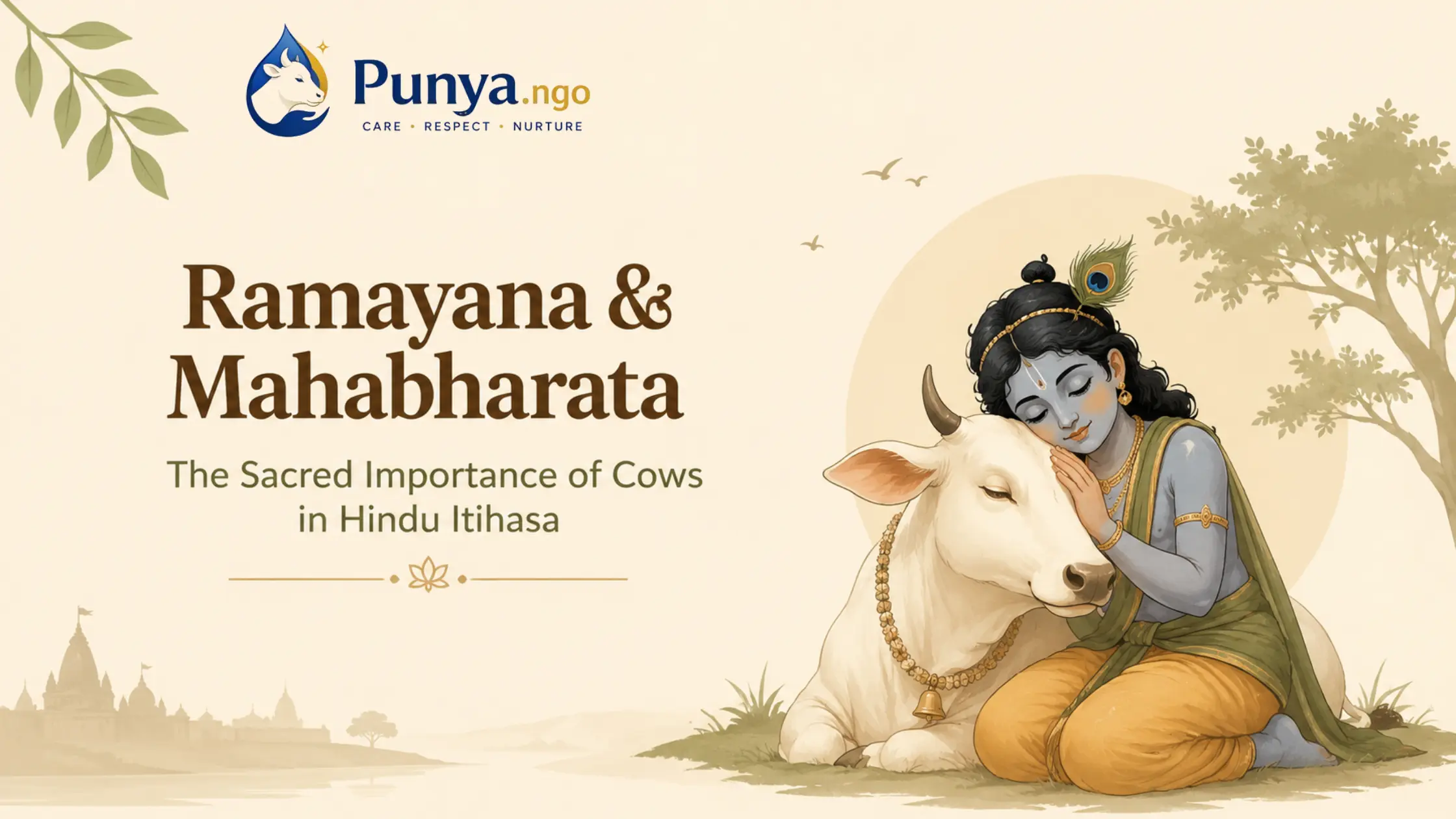
Ramayana & Mahabharata The Sacred Importance of Cows in Hindu Itihasa
In the great Hindu epics, the Ramayana and the Mahabharata, cows are far more than domestic animals. They represent prosperity, compassion, righteousness (Dharma), nourishment, and divine grace. Throughout these timeless scriptures, cows appear as symbols of wealth, sacred gifts, protectors of society, and beloved companions of Lord Krishna.
The stories of Lord Rama, Lord Krishna, sages, kings, and noble families consistently highlight the importance of caring for cows and respecting all living beings. Even today, these teachings continue to influence Indian culture, festivals, agriculture, and spiritual traditions.
This article explores how cows are portrayed in the Ramayana and Mahabharata, why Lord Krishna became known as Gopala, and how cow protection became an essential aspect of Hindu civilization.
Importance of Cows in the Ramayana
Although the Ramayana primarily narrates the life of Lord Rama, cows frequently appear as symbols of prosperity and righteousness.
Ancient kingdoms described in the Ramayana measured their prosperity through healthy cattle, fertile lands, and abundant agriculture. Wealth was not defined only by gold but also by the number of cows owned.
During important ceremonies such as Rajasuya Yajna, Ashwamedha Yajna, and royal donations, cows were gifted to Brahmins, sages, and deserving individuals.
The Ramayana also emphasizes:
- Compassion toward animals
- Protection of livestock
- Charity through cow donations
- Agriculture supported by cattle
- Dharma through non-violence
A prosperous kingdom was expected to ensure that cows were healthy, protected, and well-fed.
Cow References in the Mahabharata
The Mahabharata contains numerous references to cows across its many books.
In the epic, cows symbolize:
- Wealth
- Food security
- Religious merit
- Economic stability
- Social prosperity
Kings frequently maintained thousands of cows, and protecting cattle was considered one of the ruler's foremost duties.
The Mahabharata repeatedly describes cows as:
- Providers of milk and nourishment
- Sacred companions of sages
- Gifts offered during religious ceremonies
- Symbols of abundance
Several chapters explain that harming cows was considered sinful, while serving and protecting them brought spiritual merit.
Krishna as Gopala
Among all Hindu deities, Lord Krishna shares the deepest relationship with cows.
The name Gopala means:
- Protector of cows
- Friend of cows
- Caretaker of cows
As a child growing up in Vrindavan, Krishna spent much of his time:
- Grazing cows
- Playing the flute
- Walking through forests
- Protecting calves
- Caring for the cattle of the village
Rather than being portrayed as a distant king, Krishna is remembered as a humble cowherd whose love extended to every animal.
His life teaches that true leadership begins with compassion and service.
Govardhan Leela and Cow Protection
One of Krishna's most famous stories is the Govardhan Leela.
When the people of Vrindavan prepared to worship Indra, Krishna encouraged them instead to honor:
- Nature
- Govardhan Hill
- Cows
- Agriculture
- Rain-fed ecosystems
Angered by this, Indra sent torrential rains to destroy the village.
Krishna lifted Govardhan Hill on his little finger, providing shelter to:
- Villagers
- Cows
- Calves
- Birds
- Other animals
This event symbolizes:
- Divine protection
- Respect for nature
- Importance of sustainable living
- Protection of cattle
- Harmony between humans and animals
Govardhan Puja continues to celebrate these values every year after Diwali.
Why Lord Krishna Loved Cows
Krishna's love for cows was not merely symbolic.
According to devotional traditions, cows represented:
- Innocence
- Selfless giving
- Motherly affection
- Purity
- Harmony with nature
Krishna personally:
- Called every cow by name
- Played music for them
- Took them grazing daily
- Protected them from dangers
- Treated them as family
His relationship demonstrates the ideal of caring for all living beings with kindness and responsibility.
For devotees, serving cows is considered an expression of devotion to Krishna himself.
Cow Wealth During the Mahabharata
In ancient India, cows were one of the most valuable forms of wealth.
The Mahabharata frequently measures prosperity by:
- Number of cattle
- Dairy production
- Agricultural strength
- Livestock ownership
Large herds supplied:
- Milk
- Butter
- Ghee
- Yogurt
- Fuel from dung
- Organic manure
Cows supported families, temples, agriculture, and trade.
Unlike modern economies based on currency, cattle represented real economic security.
Gifts of Cows in Ancient India
Cow donation was regarded as one of the highest forms of charity.
Kings, wealthy households, and noble families donated cows during:
- Weddings
- Yajnas
- Coronations
- Religious ceremonies
- Pilgrimages
These gifts often included:
- Healthy cows
- Calves
- Gold ornaments
- Clothing
- Feeding supplies
The purpose was to support families, scholars, and spiritual communities while earning religious merit.
Gau Daan in Itihasa
Gau Daan (donation of cows) occupies an important place in Hindu Itihasa.
Both the Ramayana and Mahabharata describe cow donation as an act of:
- Charity
- Compassion
- Gratitude
- Dharma
Traditional beliefs associate Gau Daan with:
- Blessings
- Prosperity
- Removal of hardships
- Spiritual merit
Historically, donated cows helped sustain households by providing milk, manure, and agricultural support, making Gau Daan both a religious and practical contribution.
Krishna's Relationship with Vrindavan Cows
The cows of Vrindavan are central to Krishna's childhood stories.
Devotional literature describes a deep bond between Krishna and the cattle under his care.
Every morning:
- Krishna led the cows to green pastures.
- The cows eagerly followed him.
- His flute attracted both cows and calves.
- Even wild animals became peaceful in his presence.
These narratives symbolize unconditional love, trust, and harmony between humans, animals, and nature.
In many paintings and temples, Krishna is depicted standing beside gentle white cows, reflecting this enduring relationship.
Cow Symbolism in Krishna Bhakti
Within Krishna Bhakti traditions, cows symbolize:
- Divine compassion
- Selfless service
- Abundance
- Motherhood
- Spiritual purity
- Peaceful coexistence
Devotees often regard the cow as a reminder to live with humility, gratitude, and care for all beings.
Festivals such as Govardhan Puja and Gopashtami celebrate Krishna's role as the protector of cows and reinforce the values of kindness, community, and environmental stewardship.
Lessons for Modern Society
The teachings found in the Ramayana and Mahabharata remain relevant today.
They encourage people to:
- Respect animals with compassion.
- Protect biodiversity and natural ecosystems.
- Support sustainable agriculture.
- Practice generosity and charity.
- Value harmony between humans and nature.
Whether viewed through a spiritual, cultural, or historical lens, the stories remind us that caring for animals reflects broader responsibilities toward society and the environment.
Frequently Asked Questions (FAQs)
Why are cows important in the Ramayana?
Cows symbolize prosperity, charity, agricultural strength, and righteous living. They are associated with wealth and were often gifted during important religious ceremonies.
Why is Lord Krishna called Gopala?
Krishna is called Gopala because he lovingly cared for and protected cows during his childhood in Vrindavan.
What is the significance of Govardhan Leela?
Govardhan Leela teaches respect for nature, gratitude toward cows and agriculture, and the importance of protecting all living beings.
What is Gau Daan?
Gau Daan is the traditional donation of a cow as an act of charity. Ancient texts describe it as a meritorious deed that supported families and religious communities.
How were cows considered wealth in the Mahabharata?
Cows provided milk, dairy products, manure, and agricultural support. Large cattle herds were a key indicator of prosperity and economic stability.
Conclusion
The Ramayana and Mahabharata present cows as symbols of Dharma, prosperity, compassion, and sustainable living. Through the life of Lord Krishna as Gopala, the Govardhan Leela, the practice of Gau Daan, and numerous references to cattle wealth, these epics illustrate the deep cultural and spiritual significance of cows in ancient India.
Beyond their religious symbolism, the epics highlight values that remain meaningful today: responsible stewardship of nature, kindness toward animals, generosity, and the understanding that a thriving society depends on harmony between people, livestock, and the environment.