
Thutho Breed in India | Origin, Traits and Farming Uses
Learn about Thutho Breed in India, including origin, characteristics, milk production, adaptability, advantages, and farming value.
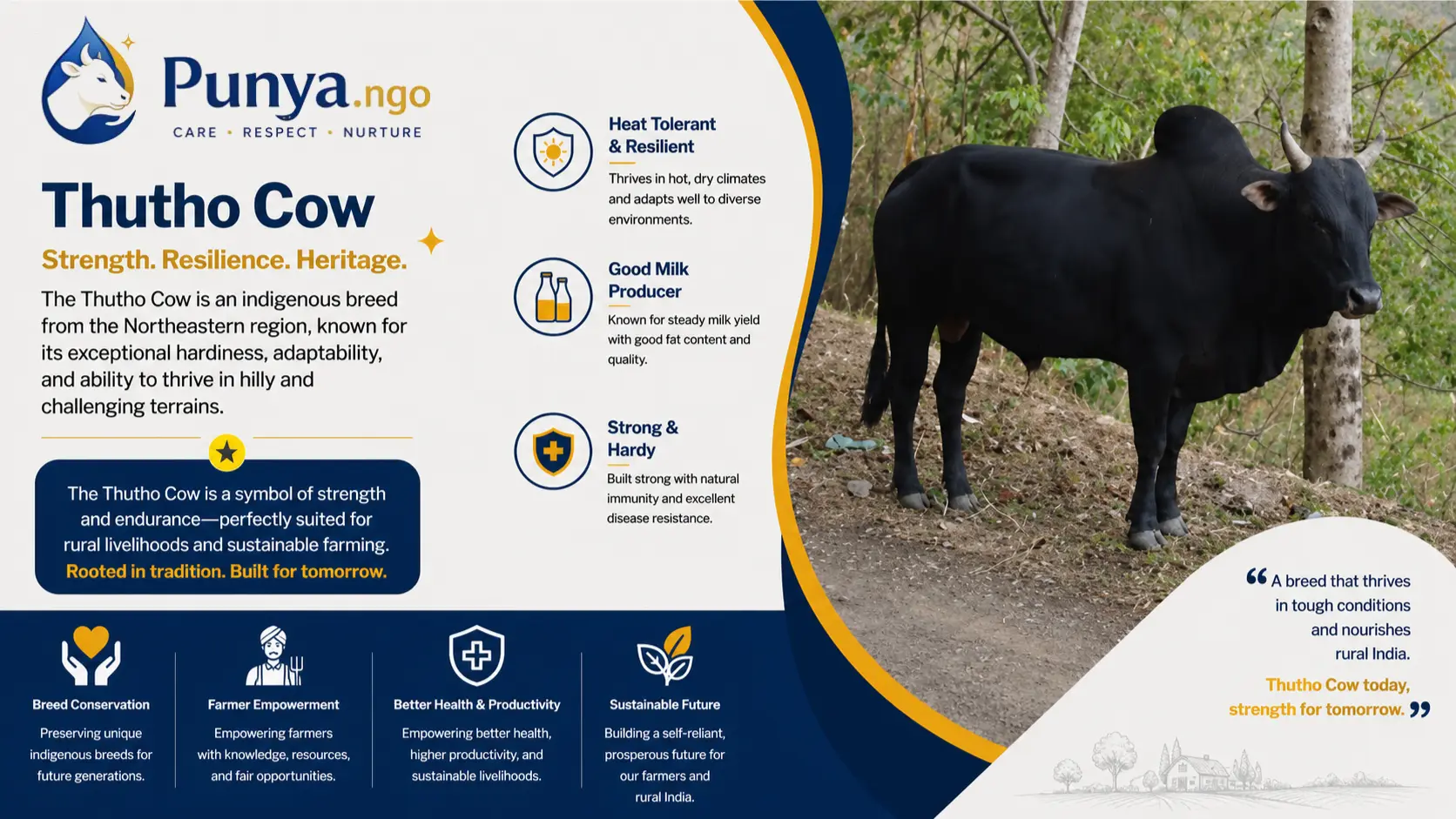
Thutho Breed in India: Origin, Characteristics, Milk Production, and Farming Value
Thutho Breed in India is an indigenous cattle breed known for its adaptation to local environmental conditions and its usefulness in traditional rural farming systems. Although it is not among the most commercially popular Indian cattle breeds, it remains valuable in regions where farmers prioritize resilience, low-input management, and adaptability over maximum milk production.
As with many native Indian cattle populations, the breed has evolved under local climatic and farming conditions, making it suitable for small and marginal farmers who require dependable livestock. Understanding the characteristics, strengths, and limitations of Thutho Breed in India helps farmers make informed decisions about breed selection and herd management.
Takeaway: Thutho is a locally adapted indigenous cattle breed valued more for hardiness and practical utility than for intensive commercial dairy production.
What is Thutho Breed in India?
Thutho Breed in India is a native cow breed associated with western India and traditional livestock-rearing communities. It belongs to the broader category of indigenous Indian cattle that have adapted naturally to local environmental conditions over generations.
The breed is primarily valued for its ability to thrive in rural farming systems where resilience, heat tolerance, and low-input management are often more important than extremely high milk yield.
Unlike specialized dairy breeds that require intensive feeding and management, Thutho Breed in India is generally appreciated for its practical utility and ability to perform under local farming conditions.
Takeaway: Thutho is a desi cow breed that offers adaptability, sustainability, and utility in traditional agricultural systems.
Origin and Native Region
The Thutho Breed in India originates from western parts of the country, where cattle have historically played a central role in agriculture and rural livelihoods.
The breed developed under semi-arid and warm climatic conditions. Over time, local farmers naturally selected animals that could withstand heat, seasonal feed shortages, and challenging grazing environments.
Quick Facts About Thutho Breed
| Feature | Details |
|---|---|
| Breed Type | Indigenous Indian cattle |
| Primary Utility | Dairy and rural farming |
| Native Region | Western India |
| Climate Suitability | Semi-arid and warm regions |
| Heat Tolerance | Good |
| Farming System | Traditional and mixed farming |
| Maintenance Requirement | Moderate to low |
| Adaptability | High |
Takeaway: The breed evolved in demanding local environments, making it naturally suited to similar farming conditions today.
Physical Characteristics
The physical appearance of Thutho Breed in India reflects its adaptation to practical farm life rather than specialized commercial breeding.
Body Structure
- Medium-sized body frame
- Strong bone structure
- Well-developed legs
- Good mobility for grazing-based systems
Coat Color
Coat color can vary among animals depending on local genetic diversity. Different shades may be observed within the breed population.
Head and Face
- Distinct indigenous cattle appearance
- Alert eyes
- Moderate ear size
- Well-proportioned head structure
Horn Characteristics
Horn size and shape may vary among individual animals, which is common in many native cattle populations.
Takeaway: Thutho cattle typically possess a sturdy and functional body structure designed for survival and productivity under local conditions.
Milk Production and Dairy Value
When discussing Thutho Breed in India, it is important to understand that the breed is not primarily known as a high-yield commercial dairy cow.
However, it provides useful milk production for rural households and small-scale dairy farming operations.
Milk Yield
Milk production can vary based on:
- Genetics
- Feeding quality
- Farm management
- Health status
- Environmental conditions
Dairy Farming Value
The breed offers several advantages for traditional dairy systems:
- Consistent production under local conditions
- Better adaptation to low-input farming
- Suitable for household dairy needs
- Lower dependency on intensive feeding programs
Milk Quality
Like many indigenous breeds, Thutho cattle are often appreciated within traditional dairy systems for their suitability in local milk production practices.
Takeaway: Thutho cattle provide practical dairy value for rural farmers, even though they are not specialized high-production dairy animals.
Temperament and Behavior
One of the notable strengths of Thutho Breed in India is its suitability for traditional livestock management systems.
Behavioral Traits
- Generally calm temperament
- Easy handling under rural conditions
- Adapted to grazing systems
- Comfortable working within village farming environments
Farmers often value cattle that combine resilience with manageable behavior, and this breed typically fits that requirement.
Takeaway: A manageable temperament makes Thutho cattle suitable for family-operated farms and traditional livestock systems.
Climate Adaptability
Climate adaptability is one of the strongest advantages of Thutho Breed in India.
Heat Tolerance
The breed has evolved in warm regions and generally demonstrates:
- Good heat tolerance
- Reduced heat stress
- Ability to remain productive during hot seasons
Drought Adaptability
Many indigenous cattle populations from western India have developed the ability to cope with:
- Limited grazing resources
- Seasonal fodder shortages
- Water scarcity
Natural Resilience
Although proper healthcare remains essential, native cattle often show strong adaptation to local environmental challenges.
Takeaway: Heat tolerance and environmental adaptability are major reasons why Thutho cattle remain relevant in rural farming systems.