Agriculture and the Cow | Backbone of Sustainable Farming
Discover the role of cows in agriculture, soil fertility, organic farming, dairy, and sustainable farming. Learn how cattle support modern agriculture naturally.
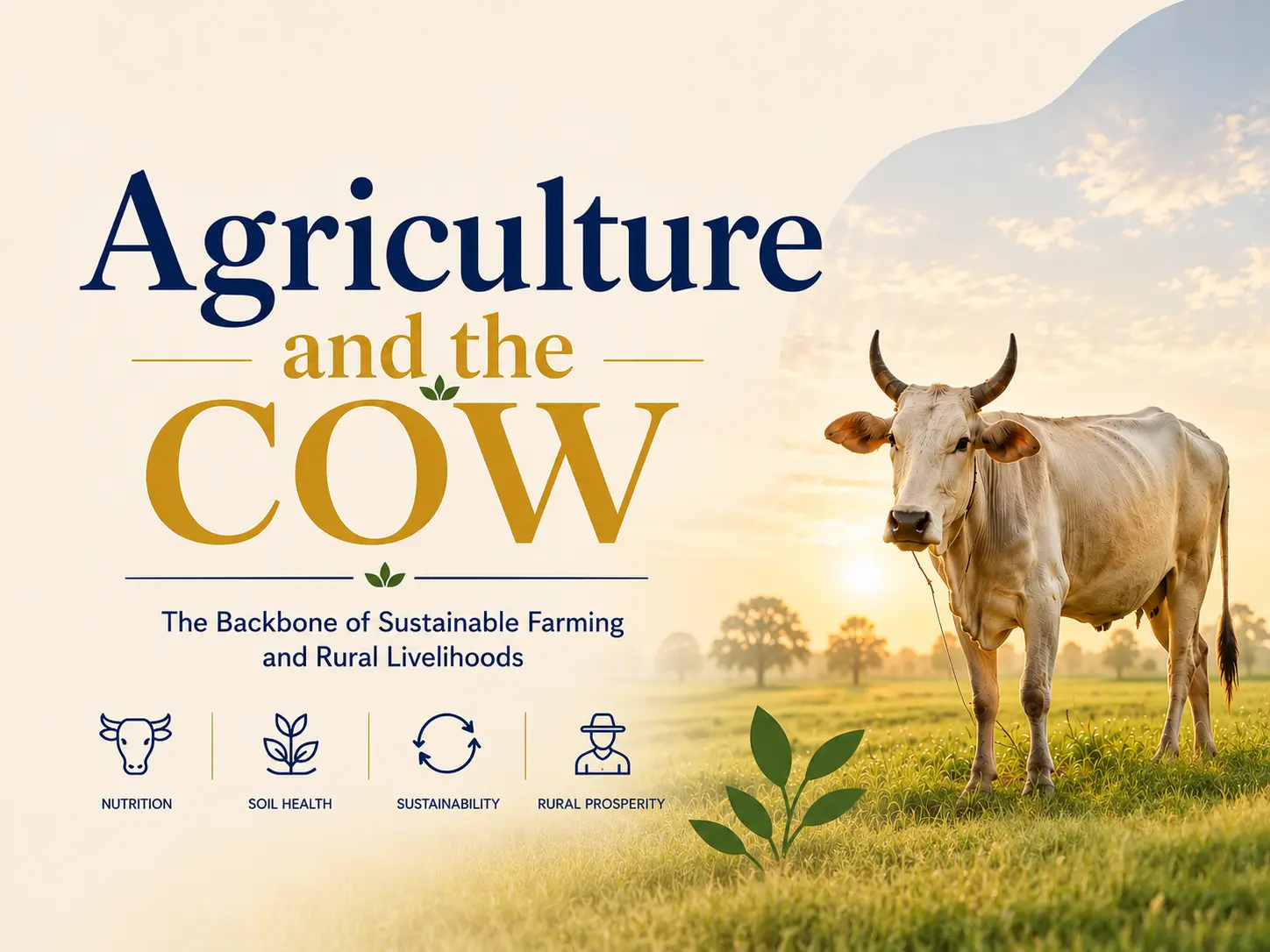
Agriculture and the Cow: The Backbone of Sustainable Farming
Agriculture and cows have shared an inseparable relationship for thousands of years. From preparing fields and enriching soil to producing milk and supporting rural livelihoods, cows have been an essential part of farming systems worldwide. Today, as the world moves toward sustainable agriculture, cows continue to play a vital role through organic manure, nutrient recycling, dairy farming, and integrated crop-livestock systems.
Unlike modern farming that often depends heavily on synthetic inputs, cow-based agriculture promotes a circular farming model where farm resources are reused efficiently. According to the Food and Agriculture Organization (FAO), integrated crop-livestock systems improve resource efficiency, increase farm productivity, enhance soil health, and contribute to environmental sustainability.
Quick Answer
Cows support agriculture by providing milk, organic manure, renewable energy through biogas, and valuable nutrients that improve soil fertility. They also help farmers diversify income, recycle agricultural waste, and build resilient farming systems.
Why Are Cows Important in Agriculture?
Cows contribute to farming in several ways beyond dairy production. Their role extends to improving crop yields, maintaining soil health, and strengthening rural economies.
Key Contributions
- 🥛 Milk production for nutrition and income
- 💩 Organic manure for natural fertilization
- ♻️ Nutrient recycling through composting
- 🔥 Biogas production for renewable energy
- 🌱 Improved soil fertility and organic matter
- 🌾 Support for integrated farming systems
- 💰 Additional livelihood opportunities for farmers
Agriculture and the Cow: A Circular Farming Model
🌾 Crop Production
│
▼
🐄 Cow
├── 🥛 Milk
├── 💩 Manure
└── 🌿 Crop Residues
│
▼
♻️ Compost & Organic Fertilizer
│
▼
🌱 Healthy Soil
│
▼
🌾 Higher Crop Productivity
│
▼
👨🌾 Sustainable Farm Income
Major Agricultural Benefits of Cows
| Agricultural Function | Benefit |
|---|---|
| Milk Production | Daily income and nutrition |
| Cow Dung | Organic fertilizer |
| Compost | Improves soil microbes |
| Biogas | Clean renewable energy |
| Nutrient Recycling | Reduces farm waste |
| Integrated Farming | Better resource efficiency |
| Rural Livelihood | Supports farming families |
How Cow Dung Improves Soil Health
Healthy soil is the foundation of productive agriculture. Cow dung naturally enriches soil by adding organic matter, improving microbial activity, and increasing water retention.
Benefits of Cow Dung
- Improves soil structure
- Enhances nutrient availability
- Supports beneficial microorganisms
- Increases moisture retention
- Reduces dependence on chemical fertilizers
- Promotes long-term soil fertility
Research shows that recycling livestock manure within crop production systems improves nutrient cycling and supports sustainable agricultural productivity.
Cow-Based Farming vs Chemical-Dependent Farming
| Feature | Cow-Based Farming | Chemical-Dependent Farming |
|---|---|---|
| Soil Organic Matter | High | Lower over time |
| Soil Biodiversity | Rich | Can decline with excessive inputs |
| Water Retention | Better | Moderate |
| Farm Sustainability | High | Input-dependent |
| Waste Recycling | Excellent | Limited |
Dairy Farming and Rural Development
Dairy farming provides a reliable source of income for millions of rural households. Since milk is produced throughout the year, it offers financial stability even when crop harvests are seasonal.
Economic Benefits
- Regular cash flow
- Employment generation
- Better household nutrition
- Women's participation in agriculture
- Diversified farm income
Integrated Crop-Livestock Farming
Modern agriculture increasingly promotes integrated crop-livestock systems (ICLS), where crops and livestock complement each other. Crop residues feed animals, while manure returns nutrients to the soil, creating a sustainable cycle.
Advantages
- Efficient use of farm resources
- Lower production costs
- Improved soil fertility
- Reduced agricultural waste
- Increased farm resilience
FAO identifies integrated crop-livestock systems as an effective approach for improving productivity, reducing dependence on external inputs, and strengthening environmental sustainability.
Environmental Benefits
When managed responsibly, cows contribute to sustainable agriculture by supporting:
- Organic farming
- Compost production
- Renewable biogas energy
- Carbon storage in soils
- Circular agricultural systems
- Improved biodiversity
However, sustainable livestock management is also important to reduce methane emissions, improve manure handling, and ensure efficient resource use.
Challenges
Despite their many benefits, cattle farming also faces several challenges:
- Methane emissions
- Limited grazing land
- Rising feed costs
- Water availability
- Animal health and welfare
- Climate change impacts
These challenges can be addressed through improved nutrition, efficient manure management, better breeding practices, and climate-smart agriculture.
Key Takeaways
| Topic | Summary |
|---|---|
| Soil Health | Cow manure improves fertility and soil structure |
| Dairy Farming | Provides regular income and nutrition |
| Organic Agriculture | Reduces dependence on synthetic fertilizers |
| Biogas | Converts waste into renewable energy |
| Integrated Farming | Recycles nutrients and improves sustainability |
| Rural Economy | Supports livelihoods and employment |
Conclusion
Cows remain one of agriculture's most valuable assets. Their contributions extend far beyond milk production to include soil fertility, organic farming, renewable energy, nutrient recycling, and rural economic development. As agriculture shifts toward sustainability, integrating livestock with crop production offers an effective way to improve productivity while protecting natural resources. Responsible cattle management, combined with modern agricultural practices, can help build resilient farming systems that benefit farmers, consumers, and the environment alike.
FAQ
1. Why are cows considered the backbone of sustainable farming?
Cows support sustainable farming by providing natural manure, reducing dependence on chemical fertilizers, improving soil fertility, and contributing to a circular agricultural ecosystem.
2. How does cow dung benefit agriculture?
Cow dung acts as an organic fertilizer that enriches soil with nutrients, improves soil structure, increases microbial activity, and enhances water retention.
3. What role does cow urine play in organic farming?
Cow urine is commonly used in natural farming as a bio-fertilizer and bio-pesticide ingredient, helping protect crops while promoting healthy plant growth.
4. How do cows help improve soil fertility naturally?
Through manure and organic waste, cows add essential nutrients to the soil, encourage beneficial microorganisms, and maintain long-term soil health without excessive chemical inputs.
5. Can farming without cows be sustainable?
While sustainable farming is possible through various methods, integrating cows can strengthen nutrient recycling, reduce external inputs, and support regenerative agricultural practices.
6. What are the economic benefits of keeping cows on a farm?
Cows provide multiple income sources through milk, manure, compost, biogas production, and value-added agricultural products, making farms more resilient.
7. How do cows contribute to natural and zero-budget farming?
Cows supply key ingredients such as dung and urine used in traditional natural farming preparations like Jeevamrit and Beejamrit, reducing farming costs.
8. What is the importance of indigenous cow breeds in Indian agriculture?
Indigenous breeds are often well-adapted to local climates, require fewer resources, and play a significant role in traditional farming systems and rural livelihoods.
9. How does cow-based farming support environmental sustainability?
Cow-based farming promotes organic nutrient cycles, reduces chemical fertilizer usage, improves biodiversity, and helps build healthier soils over time.
10. How is cow dung used for biogas production?
Cow dung is processed in biogas plants to produce renewable energy for cooking and electricity while leaving behind nutrient-rich slurry for use as fertilizer.
11. Why is integrating livestock with crop farming considered beneficial?
Combining livestock and crops creates a balanced farming system where crop residues feed animals, and animal waste returns nutrients to the fields, minimizing waste.
12. What are the future prospects of cow-based sustainable agriculture?
Growing demand for organic food, regenerative farming, and eco-friendly agricultural practices is increasing interest in cow-based farming systems for long-term sustainability.