Gau Daan | Meaning, Importance, Benefits
What is Gau Daan? Learn its meaning, importance, benefits, scriptural significance, rituals, and modern practices with this comprehensive guide.
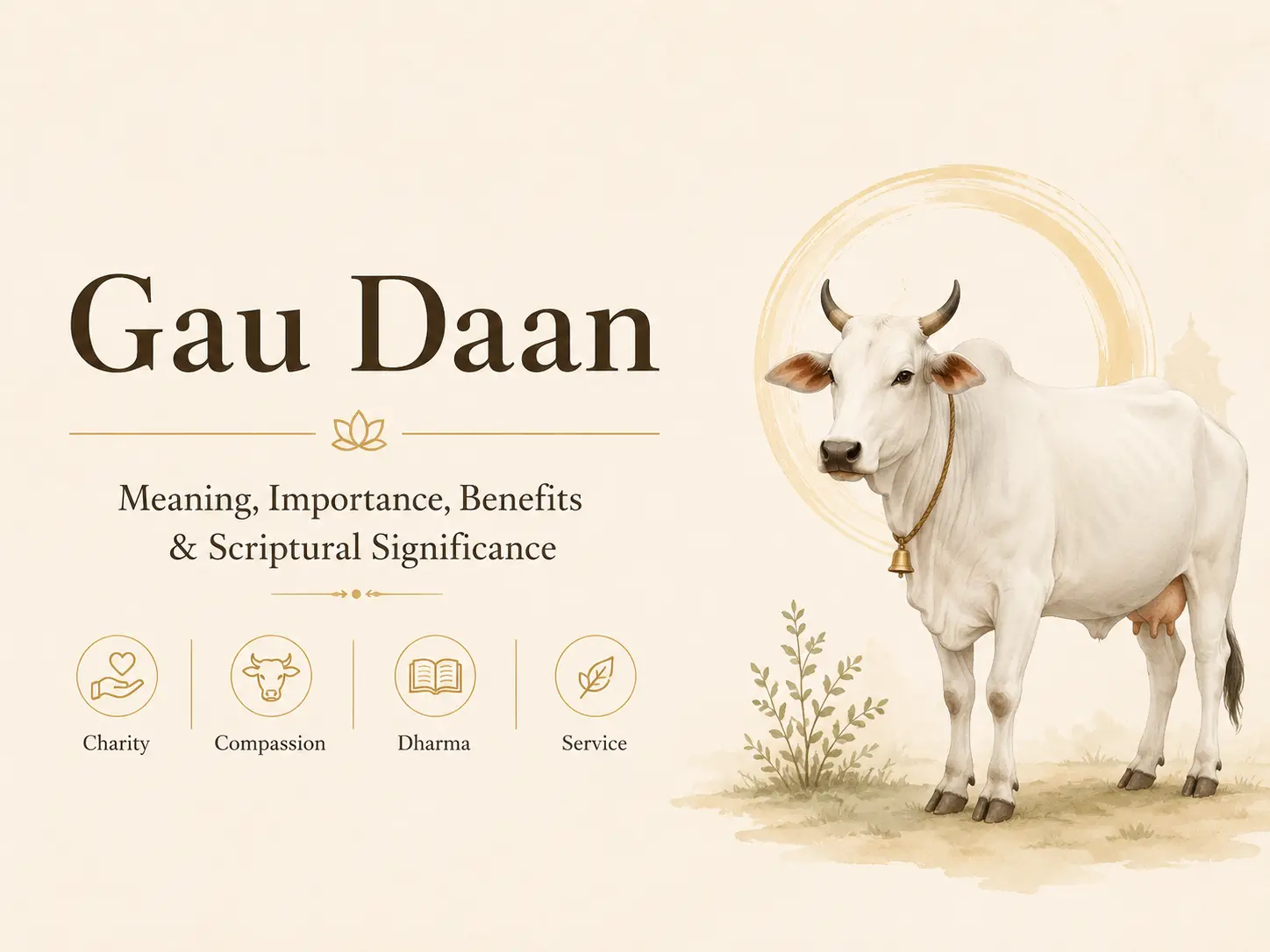
Gau Daan (Godaan): Meaning, Importance, Benefits, Scriptural Significance & Modern Relevance
Quick Answer: Gau Daan (गोदान) is the Hindu tradition of donating a cow or supporting its lifelong care as an act of selfless charity (Daan). Hindu scriptures describe Gau Daan as one of the most revered forms of giving because it symbolizes compassion, Dharma, gratitude, and the preservation of life. Today, many devotees perform Gau Daan by supporting registered Gaushalas or sponsoring cow welfare when donating a live cow is not practical.
What is Gau Daan?
Gau Daan, also known as Godaan, is one of the oldest charitable traditions in Sanatan Dharma. The Sanskrit word is formed from:
- Gau (गो) – Cow
- Daan (दान) – Donation or selfless giving
Together, Gau Daan literally means "the donation of a cow."
However, Hindu philosophy views Gau Daan as much more than donating livestock. It represents:
- Compassion for all living beings
- Gratitude for nature's gifts
- Selfless charity
- Protection of Dharma
- Service to society
- Preservation of India's agricultural heritage
For thousands of years, cows have supported human life through milk, dairy products, natural manure, and farming assistance, making them symbols of nourishment and prosperity.
Quick Facts About Gau Daan
| Aspect | Details |
|---|---|
| Sanskrit Name | गोदान (Godāna) |
| Meaning | Donation of a Cow |
| Religion | Hinduism |
| Primary Purpose | Charity (Daan) and Dharma |
| Traditional Symbol | Compassion & Prosperity |
| Modern Practice | Cow Sponsorship & Gaushala Donation |
| Related Practice | Gau Seva |
Why is the Cow Sacred in Hinduism?
The cow occupies a unique position in Indian civilization because it has historically supported both families and agriculture.
Traditionally, cows have provided:
- Milk and dairy products
- Organic manure
- Fuel from dried dung
- Agricultural support through bullocks
- Sustainable farming
- Rural livelihoods
Because of these contributions, Hindu traditions respectfully refer to the cow as Gau Mata, recognizing its nurturing role in society. Lord Krishna's life as a cowherd (Gopala) further strengthened the cultural and spiritual significance of cows.
Why is Gau Daan Considered Important?
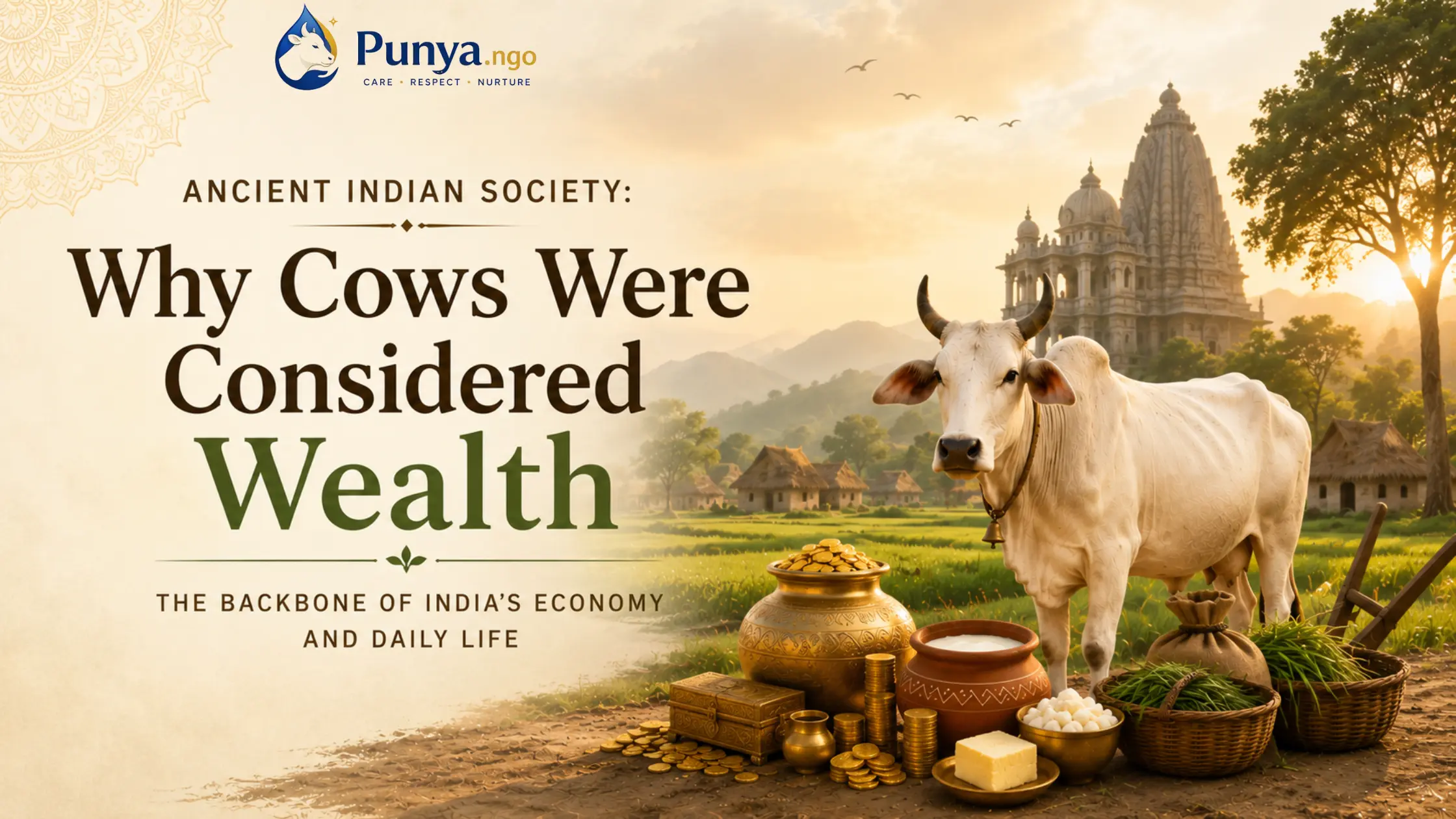
In ancient India, wealth was often measured not only in gold but also in cattle. A healthy cow could provide food, farming support, and long-term livelihood for an entire household.
For this reason, donating a cow was considered one of the most meaningful acts of charity because it benefited both the recipient and the wider community.
According to Hindu tradition, Gau Daan encourages:
- Compassion
- Generosity
- Dharma
- Gratitude
- Social welfare
- Spiritual discipline
Many Hindu scriptures describe Gau Daan as a highly meritorious act, though these teachings are matters of religious belief rather than empirical claims.
Benefits of Gau Daan
| Benefit | Description |
|---|---|
| Spiritual | Traditionally believed to cultivate Punya (spiritual merit). |
| Religious | Supports Dharma and sacred charitable practices. |
| Social | Helps families, Gaushalas, and rural communities. |
| Agricultural | Encourages livestock welfare and sustainable farming. |
| Environmental | Supports organic agriculture through natural resources. |
| Cultural | Preserves an important tradition of Indian heritage. |
Gau Daan in Hindu Scriptures
Several Hindu scriptures highlight the importance of Gau Daan and charitable giving.
| Scripture | Traditional Teaching |
|---|---|
| Rigveda | Cows symbolize prosperity, nourishment, and wealth. |
| Mahabharata | Gau Daan is praised as a noble act of charity and Dharma. |
| Garuda Purana | Describes Gau Daan as one of the highest forms of charitable giving. |
| Vishnu Purana | Connects cow protection with righteousness and prosperity. |
| Bhagavata Purana | Lord Krishna's life emphasizes care and compassion toward cows. |
Different Hindu traditions interpret these scriptures in different ways, but they consistently emphasize compassion, charity, and righteous conduct.
Ancient vs Modern Gau Daan
Although the spirit of Gau Daan remains unchanged, its practice has evolved.
| Ancient India | Modern India |
|---|---|
| Donation of a live cow | Sponsoring lifelong cow care |
| Support for agrarian families | Support for registered Gaushalas |
| Livelihood donation | Animal welfare and conservation |
| Village-based tradition | Accessible through online donations |
Today, many devotees contribute to cow welfare by funding fodder, veterinary care, shelter, or adopting cows through registered charitable organizations.
Gau Daan vs Gau Seva
| Gau Daan | Gau Seva |
|---|---|
| Donation of a cow or financial support | Continuous care and protection of cows |
| One-time charitable act | Ongoing service |
| Focuses on giving | Focuses on caregiving |
Both practices complement each other and reflect the values of compassion and responsibility.
Can Gau Daan Be Done Online?
Yes. Modern technology has made it possible for devotees worldwide to participate in the spirit of Gau Daan.
Many registered Gaushalas now accept online contributions for:
- Cow sponsorship
- Daily fodder
- Veterinary treatment
- Shelter maintenance
- Long-term cow care
This approach enables people living in cities or abroad to support cow welfare while respecting the traditional values associated with Gau Daan.
Common Misconceptions
| Myth | Reality |
|---|---|
| Only wealthy people can perform Gau Daan. | Supporting a Gaushala or sponsoring a cow is also widely practiced. |
| Gau Daan only benefits the donor. | It also supports animal welfare and community service. |
| It is only performed after death rituals. | It is traditionally observed on many auspicious occasions. |
| Women cannot participate. | Practices vary, but many traditions allow women and families to participate. |
Modern Relevance of Gau Daan
Even today, Gau Daan continues to inspire values that remain relevant in modern society.
These include:
- Animal welfare
- Sustainable agriculture
- Organic farming
- Rural development
- Indigenous cattle conservation
- Compassion toward living beings
- Community service
Supporting a Gaushala or sponsoring cow care has become a practical way for many people to uphold these values in contemporary life.
Key Takeaways
| Topic | Summary |
|---|---|
| Meaning | Gau Daan means the donation of a cow or support for its lifelong care. |
| Purpose | Promotes charity, compassion, and Dharma. |
| Historical Importance | Supported agriculture and rural livelihoods. |
| Scriptural Basis | Mentioned in the Mahabharata, Garuda Purana, Vishnu Purana, and other Hindu texts. |
| Modern Practice | Gaushala donations, cow sponsorship, and Gau Seva. |
Conclusion
Gau Daan is far more than a religious ritual—it is a timeless tradition rooted in charity, compassion, and gratitude. Historically, donating a cow meant providing a family with a sustainable source of nourishment and livelihood. Today, the same spirit continues through Gaushala support, cow sponsorship, and animal welfare initiatives. Whether viewed from a cultural, spiritual, social, or environmental perspective, Gau Daan remains one of the enduring expressions of selfless giving in Hindu tradition.
Frequently Asked Questions (FAQs)
1. What is Gau Daan in Hinduism?
Gau Daan, also known as Godaan, is the Hindu tradition of donating a cow or supporting its lifelong care as an act of selfless charity (Daan). It symbolizes compassion, gratitude, and Dharma, and is regarded in many Hindu traditions as one of the most sacred forms of giving.
2. Why is Gau Daan considered so important?
Gau Daan is considered important because cows have historically supported agriculture, nutrition, and rural livelihoods. Hindu scriptures praise it as a charitable act that reflects generosity, compassion, and righteousness (Dharma), making it spiritually significant within Hindu belief.
3. What are the spiritual benefits of Gau Daan?
According to Hindu traditions, Gau Daan is believed to generate spiritual merit (Punya), encourage compassion, and support the practice of Dharma. These benefits are based on religious teachings and may vary across different Hindu traditions and interpretations.
4. Can Gau Daan be performed online?
Yes. Many registered Gaushalas and charitable organizations allow devotees to perform the spirit of Gau Daan through online donations, cow sponsorship, fodder support, or funding veterinary care when donating a live cow is not practical.
5. Who can perform Gau Daan?
In general, Hindu traditions encourage anyone who wishes to practice charity and compassion to perform Gau Daan. Today, individuals, families, and NRIs often participate by donating to registered Gaushalas or sponsoring the lifelong care of cows.}
6. What is the best time to perform Gau Daan?
Many Hindu traditions consider occasions such as Pitru Paksha, Akshaya Tritiya, Makar Sankranti, and Gopashtami especially auspicious for Gau Daan. Customs may vary depending on regional and family traditions.
7. Is donating to a Gaushala considered Gau Daan?
Many devotees today fulfill the spirit of Gau Daan by supporting registered Gaushalas through financial contributions, cow adoption, or sponsoring food and medical care. While traditional Gau Daan involved donating a live cow, supporting its lifelong welfare is widely practiced today.
8. What is the difference between Gau Daan and Gau Seva?
Gau Daan refers to donating a cow or supporting its lifelong care as an act of charity, whereas Gau Seva involves the ongoing care, feeding, shelter, and protection of cows. Both practices are respected and complement each other in Hindu tradition.
9. Which Hindu scriptures mention Gau Daan?
Gau Daan is discussed in several Hindu texts and traditions, including the Mahabharata, Garuda Purana, Vishnu Purana, and various Dharmashastra works. These texts describe it as an important act of charity and Dharma.
10. Is Gau Daan still relevant in modern times?
Yes. Today, Gau Daan remains relevant through Gaushala donations, cow sponsorship programs, indigenous cattle conservation, and animal welfare initiatives. These modern practices preserve the traditional values of compassion, charity, and community service.
11. Can NRIs perform Gau Daan without traveling to India?
Yes. Many religious organizations and Gaushalas offer verified online Gau Daan and cow sponsorship services, allowing NRIs to participate in accordance with their faith and traditions from anywhere in the world.
12. Does Gau Daan help support cow welfare?
Yes. When performed through a trusted Gaushala or charitable organization, Gau Daan or cow sponsorship helps provide food, shelter, veterinary care, and long-term protection for cows. It also contributes to sustainable cattle welfare and community support.