Economy Based on Cattle | India's Ancient and Modern Rural Economy
Learn what a cattle-based economy is, why it was the backbone of ancient India, and how it supports agriculture, dairy, rural livelihoods, organic farming, and sustainable economic growth today.
Economy Based on Cattle: The Foundation of India's Ancient and Modern Rural Economy
Quick Answer
A cattle-based economy is an economic system where cattle generate economic value through dairy production, agriculture, organic farming, renewable energy, transportation, and rural employment. In India, cattle have historically been a symbol of wealth and continue to support millions of farmers through milk production, natural fertilizers, biogas, and sustainable farming practices. Today, India is the world's largest milk producer, and the livestock sector contributes over 30% of agricultural Gross Value Added (GVA) and around 5.5% of India's total GVA, making cattle one of the country's most valuable agricultural assets.
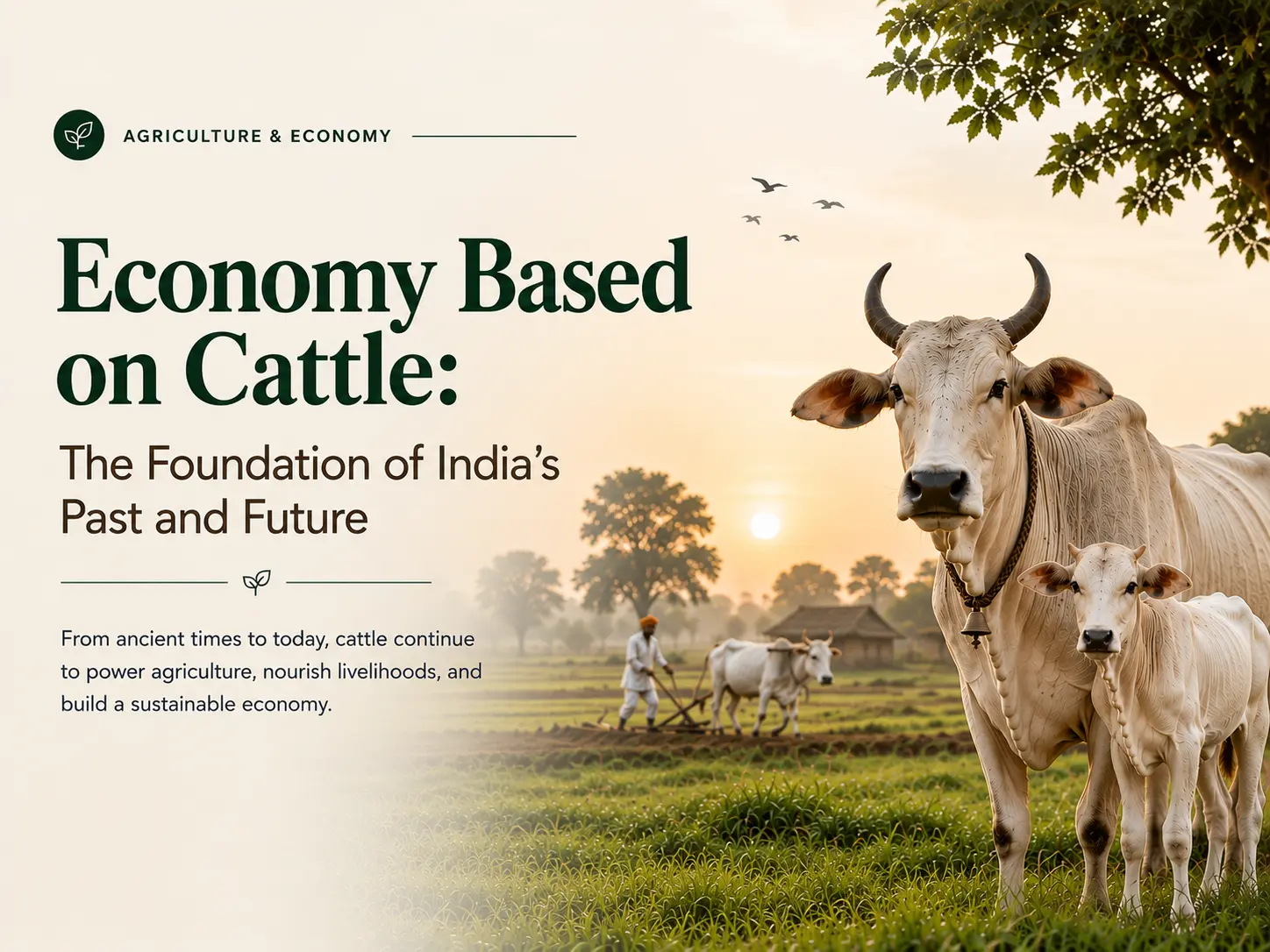
For thousands of years, cattle have played a central role in India's civilization. Long before modern industries and financial systems existed, cows and bullocks supported agriculture, transportation, dairy production, and rural livelihoods. Ancient Indian society regarded cattle not only as domestic animals but also as economic assets that ensured food security and agricultural prosperity.
Even today, despite rapid industrialization, cattle remain essential to India's rural economy. Dairy farming, organic agriculture, renewable energy, and livestock-based enterprises continue to provide employment and income to millions of households. As the global focus shifts toward sustainable development and circular economies, India's traditional cattle-based economic model has become increasingly relevant.
What Is a Cattle-Based Economy?
A cattle-based economy is an economic model in which cattle contribute directly and indirectly to multiple sectors of the economy. Instead of relying only on milk production, it utilizes every valuable output generated by cattle.
Major economic contributions include:
- Dairy production
- Agricultural support
- Organic manure
- Renewable energy
- Rural employment
- Transportation
- Natural farming
- Bio-fertilizers
This integrated approach creates a circular economy, where nearly every resource produced by cattle is utilized productively.
Why Were Cattle Considered Wealth in Ancient India?
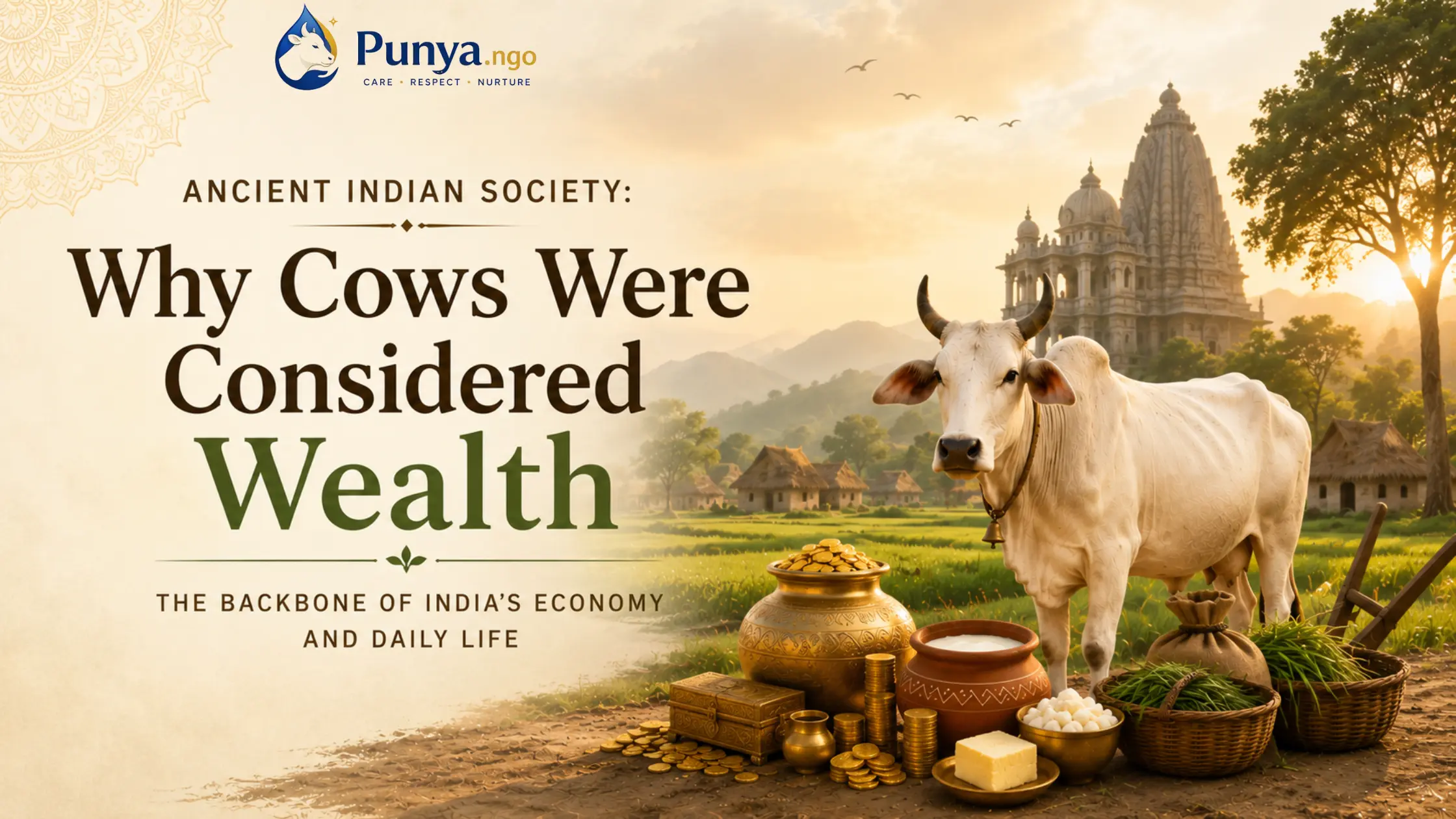
In ancient India, wealth was often measured by the number of cattle owned by an individual or kingdom. The Vedic economy was primarily agrarian and pastoral, making cattle indispensable for daily life.
Cattle provided:
- Milk and dairy products
- Bullocks for ploughing fields
- Transportation
- Organic manure
- Agricultural productivity
- Trade and exchange
Because agriculture depended heavily on healthy cattle, prosperous kingdoms often maintained large livestock populations.
Evolution of the Cattle Economy
Vedic Period
The Rigvedic society largely depended on cattle for survival. Wealth, prosperity, and social status were frequently associated with cattle ownership.
Mauryan Period
The Arthashastra emphasized livestock management as an important responsibility of the state because agriculture and taxation depended upon healthy cattle populations.
Medieval India
Village economies became increasingly dependent on dairy farming, animal husbandry, and mixed farming systems.
Modern India
Today, cattle remain one of the strongest pillars of India's agricultural economy through dairy production, organic farming, and livestock-based industries.
Economic Contributions of Cattle
Dairy Industry
Milk is the largest economic product obtained from cattle. India produced approximately 239.3 million tonnes of milk during 2023–24, making it the world's largest milk producer.
Agriculture
Bullocks continue to assist farming operations in many rural regions where mechanization remains limited.
Organic Farming
Cow dung improves soil fertility, increases microbial activity, and reduces dependence on chemical fertilizers.
Renewable Energy
Biogas plants convert cow dung into clean energy while producing nutrient-rich slurry used as organic fertilizer.
Rural Employment
Dairy farming, milk collection, transportation, veterinary services, feed manufacturing, and dairy processing generate employment for millions of rural households.
Economic Value of Every Part of Cattle
| Resource | Economic Benefit |
|---|---|
| Milk | Dairy Industry |
| Ghee | Food Processing |
| Butter | Dairy Products |
| Cow Dung | Organic Fertilizer |
| Cow Dung | Biogas Production |
| Cow Urine | Organic Farming Inputs |
| Bullocks | Agriculture & Transportation |
India's Cattle Economy in Numbers
| Indicator | Value |
|---|---|
| Global Milk Production Share | Nearly 25% |
| Milk Production (2023–24) | 239.3 Million Tonnes |
| Livestock Contribution to Agriculture GVA | 30.23% |
| Livestock Contribution to Total GVA | 5.5% |
| Global Cattle Population Share | About 19.5% |
These figures demonstrate the continued economic significance of livestock in India's agricultural sector.
Circular Economy Based on Cattle
One of the biggest strengths of a cattle-based economy is that almost every by-product has economic value.
Cattle
   │
Milk ─────────► Dairy Income
   │
Cow Dung ─────► Biogas
   │
Biogas Slurry ─► Organic Fertilizer
   │
Healthy Soil
   │
Higher Crop Yield
   │
Animal Feed
   │
Back to Cattle
This sustainable cycle reduces waste, lowers farming costs, and improves long-term agricultural productivity.
Benefits of a Cattle-Based Economy
Economic Benefits
- Diversifies farmers' income.
- Strengthens the dairy industry.
- Supports rural entrepreneurship.
- Creates employment opportunities.
Agricultural Benefits
- Improves soil fertility.
- Encourages organic farming.
- Reduces dependence on chemical fertilizers.
Environmental Benefits
- Promotes renewable energy through biogas.
- Reduces agricultural waste.
- Supports sustainable farming systems.
Social Benefits
- Enhances food security.
- Strengthens village economies.
- Supports millions of rural households.
Challenges Facing the Cattle Economy
Despite its importance, several challenges affect the livestock sector:
- Declining grazing land
- Rising fodder costs
- Animal healthcare issues
- Stray cattle management
- Climate change
- Low productivity in some indigenous breeds
- Limited access to modern veterinary services
Addressing these issues through better infrastructure, scientific breeding, and policy support will help strengthen the sector further. Government initiatives continue to focus on breed improvement, disease control, dairy cooperatives, and livestock infrastructure.
Future of the Cattle-Based Economy
The future of India's cattle economy lies in combining traditional knowledge with modern technology.
Emerging opportunities include:
- Organic agriculture
- Natural farming
- Bio-CNG production
- Precision livestock farming
- Artificial intelligence in dairy management
- Indigenous breed conservation
- Carbon-neutral farming
- Circular rural economies
These innovations can improve productivity while ensuring environmental sustainability and higher farmer incomes.
Conclusion
A cattle-based economy has been one of the strongest pillars of India's civilization for thousands of years. From supporting Vedic agriculture to powering today's dairy industry, cattle continue to contribute significantly to food security, rural employment, sustainable farming, and economic development.
As India advances toward a greener and more sustainable future, integrating traditional cattle-based practices with modern agricultural technologies can create resilient rural economies, improve farmer livelihoods, and strengthen national food security. Far from being a relic of the past, the cattle-based economy remains a practical and sustainable model for the future.
Frequently Asked Questions
1. What is a cattle-based economy?
A cattle-based economy is an economic system where cattle contribute to agriculture, dairy production, rural livelihoods, organic farming, renewable energy, and overall economic growth through products such as milk, manure, biogas, and draught power.
2. Why were cattle considered a symbol of wealth in ancient India?
In the Vedic period, cattle represented prosperity because they provided milk, supported farming, enabled transportation, and were often used as a measure of wealth and exchange in pastoral societies.
3. How do cattle contribute to the Indian economy today?
Cattle support the economy through dairy production, livestock farming, organic manure, biogas, rural employment, and agricultural productivity. India is also the world's largest milk producer, making livestock a major contributor to the agricultural sector.
4. What are the major economic benefits of cattle besides milk?
Besides milk, cattle provide organic manure, biogas, draught power for farming, transportation in rural areas, bio-fertilizers, and raw materials that support sustainable agriculture and rural industries.
5. How does a cattle-based economy support sustainable agriculture?
A cattle-based economy promotes sustainable farming by producing organic fertilizers, improving soil health, reducing dependence on chemical inputs, and generating renewable energy through biogas plants.
6. What is the role of cattle in rural livelihoods?
Cattle provide a regular source of income through dairy farming, create employment in livestock management, and help small and marginal farmers diversify their earnings beyond crop cultivation.
7. Why are indigenous cattle breeds important for the economy?
Indigenous breeds are valued for their adaptability to local climates, disease resistance, lower maintenance requirements, and their contribution to sustainable farming and dairy production.
8. What challenges does India's cattle economy face?
Major challenges include shrinking grazing land, rising fodder costs, animal diseases, stray cattle, climate change, declining productivity in some breeds, and limited veterinary infrastructure.
9. How does cow dung contribute to the economy?
Cow dung is used to produce organic manure, vermicompost, biogas, and bio-fertilizers. These products improve soil fertility, reduce farming costs, and generate additional income for farmers.
10. Is a cattle-based economy still relevant in modern India?
Yes. A cattle-based economy remains highly relevant because it supports dairy production, organic agriculture, renewable energy, rural employment, and sustainable farming while contributing significantly to India's agricultural economy.
11. How does a cattle-based economy promote a circular economy?
A cattle-based economy follows a circular model where milk generates income, cow dung is converted into biogas and organic fertilizer, crops benefit from improved soil fertility, and crop residues are reused as cattle feed, minimizing waste and maximizing resource efficiency.
12. What is the future of the cattle-based economy in India?
The future lies in integrating traditional livestock practices with modern technologies such as precision dairy farming, breed improvement, biogas production, organic agriculture, and digital livestock management to increase productivity and sustainability.