Amritmahal Cow Breed in India | Complete Guide
Learn about the **Amritmahal Cow Breed in India**, its origin, characteristics, adaptability, uses, management, and farming value.
Amritmahal Cow Breed in India: Origin, Characteristics, Uses, and Farming Value
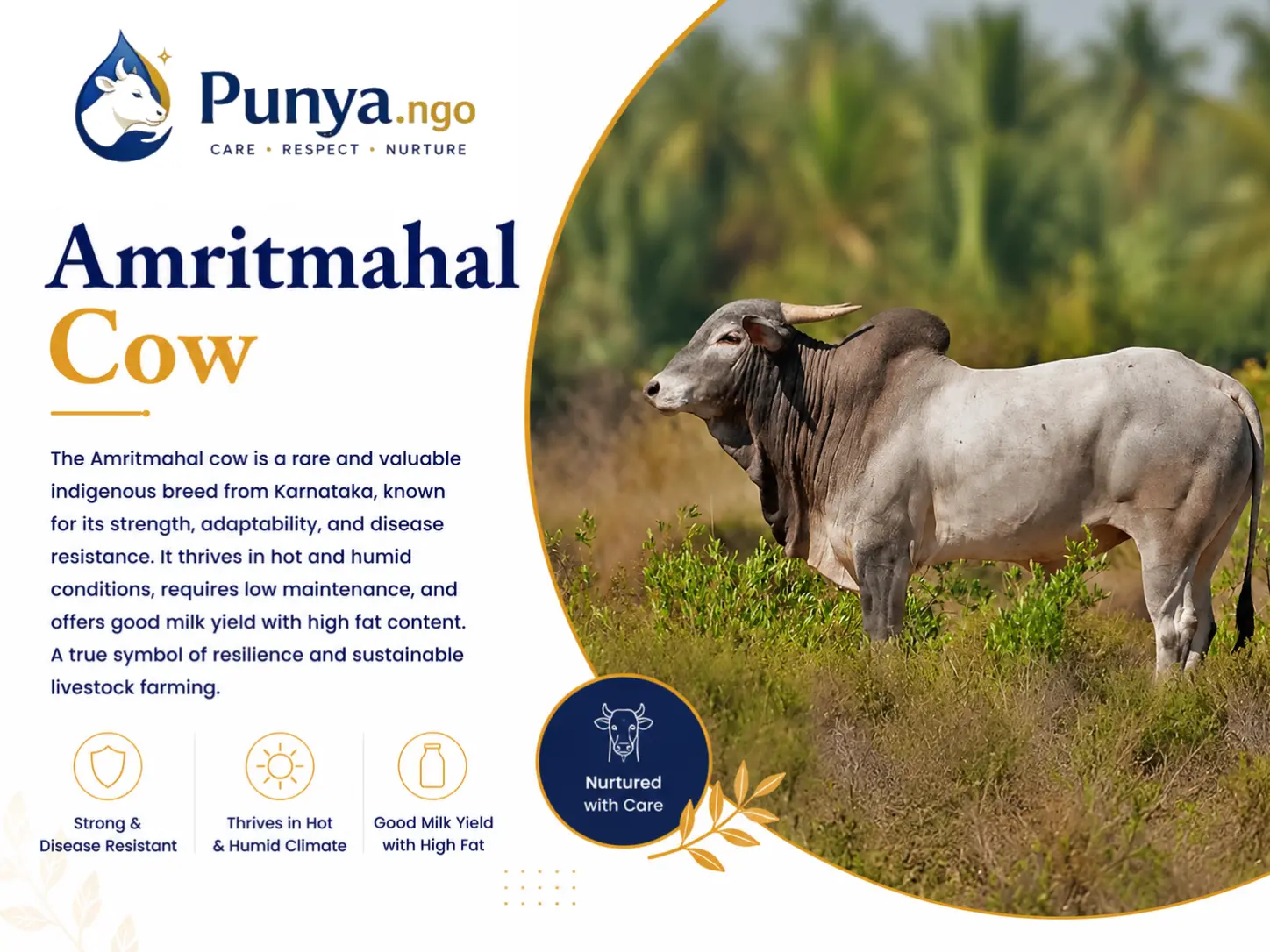
Amritmahal Cow Breed in India is one of the most respected indigenous cattle breeds known for its strength, endurance, and historical importance. Originating from Karnataka, this breed has traditionally been valued for draft power rather than high milk production. For centuries, farmers relied on Amritmahal cattle for transportation, field work, and rural agriculture because of their exceptional stamina and ability to perform under harsh climatic conditions.
Today, the breed remains important for sustainable farming, indigenous cattle conservation, and preserving India's livestock heritage.
Takeaway: The Amritmahal Cow Breed in India is primarily valued for strength, endurance, and adaptability rather than commercial milk production.
What is Amritmahal Cow Breed in India?
The Amritmahal Cow Breed in India is an indigenous cattle breed developed historically in southern India. It belongs to a group of Indian cattle that are recognized for their excellent draft capabilities and ability to work for long hours.
Unlike specialized dairy breeds, Amritmahal cattle were selectively bred to produce strong bullocks capable of agricultural work and long-distance movement.
Takeaway: Amritmahal is a native Indian cattle breed known mainly for draft utility and resilience.
Origin and Native Region
The Amritmahal Cow Breed in India originated in Karnataka, particularly in the former Mysore region. Historical accounts connect the breed with the rulers of Mysore, who maintained organized breeding programs to develop powerful cattle for military and agricultural use.
The breed is still mainly associated with Karnataka and remains an important part of the state's livestock heritage.
Quick Facts About Amritmahal
| Feature | Details |
|---|---|
| Breed Type | Indigenous Indian cattle |
| Origin State | Karnataka |
| Primary Utility | Draft Work |
| Category | Desi Cow Breed |
| Climate Suitability | Hot and Semi-Arid Regions |
| Heat Tolerance | High |
| Milk Production | Moderate to Low |
| Distinct Feature | Exceptional Strength and Endurance |
Takeaway: Karnataka is the traditional home of the Amritmahal Cow Breed in India.
Physical Characteristics
The Amritmahal Cow Breed in India has a distinctive appearance that reflects its working heritage.
Key Physical Traits
- Medium to large-sized body
- Strong and muscular build
- Long face with alert eyes
- Upward and inward-curving horns
- Strong legs and durable hooves
- Predominantly gray coat
- Darker shades around the neck, shoulders, and head
- Well-developed shoulders and hindquarters
These physical characteristics help the breed perform demanding agricultural tasks efficiently.
Takeaway: Strong musculature and a sturdy body make Amritmahal cattle excellent working animals.
Milk Production and Dairy Value
The Amritmahal Cow Breed in India was never developed as a specialized dairy breed.
Milk production is generally moderate to low when compared with dedicated dairy breeds such as Gir or Sahiwal. However, the breed can provide sufficient milk for household consumption in traditional farming systems.
Dairy Characteristics
- Moderate to low milk yield
- Useful for small farm households
- Supports healthy calf growth
- Suitable for mixed farming systems
Farmers seeking commercial milk production usually prefer specialized dairy breeds.
Takeaway: Amritmahal cattle contribute useful milk but are not considered high-yield dairy animals.
Temperament and Behavior
The Amritmahal Cow Breed in India is known for being active, alert, and energetic.
Because of its long history as a working breed, these cattle are responsive and intelligent. Proper handling and regular interaction help maintain manageable behavior.
Behavioral Traits
- Alert and active
- Intelligent and responsive
- Energetic working nature
- Strong movement instinct
- Adapted to outdoor environments
Takeaway: Amritmahal cattle are energetic animals that perform best under attentive management.
Climate Adaptability
One of the biggest strengths of the Amritmahal Cow Breed in India is its remarkable adaptability.
The breed evolved under hot climatic conditions and has developed natural resistance to environmental stress.
Climate Advantages
- Excellent heat tolerance
- Performs well in hot regions
- Suitable for semi-arid climate
- Adapts efficiently to local grazing conditions
- Resistant to climatic challenges
This adaptability makes the breed valuable for sustainable livestock farming in many parts of India.
Takeaway: High heat tolerance is one of the breed's most valuable characteristics.
Feeding and Management
The Amritmahal Cow Breed in India responds well to balanced nutrition and basic livestock management practices.
Feeding Requirements
- Green fodder
- Dry fodder
- Crop residues
- Seasonal grazing
- Mineral mixture supplements
- Constant access to clean water
Management Practices
- Regular vaccination
- Scheduled deworming
- Clean housing
- Adequate ventilation
- Proper breeding management
- Routine health monitoring
Although naturally hardy, proper care improves productivity and longevity.
Takeaway: Good nutrition and preventive healthcare support better performance and overall health.
Advantages of Amritmahal Cow Breed in India
The breed offers several practical benefits to farmers.
Major Advantages
- Exceptional draft power
- High stamina and endurance
- Excellent heat tolerance
- Adaptability to local conditions
- Lower dependence on intensive management
- Valuable indigenous genetics
- Suitable for sustainable farming systems
- Historical and cultural significance
These strengths have helped the breed remain relevant despite changing agricultural practices.
Takeaway: Strength, resilience, and adaptability are the breed's greatest advantages.
Limitations or Practical Considerations
Like every cattle breed, the Amritmahal Cow Breed in India has certain limitations.
Practical Limitations
- Lower milk production than specialized dairy breeds
- Limited commercial dairy potential
- Reduced demand for draft cattle due to mechanization
- Conservation challenges in some regions
Farmers should select the breed according to their specific farming objectives.
Takeaway: Amritmahal cattle are better suited for utility and conservation than intensive dairy production.
Best Use Cases for Farmers
The Amritmahal Cow Breed in India is ideal for specific agricultural situations.
Suitable Farming Scenarios
- Traditional rural farming
- Sustainable agriculture
- Low-input livestock systems
- Breed conservation projects
- Mixed farming operations
- Hot and semi-arid regions
Farmers seeking hardy indigenous cattle often find Amritmahal cattle highly suitable.
Takeaway: The breed performs best in traditional and sustainable farming environments.
Comparison with Similar Indian Cow Breeds
| Feature | Amritmahal | Hallikar |
|---|---|---|
| Origin | Karnataka | Karnataka |
| Primary Use | Draft Work | Draft Work |
| Heat Tolerance | High | High |
| Milk Yield | Moderate to Low | Moderate to Low |
| Endurance | Very High | High |
| Historical Importance | Very High | High |
Both breeds are respected indigenous cattle breeds, but Amritmahal cattle are particularly known for their exceptional stamina and historical military significance.
Takeaway: Amritmahal and Hallikar are similar draft breeds, but Amritmahal is especially famous for endurance.
Conclusion
The Amritmahal Cow Breed in India represents an important part of India's indigenous cattle heritage. Developed over generations for strength, endurance, and adaptability, the breed continues to provide value in sustainable farming systems and livestock conservation efforts.
While it is not a high-milk-producing breed, its resilience, heat tolerance, and working ability make it a practical choice for farmers operating in challenging conditions. As interest in native Indian cattle grows, preserving the Amritmahal breed remains important for maintaining valuable genetic diversity and supporting sustainable agriculture.
Takeaway: The Amritmahal Cow Breed in India remains one of India's most valuable indigenous breeds because of its strength, adaptability, and long-term agricultural significance.
FAQs About Amritmahal Cow Breed in India
1. What is the primary use of the Amritmahal Cow Breed in India?
The breed is mainly used for draft work, endurance-based tasks, and agricultural utility.
2. Which state is the native home of Amritmahal cattle?
Amritmahal cattle originated in Karnataka.
3. Is the Amritmahal Cow Breed in India a high milk-producing breed?
No. It generally produces lower milk yields compared with specialized dairy breeds.
4. Are Amritmahal cattle suitable for hot climates?
Yes. They have excellent heat tolerance and perform well in hot and semi-arid regions.
5. What color is commonly seen in Amritmahal cattle?
Most animals have a gray coat with darker shades around the neck, shoulders, and head.
6. Why is the breed historically important?
The breed was traditionally developed and maintained for military transport and agricultural work in the Mysore region.
7. Are Amritmahal cattle suitable for sustainable farming?
Yes. Their hardiness, adaptability, and lower input requirements make them suitable for sustainable farming systems.
8. How does Amritmahal compare with Hallikar cattle?
Both are strong indigenous draft breeds from Karnataka, but Amritmahal cattle are particularly known for their exceptional stamina and historical importance.
Takeaway: Amritmahal cattle are valued more for endurance, adaptability, and utility than for commercial dairy production.