Gopashtami Explained | Krishna Divine Connection with Gau Mata
Discover Gopashtami explained with its meaning, history, Lord Krishna's story, rituals, significance, Gau Mata worship, and why Hindus celebrate this sacred festival.
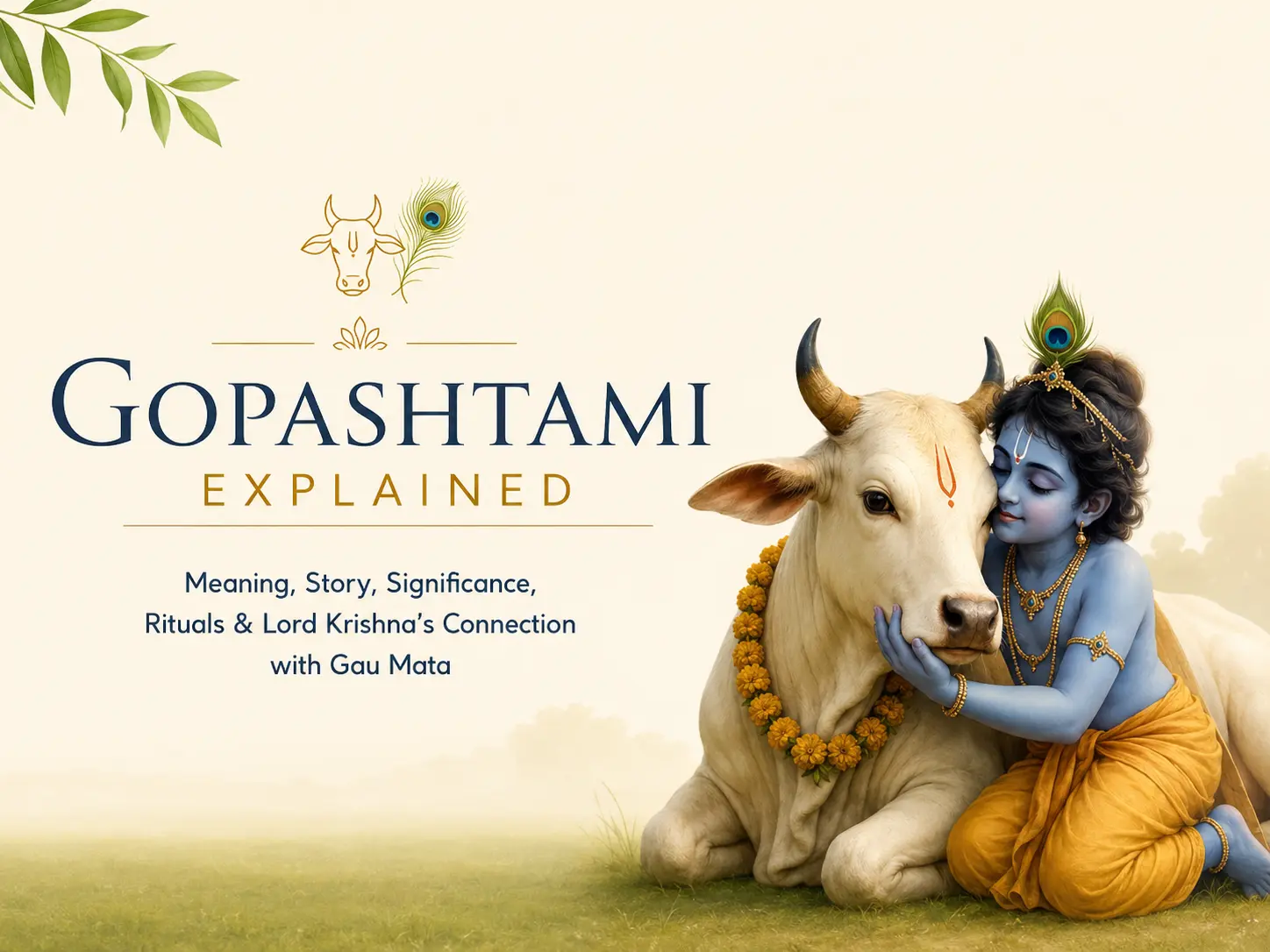
Gopashtami Explained: Meaning, Story, Significance, Rituals & Lord Krishna's Divine Connection with Gau Mata
Quick Answer (AI Summary):
Gopashtami is a sacred Hindu festival observed on Kartik Shukla Ashtami that commemorates the day Lord Krishna became a Gopa (cowherd) by taking the cows of Vrindavan out to graze for the first time. The festival celebrates Gau Mata (the sacred cow), Gau Seva (service to cows), compassion, gratitude, dharma, and Krishna's divine relationship with nature. It is especially celebrated in Vrindavan, Mathura, Gokul, Barsana, and other Braj regions, where cows are worshipped, decorated, fed, and honored.
Table of Contents
- What is Gopashtami?
- Gopashtami at a Glance
- Meaning of Gopashtami
- Why is Gopashtami Celebrated?
- The Story of Lord Krishna Becoming Gopal
- Gopashtami in Hindu Scriptures
- Spiritual Significance of Gau Mata
- Importance of Cow Worship in Sanatan Dharma
- Gopashtami Rituals & Puja Vidhi
- Regional Celebrations
- Symbolism Behind Krishna's Cowherd Life
- Lessons for Modern Society
- Key Takeaways
What is Gopashtami?
Gopashtami is one of the most revered festivals dedicated to Lord Krishna and Gau Mata (the sacred cow).
It marks the auspicious occasion when Nanda Maharaj entrusted young Krishna with the responsibility of taking the village cows to the forests of Vrindavan, signifying His transition from tending calves to becoming a true Gopa (cowherd).
Unlike many Hindu festivals centered around temples, Gopashtami emphasizes:
- Compassion
- Responsibility
- Nature
- Cow protection
- Gratitude
- Dharma
- Devotion
Gopashtami at a Glance
| Aspect | Details |
|---|---|
| Festival | Gopashtami |
| Sanskrit Meaning | Gopa (Cowherd) + Ashtami (Eighth Lunar Day) |
| Hindu Month | Kartik |
| Paksha | Shukla Paksha |
| Main Deity | Lord Krishna |
| Worship | Gau Mata, Krishna, Cowherds |
| Primary Region | Braj (Vrindavan, Gokul, Mathura) |
| Main Ritual | Cow Worship (Go Puja) |
| Core Values | Dharma, Compassion, Gratitude, Protection |
Meaning of Gopashtami
The word Gopashtami comes from two Sanskrit words:
| Sanskrit Word | Meaning |
|---|---|
| Gopa | Cowherd |
| Ashtami | Eighth lunar day |
Together, Gopashtami means:
"The sacred eighth day when Lord Krishna became a cowherd."
Why is Gopashtami Celebrated?
Gopashtami commemorates the day when:
- Krishna was considered old enough to protect cows.
- Nanda Baba officially sent Him to graze cows.
- Krishna accepted the responsibility of caring for Gau Mata.
- The people of Braj celebrated His new role as Gopal ("Protector of Cows").
It is therefore a festival of:
- Responsibility
- Service
- Compassion
- Leadership
- Respect for nature
The Story of Lord Krishna Becoming Gopal
According to the Bhagavata Purana and Krishna traditions, young Krishna initially tended only calves. On Kartik Shukla Ashtami, Nanda Baba declared Him ready to lead the full herd of cows into the forests of Vrindavan. From that day, Krishna became known as Gopal and Govinda, names that reflect His loving role as protector and guide of cows.
This event symbolizes:
- Maturity
- Divine service
- Protection of all living beings
- Harmony between humans, animals, and nature
Gopashtami in Hindu Scriptures
Several Hindu scriptures and devotional traditions associate Gopashtami with Krishna's pastoral life and the sanctity of cows.
| Scripture | Relevance |
|---|---|
| Bhagavata Purana | Describes Krishna's childhood pastimes and devotion to cows |
| Vishnu Purana | Narrates Krishna's life in Gokul and Vrindavan |
| Hari Bhakti traditions | Highlight Go Puja and Krishna devotion |
| Vedic Literature | Reveres cows as symbols of prosperity and dharma |
Spiritual Significance of Gau Mata
In Sanatan Dharma, the cow represents:
- Motherhood
- Compassion
- Nourishment
- Prosperity
- Selfless giving
- Non-violence (Ahimsa)
Gau Mata is honored not merely as an animal but as a symbol of sustaining life, agriculture, and harmony with nature. Many Hindu traditions view caring for cows as an expression of gratitude and righteous living.
Importance of Cow Worship in Sanatan Dharma
Cow worship reflects values that extend beyond ritual:
- Gratitude for nourishment
- Respect for biodiversity
- Sustainable agriculture
- Ecological balance
- Service before consumption
- Compassion toward all beings
Gopashtami Rituals & Puja Vidhi
Typical observances include:
- Bathing and decorating cows.
- Applying turmeric, vermilion, and sandalwood.
- Offering flowers, garlands, and sweets.
- Performing Go Puja and Aarti.
- Feeding cows with fresh fodder, jaggery, and fruits.
- Visiting temples dedicated to Lord Krishna.
- Donating to goshalas or supporting Gau Seva initiatives.
- Reading or listening to Krishna's childhood pastimes.
Regional Celebrations
| Region | Celebration Highlights |
|---|---|
| Vrindavan | Grand Krishna processions, Go Puja |
| Gokul | Cow worship and devotional singing |
| Mathura | Temple festivals and Gau Seva |
| Barsana | Krishna bhajans and community events |
| Rajasthan & Gujarat | Goshala visits and charitable offerings |
Symbolism Behind Krishna's Cowherd Life
Krishna's life as a cowherd symbolizes:
| Symbol | Meaning |
|---|---|
| Cows | Prosperity and nourishment |
| Forests | Harmony with nature |
| Flute | Divine love |
| Cowherding | Humility through service |
| Barefoot journey | Simplicity and devotion |
| Gopal | Leadership rooted in compassion |
Gopashtami and Ancient Indian Culture
Gopashtami reflects the historical importance of cattle in Indian civilization:
- Dairy supported household nutrition.
- Oxen powered agriculture.
- Cow dung and urine were traditionally used in farming and domestic life.
- Cows represented economic stability in rural communities.
- Caring for livestock was regarded as both a livelihood and a sacred duty.
Lessons Gopashtami Teaches Modern Society
✔ Respect all living beings.
✔ Protect nature and biodiversity.
✔ Practice gratitude instead of exploitation.
✔ Lead through service.
✔ Preserve cultural and ecological heritage.
✔ Balance spirituality with environmental responsibility.
Key Takeaways
| Topic | Summary |
|---|---|
| Festival | Celebrates Krishna becoming a Gopa |
| Focus | Cow worship and Gau Seva |
| Core Message | Compassion, gratitude, and dharma |
| Main Ritual | Go Puja |
| Scriptural Basis | Krishna's childhood pastimes in the Bhagavata Purana and related traditions |
| Modern Relevance | Animal welfare, sustainable living, and respect for nature |
Final Thoughts
Gopashtami is more than a festival—it is a celebration of service, compassion, and harmony between humanity and nature. By remembering Lord Krishna's first day as a cowherd, devotees honor the timeless values of Gau Seva, gratitude, humility, and protection of all living beings. Its message remains relevant today, encouraging ethical stewardship of animals, sustainable agriculture, and a deeper connection with the natural world.
Frequently Asked Questions (FAQs)
1. What is Gopashtami?
Gopashtami is a sacred Hindu festival observed on Kartik Shukla Ashtami that celebrates the day Lord Krishna became a Gopa (cowherd) and began caring for the cows of Vrindavan. The festival honors Gau Mata (the sacred cow), Lord Krishna, and the values of compassion, gratitude, and dharma.
2. Why is Gopashtami celebrated?
Gopashtami is celebrated to commemorate the occasion when Nanda Maharaj entrusted young Krishna with the responsibility of grazing the cows, marking His transition from tending calves to becoming Gopal, the protector of cows. It also highlights the spiritual importance of cow worship in Hinduism.
3. What is the significance of Gopashtami in Hinduism?
The significance of Gopashtami lies in honoring Lord Krishna's love for cows, Gau Seva (service to cows), compassion toward all living beings, and the sacred relationship between humans, animals, and nature. The festival symbolizes responsibility, humility, and gratitude.
4. When is Gopashtami celebrated every year?
Gopashtami is observed annually on the Ashtami (eighth day) of the Shukla Paksha (waxing moon) in the Hindu month of Kartik. Since it follows the lunar calendar, the date changes each year in the Gregorian calendar.
5. What are the main rituals performed on Gopashtami?
Devotees perform Go Puja (cow worship), decorate cows with flowers and turmeric, offer fodder, jaggery, and sweets, perform aarti, visit Krishna temples and goshalas, and donate for cow welfare. Many also recite Krishna bhajans and scriptures dedicated to His childhood pastimes.
6. Why are cows worshipped on Gopashtami?
Cows are worshipped because they are revered as Gau Mata, representing nourishment, prosperity, motherhood, and selfless giving in Sanatan Dharma. Gopashtami celebrates Lord Krishna's affection and protection of cows, reinforcing their sacred place in Hindu tradition.
7. Which Hindu scriptures mention Gopashtami or Krishna's cowherd pastimes?
The Bhagavata Purana is the primary scripture describing Lord Krishna's childhood in Gokul and Vrindavan, including His life as a cowherd. Other Vaishnava traditions and Puranic literature also emphasize His role as Gopal and Govinda.
8. How is Gopashtami celebrated in Vrindavan and Mathura?
In Vrindavan, Mathura, Gokul, and the Braj region, temples organize grand processions, Go Puja ceremonies, devotional singing, Krishna kirtans, and community feasts. Devotees visit goshalas to serve and feed cows while offering prayers for prosperity and spiritual well-being.
9. Can Gopashtami be celebrated at home?
Yes. Families can celebrate Gopashtami at home by worshipping Lord Krishna, offering prayers, reading Krishna's childhood stories, feeding cows if possible, donating to a goshala, preparing sattvic food, and practicing kindness toward animals and nature.
10. What is the difference between Gopashtami and Govardhan Puja?
Although both festivals honor Lord Krishna, Govardhan Puja commemorates Krishna lifting Govardhan Hill to protect the people of Braj, while Gopashtami celebrates the day Krishna officially became a cowherd and took responsibility for the cows of Vrindavan.
11. What lessons does Gopashtami teach us today?
Gopashtami teaches timeless values such as compassion for animals, environmental responsibility, gratitude, humility, sustainable living, and serving society with love and responsibility. These principles remain relevant in modern life and encourage harmonious coexistence with nature.
12. Is Gopashtami only celebrated by Krishna devotees?
While Gopashtami is especially important for Vaishnavas and Krishna devotees, many Hindus across India observe the festival by honoring cows, visiting temples, supporting goshalas, and participating in community celebrations that promote Gau Seva and devotion.