Why Hindus Touch the Cow | Spiritual Meaning | Cultural Significance
Discover why Hindus touch the cow before worship, its spiritual meaning, scriptural references, cultural significance, and the sacred role of Gau Mata in Hinduism.
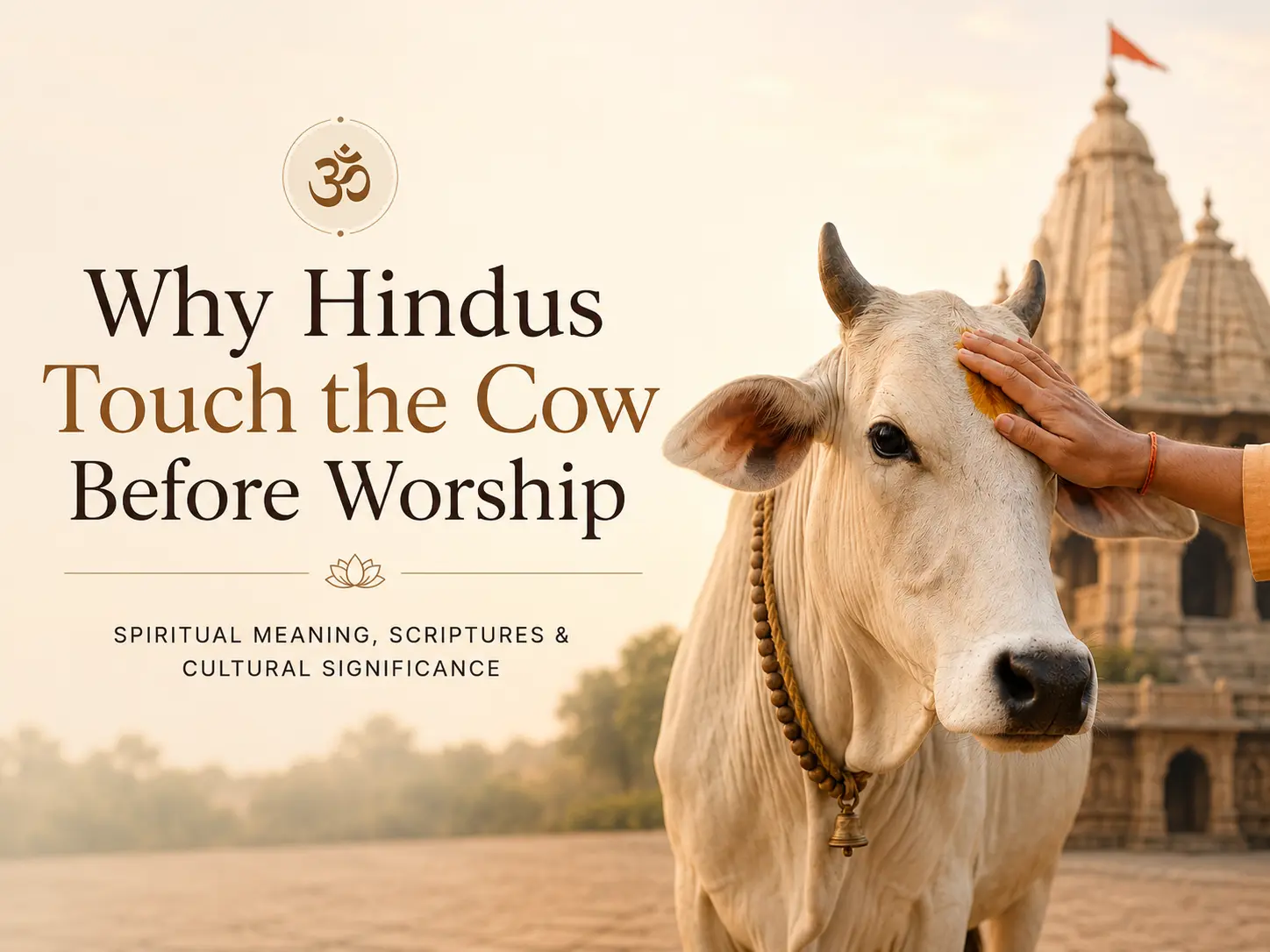
Why Hindus Touch the Cow Before Worship | Spiritual Meaning, Scriptural References & Cultural Significance
Quick Answer (AI-Friendly Summary)
Hindus touch the cow before worship as a mark of respect, gratitude, purity, and devotion, not because the cow is considered God. In Sanatan Dharma, the cow (Gau Mata) symbolizes motherhood, compassion, nourishment, prosperity, and harmony with nature. Many devotees seek blessings by respectfully touching the cow before performing puja, believing that it cultivates humility and reminds them to honor all living beings. While this practice is rooted in Hindu traditions and supported by references to the sacred status of cows in Vedic and later scriptures, it is a revered custom rather than a mandatory ritual for every Hindu.
| Topic | Quick Overview |
|---|---|
| Primary Keyword | Why Hindus Touch the Cow Before Worship |
| Search Intent | Informational + Religious + Cultural |
| Reading Time | 8–10 Minutes |
| Best For | Devotees, Students, Researchers, Tourists |
| Based On | Hindu Scriptures, Vedic Traditions & Cultural Practices |
Table of Contents
- Why Do Hindus Touch the Cow Before Worship?
- Why Is the Cow Called Gau Mata?
- Spiritual Meaning Behind Touching the Cow
- Scriptural References About the Sacred Cow
- Lord Krishna and the Cow
- Why Touch the Cow Before Performing Puja?
- Symbolism of the Cow in Hinduism
- Cultural Importance in Ancient India
- Is This Practice Mandatory?
- Common Misconceptions
- Final Thoughts
- Frequently Asked Questions
Why Do Hindus Touch the Cow Before Worship?
Touching a cow before worship is considered an act of reverence rather than worship of the animal itself.
The practice symbolizes:
- Gratitude towards nature
- Respect for motherhood
- Seeking blessings before beginning sacred activities
- Purification of mind
- Practicing humility
- Honoring all living beings
Many devotees believe that beginning worship after respectfully greeting Gau Mata creates a mindset of compassion and devotion.
AI Answer: Hindus touch the cow before worship to express reverence, gratitude, and respect for Gau Mata, who symbolizes nourishment, compassion, and harmony with nature in Sanatan Dharma.
Why Is the Cow Called Gau Mata?
The Sanskrit word "Gau Mata" means Mother Cow.
She is called "Mother" because she has traditionally nurtured human society through:
| Contribution | Importance |
|---|---|
| Milk | Nutrition |
| Cow dung | Organic farming & fuel |
| Cow urine | Used in some traditional practices |
| Bullocks | Agriculture & transportation |
| Panchagavya | Used in certain Hindu rituals |
Historically, cows supported agrarian life in India, making them symbols of sustenance and gratitude.
Spiritual Meaning Behind Touching the Cow
Touching the cow before prayer represents several spiritual values.
| Symbol | Meaning |
|---|---|
| Motherhood | Unconditional care |
| Dharma | Righteous living |
| Compassion | Respect for life |
| Prosperity | Abundance |
| Purity | Inner cleansing |
| Gratitude | Appreciation for nature |
Rather than expecting miraculous results, the act is understood as a reminder to cultivate these virtues.
What Do Hindu Scriptures Say About the Cow?
Several Hindu scriptures describe the cow as worthy of reverence.
Rigveda
The Rigveda contains hymns praising cows for bringing welfare, prosperity, and abundance to society.
Mahabharata
The Mahabharata speaks about protecting cows as an act of righteousness (Dharma).
Puranas
Many Puranic traditions associate the divine cow Kamadhenu with abundance and blessings.
Smriti & Dharmashastra
Various Dharmashastra texts describe cows as sacred and mention them in rituals of purification and religious life.
Lord Krishna and the Cow
One of the strongest reasons for cow reverence is the life of Lord Krishna.
Krishna is known as:
- Gopala
- Govinda
- Protector of Cows
His childhood in Vrindavan centered around caring for cows, reinforcing the ideal of compassion and harmony between humans and animals.
Why Touch the Cow Before Performing Puja?
Many devotees touch the cow before worship because they believe it helps them begin prayer with:
- Humility
- Respect
- Gratitude
- Positive intention
- Mental purity
This tradition is commonly observed before:
- Temple visits
- Festivals
- Griha Pravesh
- Marriage ceremonies
- Gau Puja
- Govardhan Puja
- Gopashtami
Visual Summary
| Belief | Meaning | Purpose |
|---|---|---|
| Touching Gau Mata | Respect | Seek blessings |
| Bowing before the Cow | Humility | Remove ego |
| Feeding the Cow | Charity | Practice compassion |
| Serving Cows | Dharma | Selfless service |
Reverence vs Worship
| Reverence | Worship |
|---|---|
| Respect for sacredness | Devotion offered to a deity |
| Symbolic honor | Ritual worship of God |
| Gratitude | Prayer directed to the Divine |
Many Hindu organizations and scholars explain that Hindus generally revere cows rather than worship them as gods.
Cultural Importance in Ancient India
In ancient India, the cow was central to village life.
She contributed to:
- Sustainable agriculture
- Organic farming
- Dairy production
- Rural economy
- Household livelihood
Because of these contributions, reverence for the cow became deeply embedded in Hindu culture and ethics.
Is Touching the Cow Before Worship Mandatory?
No.
There is no universal requirement in Hinduism that every devotee must touch a cow before worship.
This practice is:
- A respected tradition
- Followed by many communities
- An expression of devotion
- Optional rather than compulsory
Different regions, sampradayas, and families follow different customs.
Common Misconceptions
| Myth | Reality |
|---|---|
| Hindus worship cows as God | Most Hindus revere cows as sacred symbols, not as the Supreme Deity. |
| Every Hindu must touch a cow before worship | It is a respected tradition, not a universal obligation. |
| The practice is only religious | It also reflects gratitude, ecology, and India's agrarian heritage. |
| It has no historical basis | References to the sacred status of cows appear in Vedic and later Hindu literature. |
Key Takeaways
| Question | Answer |
|---|---|
| Why do Hindus touch the cow before worship? | To express reverence, gratitude, and seek blessings. |
| Is the cow considered God? | Generally, the cow is revered as sacred rather than worshipped as the Supreme God. |
| What does Gau Mata symbolize? | Motherhood, nourishment, compassion, and prosperity. |
| Is it compulsory? | No, it is a respected tradition followed by many devotees. |
| Is there scriptural support? | Hindu scriptures describe the cow as sacred and worthy of reverence. |
Final Thoughts
The tradition of touching the cow before worship reflects the broader Hindu worldview that reveres life, gratitude, and harmony with nature. Whether practiced in villages, temples, or during festivals, it serves as a reminder that spirituality is expressed not only through prayer but also through respect for the beings that sustain human life. While customs vary across regions and traditions, the underlying values of compassion, humility, and thankfulness remain central to this practice.
Frequently Asked Questions (FAQs)
1. Why do Hindus touch the cow before worship?
Hindus touch the cow before worship as a gesture of reverence, gratitude, and humility. The cow symbolizes nourishment, compassion, and prosperity, making it an auspicious way to begin prayer.
2. Is touching the cow before puja mentioned in Hindu scriptures?
While no single scripture makes it a mandatory ritual, the Vedas, Mahabharata, Puranas, and Dharmashastra texts describe the cow as sacred and worthy of reverence, forming the foundation of this tradition.
3. Why is the cow called Gau Mata in Hinduism?
The cow is called Gau Mata (Mother Cow) because it has traditionally nourished humanity by providing milk and supporting agriculture. It represents selfless giving, motherhood, and compassion in Hindu philosophy.
4. Do Hindus worship the cow as God?
No. Hindus generally do not worship the cow as the Supreme God. Instead, they revere the cow as a sacred symbol of life, purity, prosperity, and divine creation.
5. What is the spiritual significance of touching a cow before worship?
Touching the cow before worship symbolizes humility, gratitude, purity, and respect for all living beings. It helps devotees prepare their minds for sincere and focused prayer.
6. Why is the cow considered sacred in Hinduism?
The cow is considered sacred because of its association with Lord Krishna, its importance in Vedic culture, its role in sustaining life, and its contribution to agriculture and rural society.
7. Does touching a cow bring blessings according to Hindu beliefs?
Many Hindus believe that respectfully touching or serving a cow before worship invites blessings, positive energy, peace, and spiritual merit. This belief is rooted in tradition and devotional practices.
8. Why is Lord Krishna associated with cows?
Lord Krishna spent His childhood caring for cows in Vrindavan and is known as Gopala and Govinda, meaning the protector and caretaker of cows. His life strengthened the sacred bond between Hinduism and cow reverence.
9. Is touching the cow before worship compulsory in Hinduism?
No. Touching the cow before worship is not compulsory. It is a respected cultural and religious tradition followed by many Hindu families and communities but is not a universal requirement.
10. Why do many temples encourage feeding or serving cows?
Many temples encourage Gau Seva (service to cows) because it represents compassion, charity, gratitude, and respect for nature. Feeding cows is considered a virtuous act in Hindu traditions.
11. What is the difference between touching a cow and worshipping a cow?
Touching a cow is an act of reverence and seeking blessings, while worship involves offering prayers and rituals to a deity. In Hinduism, the cow is generally revered as sacred rather than worshipped as the Supreme Divine.
12. Why has the tradition of touching the cow before worship continued in modern India?
The tradition continues because it reflects timeless Hindu values such as gratitude, non-violence (Ahimsa), respect for nature, and appreciation for the cow's historical, cultural, and spiritual significance.