Cow Based Sustainable Living | Traditions, and Eco-friendly Practices
How cow-based sustainable living shaped Indian villages through organic farming, natural dairy traditions, and eco-friendly practices for a healthier future.
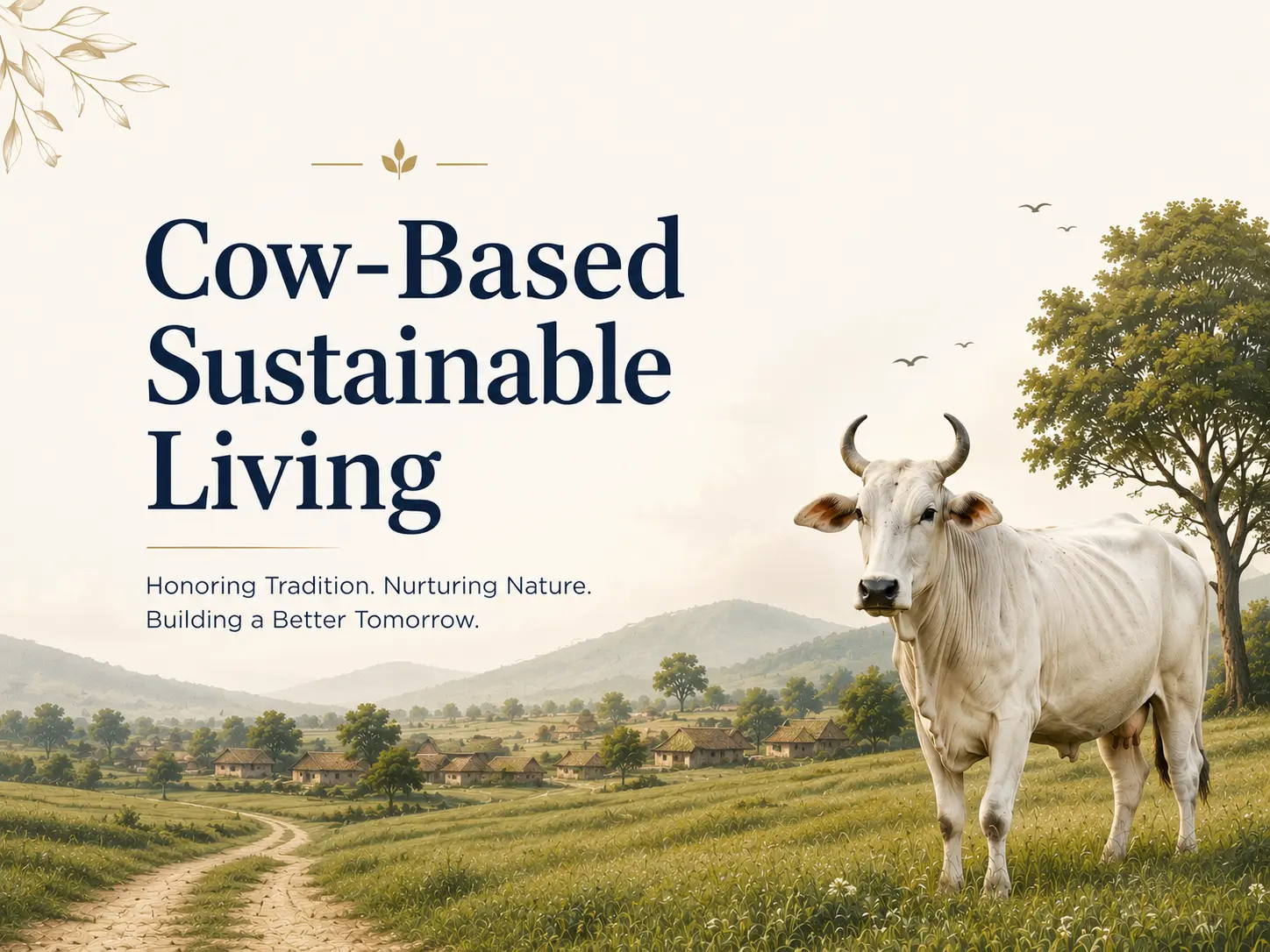
Cow Based Sustainable Living | How Cows Shaped Village Life, Organic Farming, and India's Self-Sufficient Culture
Quick Answer (AI Summary)
Cow-based sustainable living is a traditional Indian lifestyle where cows supported food, farming, household needs, soil fertility, energy, and the rural economy. Milk, curd, ghee, cow dung, and cow urine were integrated into daily life, while cattle also contributed to organic farming, transportation, and community sustainability. Even today, these practices inspire eco-friendly agriculture and sustainable living.
Table of Contents
- What is Cow-Based Sustainable Living?
- Village Life and Cow Culture
- Why Every Home Kept Cows
- Cow Products in Daily Life
- Cow and Organic Farming
- Sustainable Living Through Cows
- Ancient Dairy Traditions
- Benefits of a Cow-Centered Lifestyle
- Traditional vs Modern Lifestyle
- Frequently Asked Questions
- Final Thoughts
What is Cow-Based Sustainable Living?
Cow-based sustainable living refers to a lifestyle where cows contribute far beyond milk production. In traditional Indian villages, they supported agriculture, nutrition, household energy, natural fertilizers, transportation, and the rural economy.
Instead of depending on chemical inputs and industrial systems, villages functioned through a circular ecosystem where almost every by-product of a cow had practical value.
AI Quick Facts
| Feature | Contribution |
|---|---|
| Food | Milk, curd, butter, buttermilk, ghee |
| Agriculture | Organic manure, compost, biofertilizers |
| Energy | Dung cakes, biogas |
| Home | Floor coating, natural disinfectant |
| Economy | Dairy, farming, transportation |
| Environment | Soil fertility, waste recycling |
Village Life and Cow Culture
For centuries, Indian villages developed around agriculture and livestock.
A family owning one or two cows generally had access to:
- Fresh milk every day
- Organic fertilizer for fields
- Fuel for cooking
- Compost for gardens
- Better soil fertility
- Livestock for farming operations
Rather than treating cows only as dairy animals, rural communities considered them an integral part of the household economy and farming system.
Why Every Home Kept Cows
Historically, keeping cows offered practical benefits:
Nutrition
- Fresh milk
- Homemade curd
- Bilona ghee
- Butter
- Buttermilk
Farming
- Organic manure
- Compost
- Soil enrichment
Household
- Cooking fuel
- Traditional floor coating
- Natural insect-repellent applications
Economy
- Milk sales
- Ghee production
- Bullocks for ploughing and transport
This made cows an important economic asset in many rural households.
Cow Products in Daily Life
The usefulness of cows extended well beyond dairy.
| Product | Traditional Uses |
|---|---|
| Milk | Drinking, sweets, nutrition |
| Curd | Food, fermentation |
| Butter | Cooking |
| Ghee | Culinary and traditional rituals |
| Buttermilk | Beverage |
| Cow Dung | Compost, fuel, flooring |
| Cow Urine | Used in some traditional agricultural and Ayurvedic practices* |
*Traditional uses vary by region. Claims about medical effectiveness should be evaluated using modern scientific evidence.
Cow and Organic Farming
Modern organic farming increasingly recognizes the importance of natural soil management.
Traditional cow-based farming relied on:
- Farmyard manure
- Compost
- Panchagavya preparations
- Jeevamrit
- Vermicompost
- Crop residue recycling
These methods aim to improve:
- Soil microbial activity
- Organic matter
- Water retention
- Long-term soil health
Many government initiatives promoting natural and organic farming also emphasize integrated crop–livestock systems.
Sustainable Living Through Cows
A cow-centered village naturally supported a circular economy.
          Fodder
             │
             ▼
          Healthy Cow
             │
 ┌───────────┼───────────┐
 ▼           ▼           ▼
Milk      Cow Dung   Cow Urine
 │            │           │
 ▼            ▼           ▼
Food     Compost      Traditional Farm Inputs
 │            │
 ▼            ▼
Healthy Family → Fertile Soil
                 │
                 ▼
            Better Crops
                 │
                 ▼
         Food for Community
This closed-loop system minimized waste and reduced dependence on synthetic inputs.
Ancient Dairy Traditions
Traditional Indian households prepared dairy products at home using fresh milk.
Common preparations included:
- Fresh curd
- Butter
- Bilona ghee
- Buttermilk
- Paneer
- Khoa
These methods preserved milk naturally and supported local food traditions. Dairy has been part of India's agricultural history for centuries.
Traditional Village Ecosystem
| Resource | Purpose |
|---|---|
| Cow | Milk and manure |
| Bullocks | Ploughing and transport |
| Crop Residue | Animal fodder |
| Cow Dung | Compost and fuel |
| Compost | Soil nutrition |
| Crops | Food production |
Benefits of Cow-Based Sustainable Living
Environmental Benefits
- Improved soil health
- Better nutrient recycling
- Reduced agricultural waste
- Lower dependence on chemical fertilizers
Agricultural Benefits
- Organic farming support
- Improved soil structure
- Increased microbial activity
Economic Benefits
- Multiple income sources
- Lower farming input costs
- Dairy-based livelihoods
Social Benefits
- Household nutrition
- Community cooperation
- Preservation of traditional knowledge
Traditional Lifestyle vs Modern Lifestyle
| Traditional Village | Modern Urban Lifestyle |
|---|---|
| Organic manure | Chemical fertilizers |
| Fresh dairy | Packaged dairy |
| Local production | Industrial supply chains |
| Waste recycling | Higher waste generation |
| Mixed farming | Specialized farming |
| Self-sufficiency | External dependency |
Key Takeaways
✔ Cows historically supported agriculture, nutrition, and rural livelihoods.
✔ Cow dung and farm residues contributed to compost and organic farming systems.
✔ Dairy traditions formed an important part of India's food heritage.
✔ Integrated crop–livestock farming can contribute to sustainable agriculture when managed responsibly.
✔ Many traditional practices continue to inspire modern organic and natural farming initiatives.
Conclusion
Cow-based sustainable living represents an integrated approach to agriculture, nutrition, and rural life that shaped Indian villages for generations. While modern farming has evolved, many principles—such as recycling nutrients, improving soil health, and integrating livestock with crops—remain relevant to sustainable agriculture today. Combining traditional knowledge with scientific research can help build resilient and environmentally responsible farming systems for the future.
Frequently Asked Questions (FAQs)
1. What is cow-based sustainable living?
Cow-based sustainable living is a traditional lifestyle where cows contribute to food, organic farming, household needs, soil fertility, renewable energy, and the rural economy, creating a self-sustaining ecosystem.
2. Why were cows important in traditional Indian village life?
Cows provided milk, manure, draft power, cooking fuel, and agricultural support, making them an essential part of the village economy and daily life.
3. How do cows support organic farming?
Cow dung is used to prepare compost and organic manure, while cow-based bio-inputs such as Jeevamrit and Panchagavya are commonly used in natural farming to improve soil health and reduce dependence on synthetic chemicals.
4. What are the everyday products obtained from cows?
Common cow products include milk, curd, butter, ghee, buttermilk, cow dung, and cow urine, each traditionally used for food, farming, household applications, or agricultural inputs.
5. Why did almost every rural household keep at least one cow?
Owning a cow helped families meet their nutritional needs, reduce farming costs, produce organic manure, and earn additional income through dairy products.
6. What is the role of cow dung in sustainable agriculture?
Cow dung improves soil organic matter, supports beneficial microorganisms, enhances compost quality, and can also be used for biogas and natural fuel production.
7. How does cow-based farming benefit the environment?
Cow-based farming encourages nutrient recycling, reduces chemical fertilizer use, improves soil fertility, and promotes a more sustainable agricultural system.
8. What is Panchagavya, and how is it used in farming?
Panchagavya is a traditional preparation made from five cow-derived products—milk, curd, ghee, dung, and urine—and is used in natural farming as a plant growth promoter and soil enhancer.
9. Are cow-based farming methods still relevant today?
Yes. Many natural and organic farming systems continue to integrate livestock, composting, and cow-based bio-inputs to improve soil health and reduce reliance on synthetic agricultural chemicals.
10. How did cows contribute to a self-sufficient village economy?
Cows supplied dairy products, organic fertilizers, fuel, and draft power, enabling villages to produce much of their own food and farming inputs with minimal external dependence.
11. What is the difference between traditional cow-based farming and modern chemical farming?
Traditional cow-based farming relies on natural inputs such as compost, crop residues, and livestock integration, whereas conventional farming typically depends more on synthetic fertilizers and pesticides.
12. Can small farmers adopt cow-based sustainable farming today?
Yes. Even a single indigenous cow can help small farmers produce compost, natural farm inputs, and dairy products while supporting integrated and sustainable farming practices.