what Govatsa Dwadashi means, why cows are worshipped during Diwali
Learn what Govatsa Dwadashi means, why cows are worshipped during Diwali, its Vasu Baras tradition, rituals, significance, vrat and 2026 date.
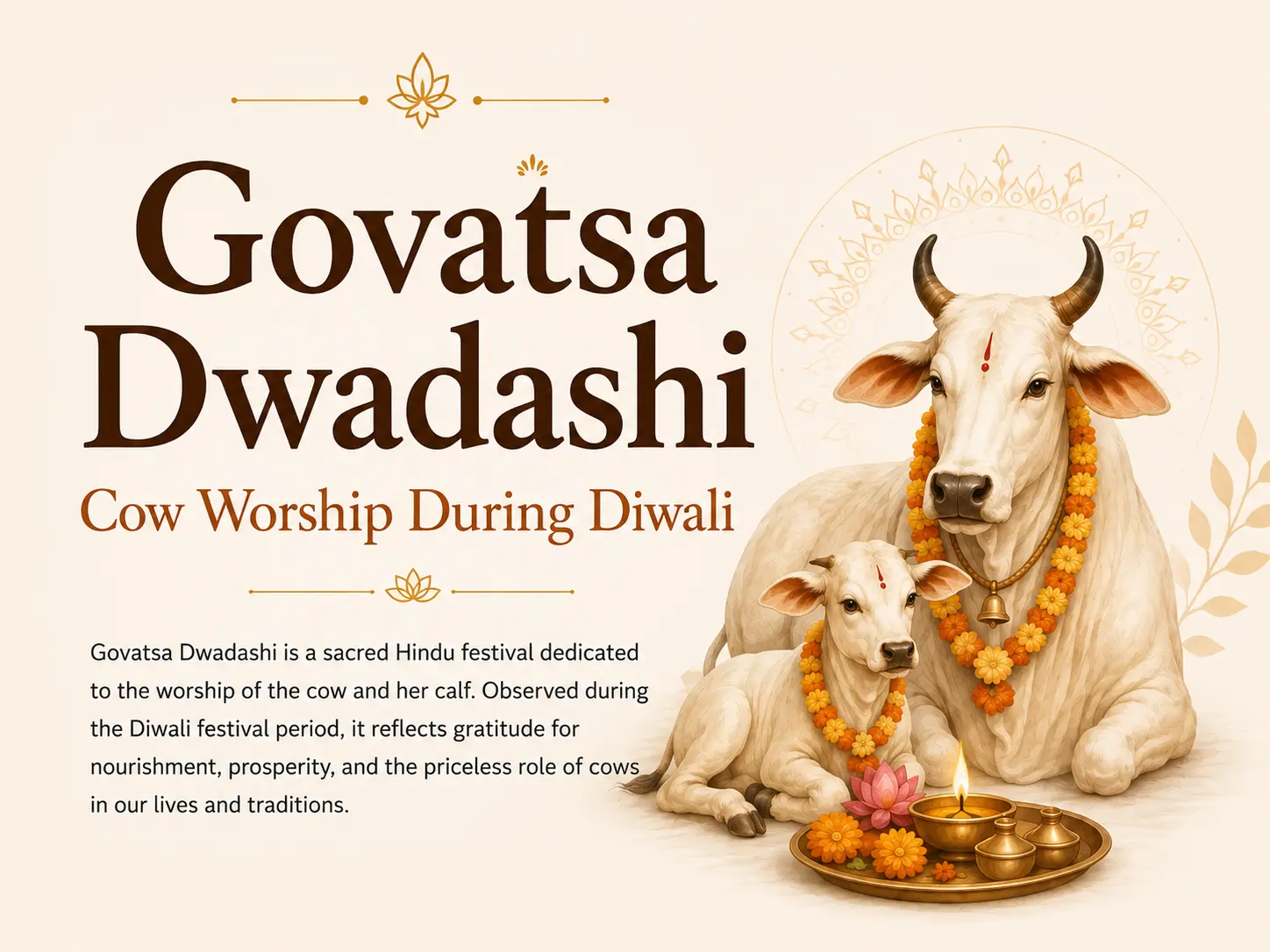
Govatsa Dwadashi: Significance of Cow Worship During Diwali
Quick Answer:
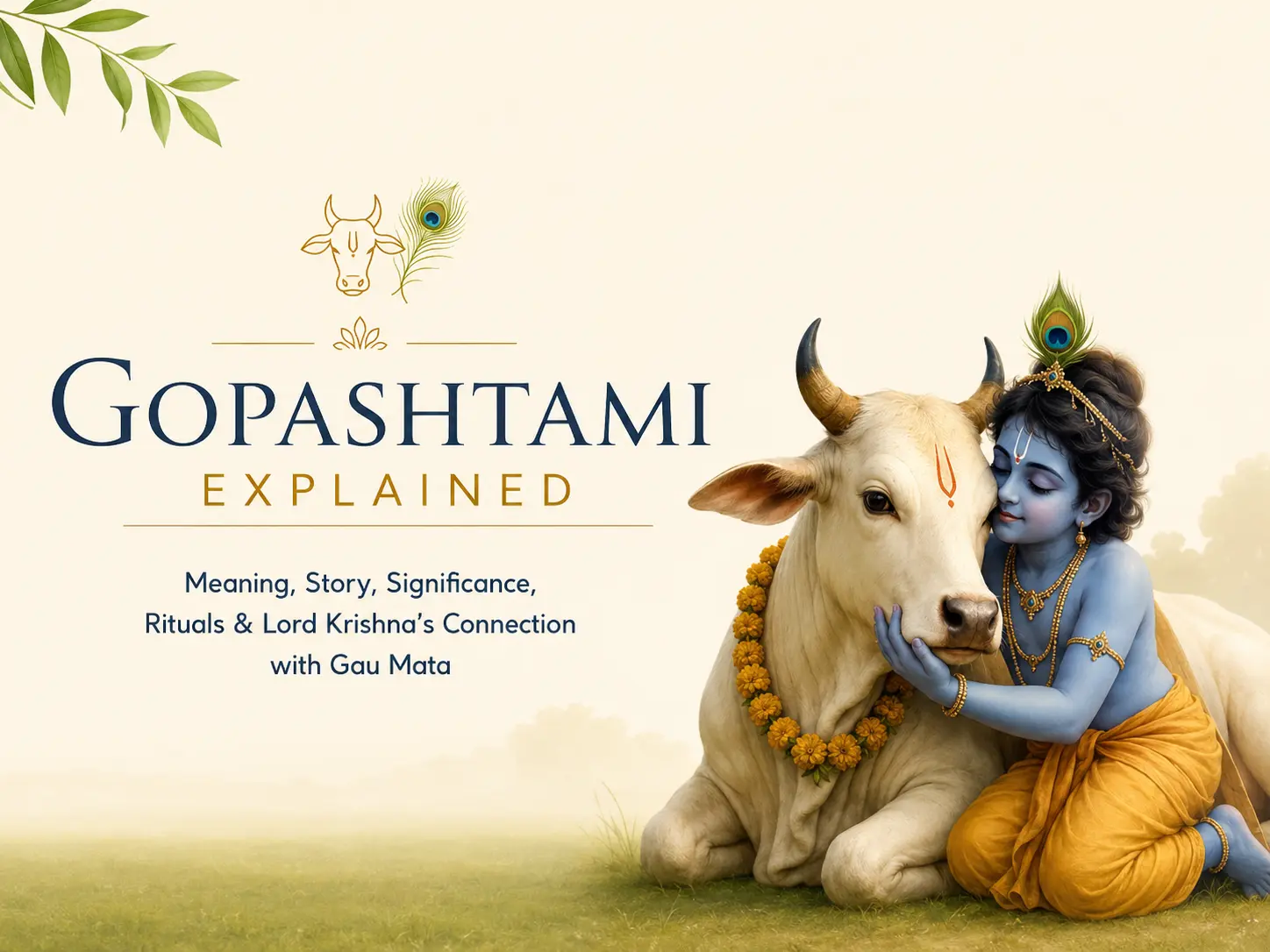
Govatsa Dwadashi is a Hindu festival dedicated to the worship of the cow and her calf. It is observed during the Diwali festival period and is known as Vasu Baras in Maharashtra. The festival expresses gratitude and reverence toward the cow, which is traditionally associated with nourishment, agriculture, prosperity, motherhood, and abundance. In many traditions, devotees worship and feed a cow and calf, perform aarti, and pray for family well-being and prosperity.
What Is Govatsa Dwadashi?
Govatsa Dwadashi is a Hindu observance dedicated to the cow and her calf. The word Govatsa refers to a calf, while Dwadashi refers to the twelfth lunar day.
The festival is observed during the Krishna Paksha Dwadashi of the Hindu lunar calendar and forms part of the wider Diwali festival cycle.
In Maharashtra, Govatsa Dwadashi is widely known as Vasu Baras and is traditionally regarded as the beginning of Diwali celebrations.
The central idea of Govatsa Dwadashi is simple:
Before celebrating prosperity and abundance during Diwali, devotees express gratitude toward the cow and the sources of nourishment and livelihood associated with her.
This makes Govatsa Dwadashi more than a ritual of worship. It represents an older cultural relationship between people, cattle, agriculture, nourishment, family life, and the natural world.
When Is Govatsa Dwadashi Celebrated?
Govatsa Dwadashi is observed on the Dwadashi Tithi of the Krishna Paksha during the Diwali period.
In 2026, Govatsa Dwadashi falls on Thursday, November 5, according to current Hindu calendar calculations. The exact puja timing can vary according to location because Hindu festivals are determined using local tithi and sunset calculations.
Govatsa Dwadashi 2026 at a Glance
| Detail | Information |
|---|---|
| Festival | Govatsa Dwadashi |
| Year | 2026 |
| Date | November 5, 2026 |
| Day | Thursday |
| Main Worship | Cow and calf |
| Regional Name | Vasu Baras |
| Connection | Diwali festival cycle |
| Main Theme | Gratitude, nourishment and prosperity |
Note: Festival dates and puja timings can differ by location and regional calendar traditions. Always check a local Panchang for the exact muhurat.
Why Is Govatsa Dwadashi Celebrated?
Govatsa Dwadashi is celebrated to honor the cow and calf and to express gratitude for the nourishment, livelihood, and abundance traditionally associated with cattle.
The significance of the festival can be understood through several connected ideas:
- Nourishment — The cow has traditionally been an important source of food and agricultural support.
- Motherhood — The cow and calf together symbolize the relationship between mother and child.
- Prosperity — Cattle have historically been connected with household wealth and rural livelihood.
- Agriculture — Cattle have played an important role in traditional Indian farming communities.
- Gratitude — Worship becomes an expression of thankfulness toward an animal that has supported human life.
- Family well-being — Traditional vrat observances are associated with prayers for the health, longevity and prosperity of children and family members.
- Compassion — The festival encourages respectful treatment and care of animals.
Therefore, Govatsa Dwadashi can be understood as a festival where gratitude comes before celebration.
Why Are Cows Worshipped During Diwali?
The connection between cow worship and Diwali becomes clearer when the festival is viewed as a sequence of traditions rather than only a single night of lights.
In several regional traditions, Diwali observances begin with Govatsa Dwadashi or Vasu Baras.
The symbolic progression can be understood like this:
| Stage | Meaning |
|---|---|
| Govatsa Dwadashi | Gratitude toward the cow and calf |
| Dhanteras | Prosperity and auspicious beginnings |
| Naraka Chaturdashi / Kali Chaudas | Ritual purification and regional observances |
| Diwali | Light, Lakshmi worship and spiritual renewal |
| Govardhan Puja | Gratitude toward nature, land and cattle |
| Bhai Dooj | Family and sibling relationships |
This sequence also shows why cow worship can have a meaningful place within Diwali traditions.
The deeper idea
Diwali is widely associated with light, prosperity, renewal and abundance.
Govatsa Dwadashi places an earlier emphasis on gratitude for the sources of nourishment and livelihood.
In this sense:
Gratitude → Nourishment → Prosperity → Celebration
becomes one way to understand the cultural connection between Govatsa Dwadashi and Diwali.
What Does the Name Govatsa Dwadashi Mean?
The name itself helps explain the festival.
Govatsa
Govatsa refers to a calf, particularly in the context of the cow and her young one.
Dwadashi
Dwadashi means the twelfth lunar day of the Hindu calendar.
Therefore, Govatsa Dwadashi can broadly be understood as:
The Dwadashi observance associated with the worship of the cow and calf.
The emphasis on both the cow and calf is important because the festival is not simply about venerating an animal.
It also represents:
- motherhood,
- nourishment,
- protection,
- continuity of life,
- family,
- and gratitude.
Govatsa Dwadashi and Vasu Baras
One of the most important regional names associated with Govatsa Dwadashi is Vasu Baras.
In Maharashtra, Vasu Baras is traditionally observed as part of the beginning of Diwali celebrations.
On this day, families may worship a cow and her calf, decorate them, perform aarti and offer appropriate food.
Is Vasu Baras the Same as Govatsa Dwadashi?
In the Maharashtra tradition, Vasu Baras is commonly used for Govatsa Dwadashi.
However, names and customs associated with this observance vary across different parts of India.
This is why an article about Govatsa Dwadashi should discuss regional traditions rather than presenting one ritual as universal across all Hindu communities.
Govatsa Dwadashi and Nandini Vrat
Govatsa Dwadashi is also associated with Nandini Vrat in some traditions.
Nandini is described in Hindu tradition as a divine cow, and stories connected with Nandini contribute to the religious narrative surrounding the observance.
The association with Nandini reinforces several themes:
- sacredness of the cow,
- fulfillment of righteous wishes,
- devotion,
- family welfare,
- prosperity,
- and protection.
Different traditions may explain the religious story differently, so these narratives should be identified as traditional accounts rather than treated as a single universally interpreted story.
What Is the Significance of Cow and Calf Worship?
The cow and calf together carry a deeper symbolic meaning.
1. Motherhood
The relationship between a cow and her calf naturally represents the bond between mother and child.
2. Nourishment
The cow has historically been connected with nourishment and household sustenance.
3. Continuity
The calf represents the continuation of life and the future of the herd.
4. Prosperity
In traditional agrarian societies, cattle were closely connected with livelihood and economic stability.
5. Gratitude
Worship creates a ritual expression of gratitude toward the living beings that support human communities.
6. Compassion
Respecting the cow and calf can also be understood as an expression of care toward animals.
How Is Govatsa Dwadashi Celebrated?
The exact rituals vary by family, community and region.
A traditional observance may include the following steps:
Step 1: Preparing the Worship Area
The place where the cow and calf will be worshipped is cleaned and decorated.
Rangoli, flowers and traditional decorative elements may be used.
Step 2: Preparing the Cow and Calf
The cow and calf may be gently cleaned and decorated.
Traditional decorations can include:
- flowers,
- garlands,
- turmeric,
- kumkum,
- and other auspicious materials.
Animal comfort should always come first.
Step 3: Performing Puja
Devotees worship the cow and calf with traditional puja materials.
Depending on the regional tradition, this may include:
- sandalwood,
- turmeric,
- kumkum,
- flowers,
- incense,
- diya,
- and devotional prayers.
Step 4: Offering Food
Appropriate fodder or traditional offerings may be given after the worship.
The offering should be suitable and safe for the animal.
Step 5: Performing Aarti
Aarti may be performed as an expression of devotion and reverence.
Step 6: Prayer
Families may pray for:
- children's well-being,
- family prosperity,
- good health,
- peace,
- abundance,
- and spiritual well-being.
Govatsa Dwadashi Puja Vidhi: Simple Guide
| Step | Ritual | Purpose |
|---|---|---|
| 1 | Clean the worship area | Purity and preparation |
| 2 | Prepare cow and calf | Respect and decoration |
| 3 | Apply traditional puja materials | Devotional worship |
| 4 | Offer flowers and diya | Reverence |
| 5 | Offer suitable food | Gratitude and seva |
| 6 | Perform aarti | Devotional conclusion |
| 7 | Pray for family | Well-being and prosperity |
Important: Ritual details can differ according to regional customs, family traditions and Panchang-based practices.
What Food Is Traditionally Avoided During Govatsa Dwadashi?
Some traditions associated with Govatsa Dwadashi prescribe avoiding wheat and milk products during the observance.
The reasoning and exact restrictions vary according to tradition.
In some interpretations, avoiding milk products is connected with giving the cow a symbolic day of rest from being a source of milk.
However, these practices should not be presented as a universal rule for every Hindu household.
Remember
Vrat rules are tradition-specific.
If a family follows a particular sampradaya, regional custom or family practice, that tradition should take priority.
What Can Be Offered to a Cow on Govatsa Dwadashi?
Traditional offerings vary by region.
Commonly mentioned offerings include suitable:
- green fodder,
- grains,
- jaggery,
- gram,
- and other appropriate cattle feed.
The most important principle is animal safety.
Festival devotion should never mean feeding a cow food that may be harmful to her.
A simple rule:
Offer what is traditionally appropriate and nutritionally safe for the animal.
Avoid treating processed human snacks, oily foods, excessively salty foods or unsuitable sweets as festive animal food.
True gau seva means caring for the animal, not simply performing a ritual.
Govatsa Dwadashi: Ritual vs Meaning
The festival becomes easier to understand when its outward rituals are connected with their deeper meaning.
| Ritual | Deeper Meaning |
|---|---|
| Worshipping the cow | Gratitude |
| Worshipping the calf | Mother-child bond |
| Decorating the cow | Respect |
| Offering food | Nourishment and seva |
| Performing aarti | Devotion |
| Observing vrat | Discipline |
| Praying for children | Family well-being |
| Caring for cattle | Compassion |
| Beginning Diwali with gratitude | Prosperity with responsibility |
This is why Govatsa Dwadashi should not be reduced to only a puja vidhi.
Its broader message is about the relationship between people, animals, agriculture, family and prosperity.
Govatsa Dwadashi in Different Regions of India
The festival is known by different names and is observed with regional variations.
| Region / Tradition | Name or Association | Main Feature |
|---|---|---|
| Maharashtra | Vasu Baras | Cow and calf worship; beginning of Diwali observances |
| Gujarat | Regional Diwali traditions including Vagh Baras | Regional customs around the Diwali period |
| Other regions | Govatsa Dwadashi / related observances | Cow and calf worship with local variations |
| Some traditions | Nandini Vrat | Association with Nandini and cow worship |
Regional traditions should be understood on their own terms because Diwali is not celebrated identically across India.
Govatsa Dwadashi and the Traditional Indian Cow
The significance of Govatsa Dwadashi becomes even clearer when we look at the traditional place of cattle in Indian society.
For centuries, cattle were closely connected with rural life.
They contributed to:
- agriculture,
- dairy-based nourishment,
- household livelihood,
- transportation,
- manure for farming,
- and the wider rural economy.
Therefore, the cow was not viewed only as an individual animal.
She was part of a larger system of agriculture, food, family and livelihood.
Govatsa Dwadashi preserves this relationship through ritual remembrance.
Why Is the Cow Considered Sacred in Hindu Tradition?
The sacred status of the cow in Hindu traditions is connected with multiple religious, cultural and social ideas.
The cow is often associated with:
- Mata — motherhood
- Nourishment
- Abundance
- Purity
- Compassion
- Agriculture
- Prosperity
- Selfless giving
The important point is that the meaning of the cow in Hindu culture cannot be reduced to one single explanation.
It developed through religious traditions, agricultural life, social customs, mythology and centuries of cultural memory.
Govatsa Dwadashi and the Idea of Prosperity
One of the most interesting aspects of Govatsa Dwadashi is its connection with prosperity.
At first glance, Diwali is associated with wealth, Lakshmi and material abundance.
But Govatsa Dwadashi introduces another question:
Where does prosperity come from?
Traditional Indian life often connected prosperity with:
Healthy cattle + fertile land + agriculture + food + family + community
Therefore, prosperity was not always understood only as money.
It could also mean:
- sufficient food,
- healthy livestock,
- productive land,
- healthy children,
- family stability,
- and a harmonious household.
Govatsa Dwadashi places this broader understanding of prosperity at the beginning of the Diwali season.
Govatsa Dwadashi and Diwali: A Simple Connection
              GOVATSA DWADASHI
                     │
                     ▼
              Cow & Calf Worship
                     │
                     ▼
                 Gratitude
                     │
                     ▼
                Nourishment
                     │
                     ▼
                Prosperity
                     │
                     ▼
              DIWALI CELEBRATION
Frequently Asked Questions About Govatsa Dwadashi
1. What is Govatsa Dwadashi?
Govatsa Dwadashi is a Hindu festival dedicated to the worship of the cow and her calf. It is observed during the Diwali festival period and is associated with gratitude, nourishment, prosperity, family well-being, and reverence for cattle.
2. When is Govatsa Dwadashi celebrated in 2026?
Govatsa Dwadashi will be celebrated on November 5, 2026, according to current Hindu calendar calculations. The exact tithi and puja timings may vary by location, so devotees should check their local Panchang for the appropriate time.
3. Why are cows worshipped during Diwali?
Cows are worshipped during Diwali as an expression of gratitude for their traditional role in nourishment, agriculture, livelihood, and household prosperity. Govatsa Dwadashi places this gratitude at the beginning of Diwali observances in several regional traditions.
4. What is the significance of Govatsa Dwadashi?
The significance of Govatsa Dwadashi lies in honoring the cow and calf while expressing gratitude for nourishment, motherhood, agriculture, prosperity, and family well-being. The festival also reflects the traditional cultural relationship between humans, cattle, and rural life.
5. Is Govatsa Dwadashi the same as Vasu Baras?
Yes, Vasu Baras is the regional name commonly used for Govatsa Dwadashi in Maharashtra. The observance involves worshipping the cow and calf and is traditionally considered the beginning of Diwali celebrations in the region.
6. How is Govatsa Dwadashi celebrated?
Govatsa Dwadashi may be celebrated by cleaning and decorating a cow and calf, applying traditional puja materials, offering flowers and suitable food, performing aarti, and praying for family health, prosperity, and well-being. Rituals can vary by region and family tradition.
7. What is the significance of worshipping the cow and calf together?
Worshipping the cow and calf together represents motherhood, nourishment, protection, family, continuity of life, and prosperity. The cow symbolizes nourishment and the calf represents the continuation of life and the mother-child relationship.
8. What food is avoided on Govatsa Dwadashi?
In some traditions, devotees observing the Govatsa Dwadashi vrat avoid wheat and milk or milk-based products during the day. However, fasting and dietary rules differ among regions and families, so devotees should follow their own established tradition.
9. What can be offered to cows on Govatsa Dwadashi?
Depending on regional tradition, devotees may offer suitable cattle feed such as green fodder, grains, gram, or jaggery. The food should always be safe and appropriate for cattle. Festival traditions should not involve feeding cows unsuitable processed or unhealthy human foods.
10. What is the story behind Govatsa Dwadashi?
Traditional accounts of Govatsa Dwadashi are associated with the divine cow Nandini, who is connected with Kamadhenu in Hindu tradition. Different versions of the story emphasize devotion, protection of children, repentance, family welfare, and the importance of honoring the cow.
11. What is Nandini Vrat on Govatsa Dwadashi?
Nandini Vrat is an associated name for the observance of Govatsa Dwadashi in some traditions. Devotees worship the cow and calf and observe the vrat with prayers for family welfare, children's well-being, prosperity, and spiritual merit.
12. What is the connection between Govatsa Dwadashi and Diwali?
Govatsa Dwadashi is part of the wider Diwali festival cycle and is traditionally observed before Dhanteras. In Maharashtra, where it is known as Vasu Baras, it is regarded as the beginning of Diwali celebrations. The observance connects gratitude toward the cow with the broader Diwali themes of prosperity, nourishment, and renewal.