
Bachaur Cow Breed in India | Complete Guide
Learn about the Bachaur Cow Breed in India, including origin, characteristics, milk production, temperament, adaptability, and farming benefits.
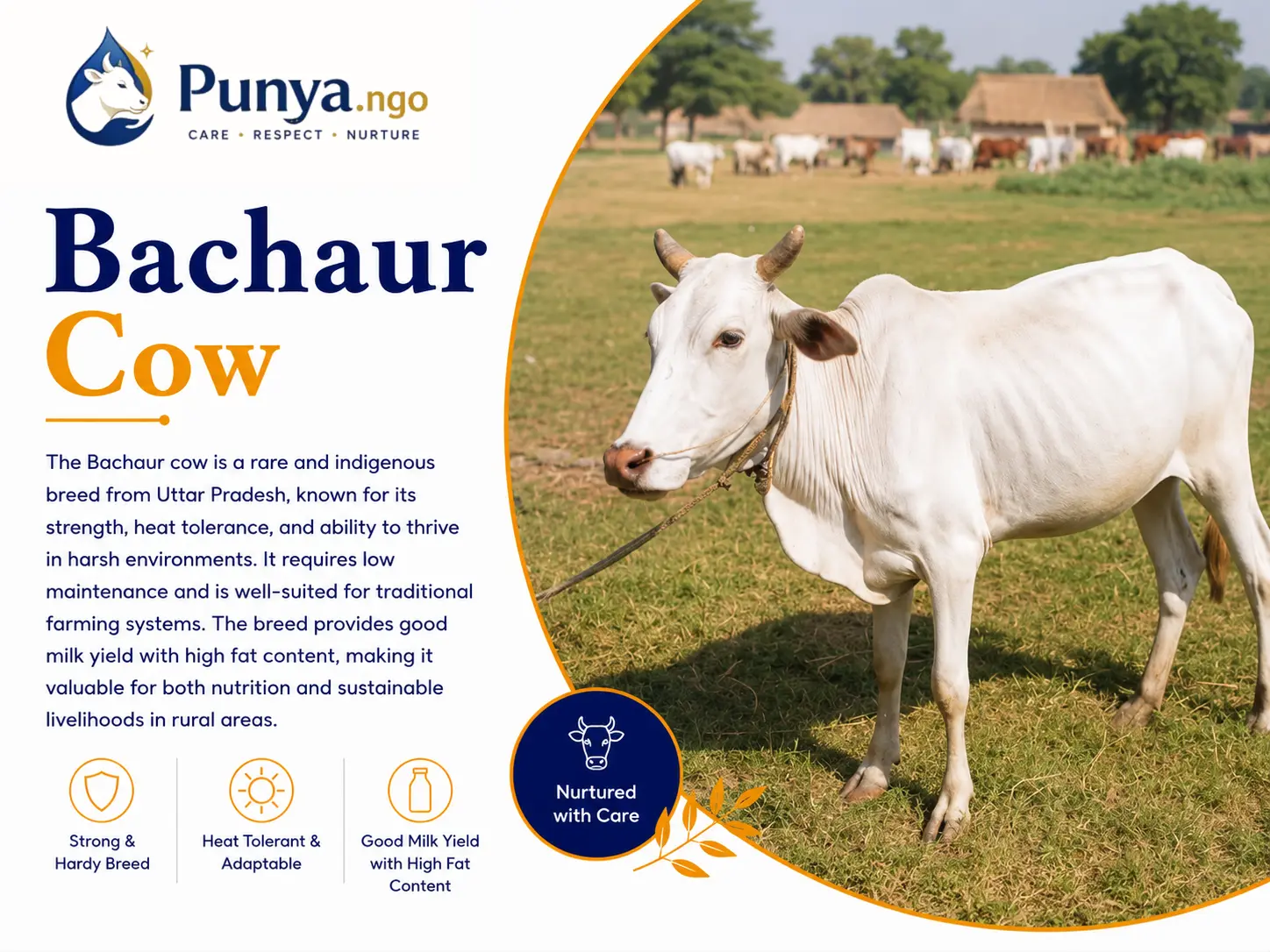
Bachaur Cow Breed in India: Origin, Characteristics, Milk Production, and Farming Value
Bachaur Cow Breed in India is an indigenous cattle breed primarily found in the northern plains of Bihar. Known for its hardiness, adaptability, and usefulness in traditional farming systems, this breed has served rural communities for generations. Although not considered a high-yield dairy breed, Bachaur cattle are valued for their ability to thrive under local conditions, contribute to milk production for household needs, and support small-scale farming operations.
For farmers looking for a resilient desi cow that can perform well in challenging environments, the Bachaur breed remains a practical option.
Takeaway: The Bachaur Cow Breed in India is a hardy indigenous breed valued for adaptability, rural utility, and dependable performance under local farming conditions.
What is Bachaur Cow Breed in India?
The Bachaur Cow Breed in India is a native cattle breed originating from the northern regions of Bihar, particularly around the Bachaur area from which it derives its name. It belongs to the group of Indian cattle breeds that have evolved naturally to suit local climatic and farming conditions.
Traditionally, Bachaur cattle have been used for both milk production and agricultural work. Their moderate size, disease resistance, and ability to survive on locally available feed resources make them particularly suitable for small and marginal farmers.
Takeaway: Bachaur is a traditional dual-purpose Indian cattle breed developed for local farming and household dairy needs.
Origin and Native Region
The Bachaur breed is mainly associated with the Mithila region of Bihar, especially districts located near the Nepal border. Over time, local farmers selectively retained animals that could withstand seasonal challenges, resulting in a breed adapted to the region's environment.
Native Distribution
- Northern Bihar
- Areas around Sitamarhi district
- Regions close to the Indo-Nepal border
- Traditional rural farming communities
Breed Development
The breed developed through natural selection and farmer-led breeding practices rather than formal breed improvement programs. This helped preserve traits such as endurance, adaptability, and efficient feed utilization.
Takeaway: The Bachaur breed evolved naturally in northern Bihar and remains closely linked to traditional rural agriculture.
Physical Characteristics
The Bachaur Cow Breed in India possesses several physical traits that help it perform efficiently in local conditions.
| Characteristic | Description |
|---|---|
| Size | Small to medium |
| Body Color | Usually grey, white, or light shades |
| Build | Compact and sturdy |
| Head | Moderately sized |
| Horns | Short to medium length |
| Hump | Present, typical of Indian cattle |
| Legs | Strong and well adapted for field movement |
| Skin | Loose and suitable for heat dissipation |
The breed is not particularly large, but its body structure supports endurance and efficient utilization of available resources.
Takeaway: Bachaur cattle are compact, sturdy, and physically suited to rural farming environments.
Milk Production and Dairy Value
Milk production in the Bachaur Cow Breed in India is generally considered moderate compared to specialized dairy breeds. However, the breed continues to hold value in low-input farming systems.
Milk Yield
- Produces sufficient milk for household consumption
- Suitable for small dairy operations
- Performs consistently under local management conditions
Dairy Value
Farmers often appreciate Bachaur cows because they can produce milk without requiring expensive feeding programs. While they may not match the output of specialized dairy breeds, their lower maintenance requirements can balance overall profitability.
Takeaway: Bachaur cows offer moderate milk production and are most valuable in low-cost rural dairy systems.
Temperament and Behavior
One of the strengths of the Bachaur Cow Breed in India is its manageable temperament.
Behavioral Traits
- Generally calm and cooperative
- Easy to handle
- Suitable for family-managed farms
- Comfortable in mixed farming systems
These traits help reduce management challenges, particularly for small farmers who handle livestock directly.
Takeaway: Bachaur cattle are known for their calm nature and ease of management.
Climate Adaptability
Climate adaptability is one of the breed's most valuable characteristics.
Heat Tolerance
Like many indigenous Indian cattle breeds, Bachaur cattle have developed strong heat tolerance. They can perform reasonably well during hot summers and seasonal fluctuations.
Environmental Adaptation
- Adapted to humid conditions
- Handles variable feed availability
- Tolerates local disease pressures better than many exotic breeds
- Performs well in traditional grazing systems
This adaptability helps reduce production risks in challenging farming environments.
Takeaway: Strong climate adaptability makes Bachaur cattle suitable for diverse rural conditions.
Feeding and Management
The Bachaur Cow Breed in India does not require highly specialized feeding programs.
Feeding Practices
Typical feeding includes:
- Green fodder
- Crop residues
- Dry fodder
- Seasonal grazing
- Mineral supplementation when available
Management Tips
Provide Balanced Nutrition
Even hardy breeds benefit from balanced feeding to support milk production and reproductive performance.
Maintain Clean Housing
Simple, clean shelters reduce disease risks and improve overall productivity.
Regular Health Monitoring
Routine vaccination and deworming programs should be followed according to local veterinary recommendations.
Takeaway: Proper nutrition, clean housing, and preventive healthcare support the best performance from Bachaur cattle.
Advantages of Bachaur Cow Breed in India
Strong Adaptability
The breed performs well under local climatic and management conditions.
Lower Maintenance Costs
Feed and management requirements are generally lower than those of high-producing exotic breeds.
Disease Resistance
Indigenous cattle often show better resistance to local diseases and environmental stress.
Suitable for Small Farmers
Its moderate size and manageable temperament make it practical for small holdings.
Useful in Mixed Farming
The breed integrates well into traditional crop-livestock systems.
Takeaway: Bachaur cattle offer affordability, resilience, and practicality for rural farming households.
Limitations or Practical Considerations
No cattle breed is ideal for every farming objective, and the Bachaur Cow Breed in India has certain limitations.
Moderate Milk Yield
Farmers seeking commercial-scale dairy production may find specialized dairy breeds more productive.
Limited Organized Breeding Programs
Compared to popular dairy breeds, fewer structured breeding and improvement programs exist.
Lower Commercial Recognition
The breed is less widely known outside its native region.
Takeaway: Bachaur cattle excel in traditional farming systems but may not be the best choice for intensive dairy enterprises.
Best Use Cases for Farmers
The Bachaur breed is particularly suitable for:
- Small-scale dairy farming
- Household milk production
- Low-input farming systems
- Traditional rural agriculture
- Integrated crop-livestock operations
- Farmers seeking indigenous cattle breeds
It is often a practical choice where resilience matters more than maximum milk output.
Takeaway: Bachaur cattle are best suited for low-input, sustainable, and family-based farming systems.
Comparison with Similar Indian Cow Breeds
Bachaur vs Sahiwal
| Feature | Bachaur | Sahiwal |
|---|---|---|
| Milk Production | Moderate | High |
| Maintenance Cost | Lower | Moderate |
| Adaptability | Excellent | Excellent |
| Commercial Dairy Suitability | Moderate | High |
| Rural Farming Utility | Strong | Strong |
The Sahiwal breed is generally preferred for higher milk production, while Bachaur cattle are appreciated for their simplicity, hardiness, and suitability for traditional farming systems.
Takeaway: Sahiwal offers greater dairy output, while Bachaur provides resilience and lower-input management advantages.
Conclusion
The Bachaur Cow Breed in India represents an important part of India's indigenous cattle heritage. Developed under local farming conditions in northern Bihar, it remains valued for adaptability, heat tolerance, disease resistance, and practical utility in rural agriculture.
Although it is not a high-yield commercial dairy breed, Bachaur cattle continue to serve farmers who prioritize sustainability, affordability, and reliable performance. For small and marginal farmers operating under traditional conditions, the breed remains a sensible and dependable choice.
Takeaway: Bachaur cattle may not produce the highest milk volumes, but their resilience, adaptability, and low maintenance needs make them highly relevant for sustainable rural farming.
FAQs
1. What is the Bachaur Cow Breed in India?
The Bachaur breed is an indigenous cattle breed from northern Bihar known for adaptability, rural utility, and moderate milk production.
2. Where is the Bachaur breed mainly found?
It is primarily found in northern Bihar, particularly around the Sitamarhi and Mithila regions.
3. Is Bachaur a good dairy breed?
It is a moderate milk-producing breed suitable for household dairy needs and small-scale farming.
4. What color are Bachaur cows?
They are commonly found in grey, white, and light-colored shades.
5. Is the Bachaur breed heat tolerant?
Yes. Like many Indian cattle breeds, it has good heat tolerance and adapts well to local climatic conditions.
6. Are Bachaur cows suitable for small farmers?
Yes. Their low maintenance requirements and calm temperament make them suitable for small and marginal farmers.
7. What are the main advantages of the Bachaur breed?
Adaptability, disease resistance, affordability, heat tolerance, and suitability for traditional farming systems.
8. How does Bachaur compare with Sahiwal cattle?
Sahiwal generally produces more milk, while Bachaur is often preferred for low-input farming and greater management simplicity.