Badri Cow Breed in India | Complete Guide
Learn about the Badri Cow Breed in India, including origin, milk yield, characteristics, farming benefits, climate adaptability, and management.
Badri Cow Breed in India: Origin, Milk Production, Characteristics, and Farming Value
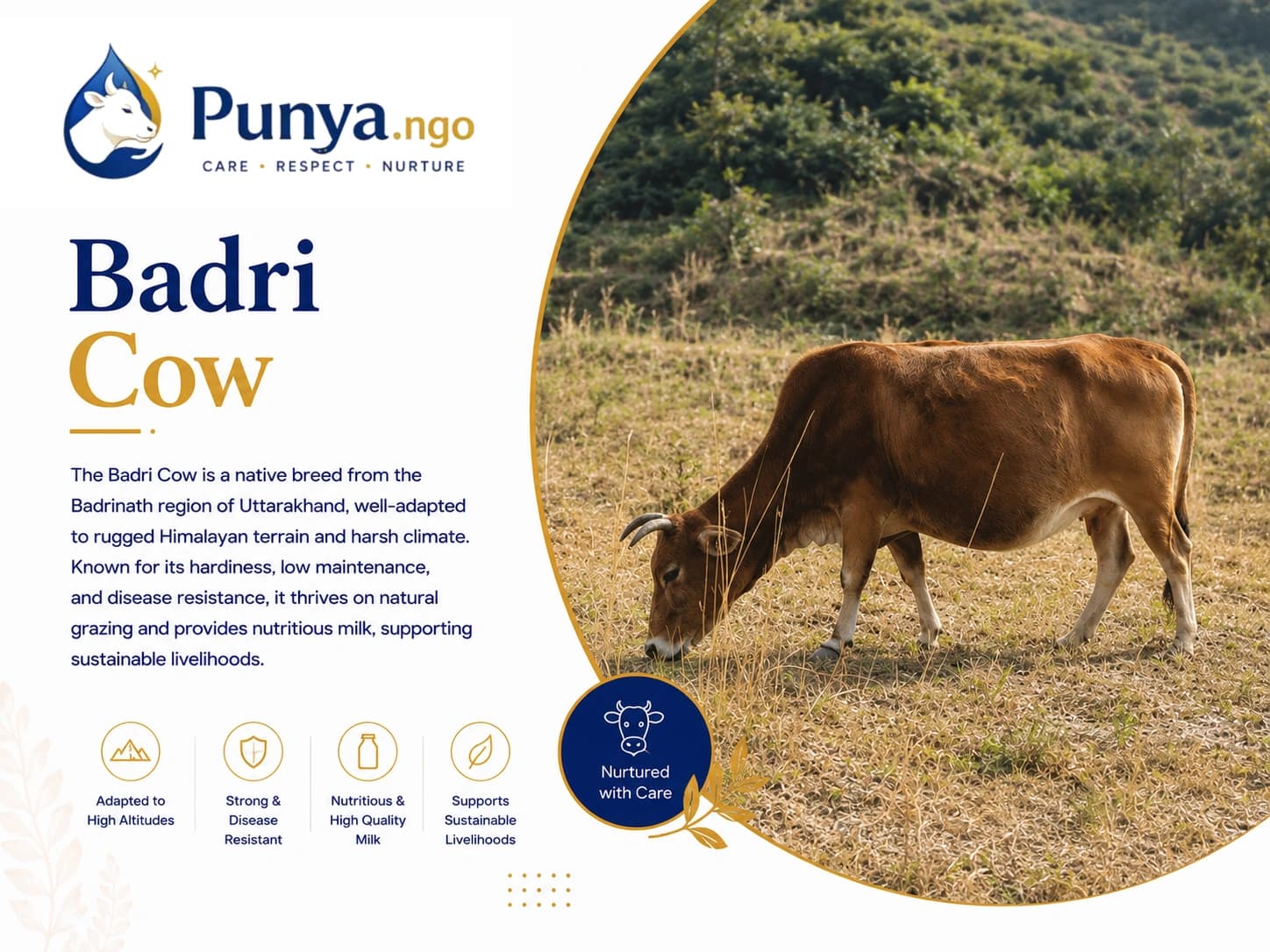
The Badri Cow Breed in India is a small indigenous cattle breed native to the Himalayan region of Uttarakhand. Known for its adaptability, hardiness, and ability to thrive in challenging mountain environments, this desi cow plays an important role in rural farming systems.
Unlike many commercial dairy breeds that require intensive management, the Badri cow survives and performs well under low-input conditions. It provides milk, manure, and support to traditional farming households while maintaining relatively low upkeep costs.
Takeaway: The Badri cow is a hardy indigenous breed best suited for sustainable farming in hilly and resource-limited regions.
What is Badri Cow Breed in India?
The Badri Cow Breed in India is an indigenous cattle breed recognized for its adaptation to the Himalayan ecosystem of Uttarakhand. It is a traditional desi cow breed that has evolved naturally over generations in mountain farming communities.
Farmers value this breed for its resilience, efficient use of local resources, and ability to remain productive in areas where more specialized cattle breeds may struggle.
Quick Overview
| Feature | Details |
|---|---|
| Breed Type | Indigenous cattle breed |
| Native State | Uttarakhand |
| Region | Himalayan hills and foothills |
| Primary Use | Milk, manure, and rural farming |
| Body Size | Small to medium |
| Climate Suitability | Hilly and temperate regions |
| Heat Tolerance | Moderate to good |
| Management Level | Low-input farming systems |
Takeaway: Badri cattle are multipurpose indigenous animals developed for survival and utility in Himalayan farming conditions.
Origin and Native Region
The Badri Cow Breed in India originates from Uttarakhand, particularly the Kumaon and Garhwal regions. These areas are known for steep slopes, forested landscapes, and traditional mixed farming systems.
Over centuries, local farmers selectively retained animals that could survive difficult terrain, variable weather, and limited feed resources. As a result, the Badri cow developed strong adaptation to mountain agriculture.
Today, the breed remains closely linked to the rural culture and agricultural heritage of Uttarakhand.
Takeaway: The breed's Himalayan origin is the foundation of its strength, endurance, and adaptability.
Physical Characteristics
The Badri Cow Breed in India has several distinctive physical traits that make it suitable for life in hilly regions.
Common Physical Features
- Small to medium-sized body
- Compact and sturdy build
- Strong legs and hooves
- Narrow face and alert expression
- Small to medium horns
- Coat colors may include black, brown, grey, red, or mixed shades
- Good mobility on rocky and uneven terrain
The breed is not large in stature, but its body structure is efficient and practical for mountain environments.
Takeaway: Badri cattle are physically designed for endurance, mobility, and survival rather than maximum production.
Milk Production and Dairy Value
Milk production from the Badri Cow Breed in India is generally moderate. However, evaluating the breed solely on milk yield does not provide a complete picture of its value.
Because these cattle require less feed and management, many small farmers find them economically practical. The milk produced is commonly used for household consumption and local sales.
Dairy Farming Value
- Suitable for small-scale dairy farming
- Lower feed requirement than larger dairy breeds
- Supports family nutrition
- Can provide supplemental rural income
- Performs under low-input conditions
While commercial dairy farms often prefer specialized breeds, Badri cattle remain valuable where sustainability and affordability are priorities.
Takeaway: The breed offers practical milk production with lower operational costs for small farmers.
Temperament and Behavior
The Badri Cow Breed in India is generally calm, alert, and easy to manage. This temperament makes it suitable for family-operated farms where daily handling is common.
Behavioral Traits
- Docile nature
- Easy handling
- Strong grazing instinct
- Adaptable to open grazing systems
- Comfortable in traditional farming environments
Their manageable behavior contributes to reduced labor requirements and easier herd management.
Takeaway: A calm temperament makes the Badri cow suitable for smallholder and family-based farming systems.
Climate Adaptability
Climate adaptability is one of the strongest advantages of the Badri Cow Breed in India.
The breed has evolved under conditions that include:
- Cold winters
- Moderate summers
- Mountainous landscapes
- Variable rainfall
- Seasonal fodder availability
This natural adaptation allows the breed to remain productive where many exotic cattle breeds may experience stress.
Adaptability Strengths
- Performs well in hill regions
- Efficient use of local grazing resources
- Good environmental resilience
- Strong adaptation to changing weather conditions
Takeaway: Badri cattle are naturally equipped to handle the environmental challenges of Himalayan farming.
Feeding and Management
The Badri Cow Breed in India is relatively easy to maintain compared to high-producing commercial breeds.
Feeding Practices
- Grazing on natural pastures
- Green fodder when available
- Crop residues from farms
- Dry fodder during lean periods
- Mineral supplementation
- Constant access to clean water
Management Tips
- Follow regular vaccination schedules
- Conduct routine deworming
- Maintain clean housing
- Protect animals during harsh weather
- Provide balanced nutrition during lactation
Even modest improvements in nutrition and healthcare can significantly improve productivity.
Takeaway: Proper feeding and preventive healthcare help maximize the breed's natural strengths.
Advantages of Badri Cow Breed in India
1. Excellent Adaptability
The breed thrives in mountainous and difficult terrains.
2. Low Maintenance Cost
Feed and management expenses are generally lower than many commercial breeds.
3. Better Local Adaptation
As an indigenous breed, it is naturally suited to local environmental conditions.
4. Suitable for Small Farmers
The breed fits well within traditional mixed farming systems.
5. Efficient Resource Utilization
Badri cattle can effectively use locally available fodder resources.
6. Sustainable Farming Support
They contribute milk, manure, and agricultural value without requiring intensive inputs.
Takeaway: The breed's biggest strengths are sustainability, resilience, and affordability.
Limitations or Practical Considerations
Every cattle breed has trade-offs, and the Badri Cow Breed in India is no exception.
Practical Limitations
- Lower milk yield than specialized dairy breeds
- Not ideal for large commercial dairy operations
- Limited availability outside native regions
- Productivity depends on feeding and management quality
Farmers focused solely on maximizing milk output may prefer breeds developed specifically for commercial dairy production.
Takeaway: Badri cattle prioritize resilience and low-cost farming over maximum milk yield.
Best Use Cases for Farmers
The Badri Cow Breed in India is particularly suitable for:
Ideal Farming Situations
- Hill farming systems
- Small and marginal farmers
- Organic farming operations
- Sustainable agriculture projects
- Mixed crop-livestock systems
- Household dairy production
Its adaptability often makes it a more practical option than high-maintenance breeds in difficult environments.
Takeaway: The breed performs best where sustainability and adaptability matter more than peak production.
Comparison with Similar Indian Cow Breeds
Badri vs Sahiwal
| Feature | Badri | Sahiwal |
|---|---|---|
| Origin | Uttarakhand | Punjab Region |
| Body Size | Small to Medium | Medium to Large |
| Milk Yield | Moderate | Higher |
| Feed Requirement | Lower | Higher |
| Hill Adaptability | Excellent | Moderate |
| Commercial Dairy Suitability | Limited | Strong |
| Maintenance Cost | Lower | Higher |
The Sahiwal breed is widely known for higher milk production. In contrast, the Badri Cow Breed in India is better adapted to rugged terrain, limited resources, and traditional farming systems.
Takeaway: Sahiwal is stronger for commercial dairying, while Badri excels in sustainability and hill farming.
Conclusion
The Badri Cow Breed in India represents the practical strengths of indigenous Indian cattle. Its value comes from adaptability, resilience, low maintenance requirements, and compatibility with traditional farming systems.
Although it may not compete with specialized dairy breeds in terms of milk production, it remains highly relevant for small farmers, hill agriculture, and sustainable livestock management.
For farmers seeking a dependable desi cow that can perform under challenging conditions, the Badri breed continues to be a valuable and practical choice.
Takeaway: The Badri cow remains one of the most useful indigenous breeds for sustainable farming in Himalayan regions.
FAQs
What is the Badri Cow Breed in India?
The Badri cow is an indigenous cattle breed native to Uttarakhand and adapted to Himalayan farming conditions.
Which state is the Badri cow mainly found in?
The breed is primarily found in Uttarakhand, especially in the Kumaon and Garhwal regions.
Is the Badri cow good for dairy farming?
Yes, it is suitable for small-scale dairy farming, though its milk production is moderate compared to specialized dairy breeds.
What makes the Badri cow unique?
Its adaptability to mountainous terrain, low maintenance requirements, and resilience under challenging conditions make it unique.
Is the Badri cow suitable for organic farming?
Yes. Its low-input nature makes it well suited for organic and sustainable farming systems.
Does the Badri cow tolerate heat?
The breed has moderate to good heat tolerance, although it performs best in temperate and hilly regions.
How does Badri compare with Sahiwal cattle?
Sahiwal generally produces more milk, while Badri is better adapted to mountainous environments and low-resource farming systems.
What are the main advantages of the Badri cow?
Key advantages include adaptability, lower maintenance costs, disease resilience, sustainable farming value, and suitability for smallholder agriculture.