Dangi Cow Breed in India | Milk Yield & Benefits
Learn about the Dangi Cow Breed in India, including origin, milk production, characteristics, adaptability, advantages, and farming value.
Dangi Cow Breed in India: Complete Guide for Farmers and Dairy Enthusiasts
Dangi Cow Breed in India is an indigenous cattle breed known for its remarkable adaptability, strong work capacity, and ability to thrive in high-rainfall regions. Originating from western India, this desi cow breed has traditionally supported rural farming communities through moderate milk production and agricultural utility. Its resilience and low-input maintenance requirements make it a practical choice for many farmers.
Takeaway: The Dangi cow is a hardy indigenous breed valued for adaptability, utility, and sustainable farming.
What is Dangi Cow Breed in India?
The Dangi Cow Breed in India is a native Indian cattle breed primarily reared in parts of Maharashtra and nearby regions. It is considered a dual-purpose breed, offering both milk production and farm utility.
Unlike specialized dairy breeds developed mainly for high milk output, Dangi cattle are appreciated for their ability to perform consistently under challenging environmental conditions.
Key Highlights
- Indigenous Indian cattle breed
- Moderate milk producer
- Suitable for rural farming
- Strong work capacity
- Adapted to wet and hilly regions
- Low-maintenance management
Takeaway: Dangi cattle are known more for reliability and adaptability than for maximum milk production.
Origin and Native Region
The Dangi Cow Breed in India originated in the Dangs region and adjoining areas of western India. The breed developed naturally under conditions of heavy rainfall, rugged terrain, and traditional farming systems.
Native Areas
- Maharashtra
- Nashik district
- Ahmednagar district
- Western Ghats foothills
- Bordering regions of Gujarat
Generations of natural selection helped the breed become highly resilient in environments that can be difficult for many other cattle breeds.
Quick Breed Profile
| Feature | Details |
|---|---|
| Breed Name | Dangi |
| Category | Indigenous Indian cattle |
| Origin | Western India |
| Main Region | Maharashtra |
| Utility | Milk and draft work |
| Climate Suitability | High rainfall areas |
| Heat Tolerance | Good |
| Farming Type | Mixed and rural farming |
Takeaway: The Dangi breed evolved in western India's rainy and hilly agricultural landscape.
Physical Characteristics
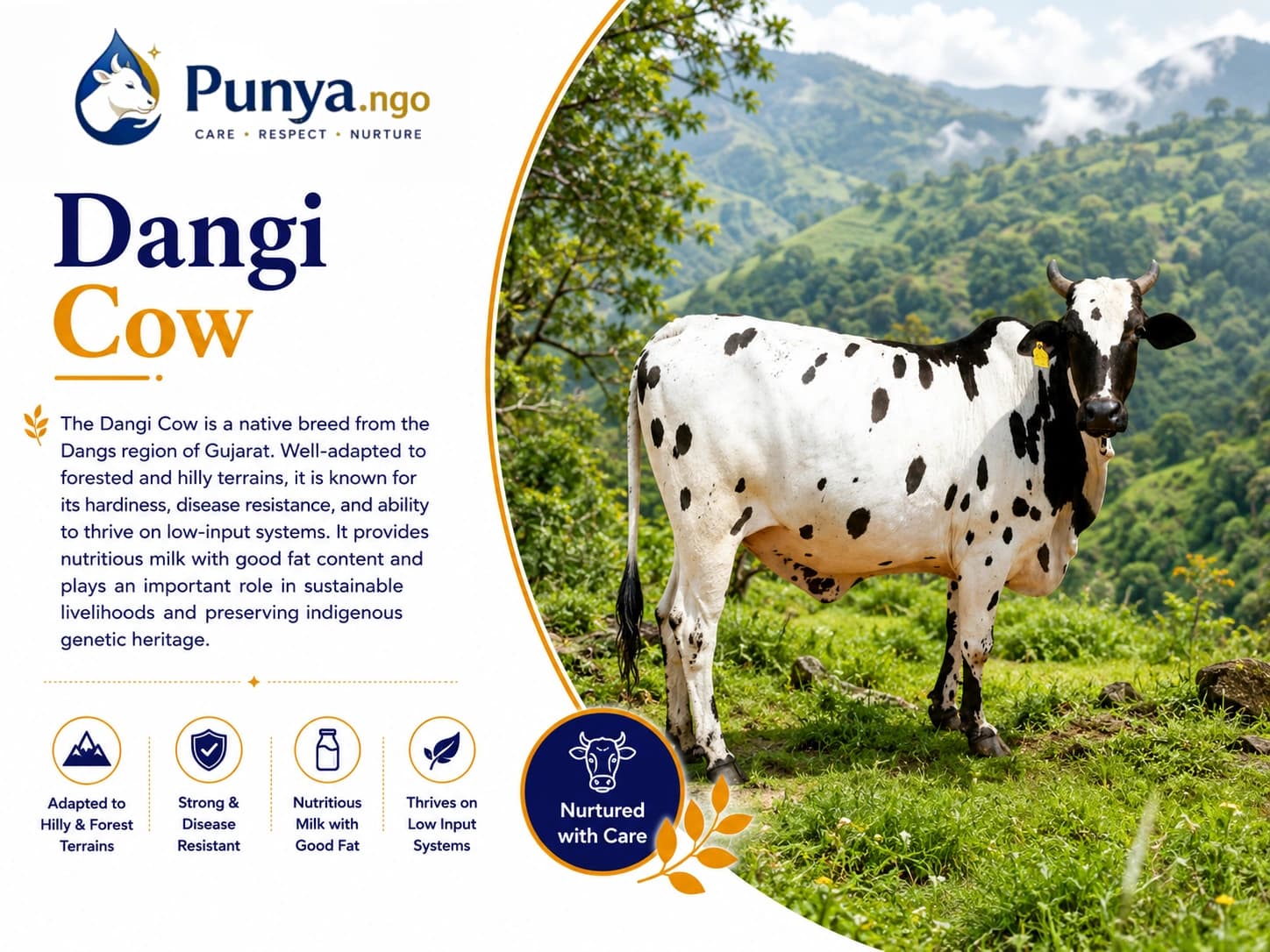
The Dangi Cow Breed in India has a sturdy and functional body structure that reflects its working ability and environmental adaptability.
Appearance
- Medium-sized body
- White coat with black, brown, or red patches
- Strong legs and hooves
- Well-developed hump
- Broad chest
- Medium-length horns
- Alert appearance
The breed's physical build helps it move efficiently across uneven terrain and wet agricultural fields.
Takeaway: Dangi cattle are built for endurance, strength, and long-term productivity.
Milk Production and Dairy Value
Milk production in the Dangi Cow Breed in India is generally moderate. Farmers often keep the breed because it can provide consistent milk while also serving other agricultural purposes.
Dairy Characteristics
- Moderate milk yield
- Suitable for household dairy needs
- Supports small-scale dairy farming
- Milk often contains good fat content
- Performs well under low-input systems
Milk production depends on several factors:
- Genetics
- Nutrition
- Health management
- Lactation stage
- Environmental conditions
Although not a specialized dairy breed, Dangi cows can be a dependable source of milk for rural households.
Takeaway: Dangi cows offer practical and reliable milk production rather than exceptionally high yields.
Temperament and Behavior
One of the strengths of the Dangi Cow Breed in India is its manageable temperament.
Behavioral Traits
- Calm nature
- Easy handling
- Farmer-friendly
- Adaptable to grazing systems
- Suitable for family-operated farms
Their cooperative behavior helps reduce management challenges, especially for small and medium-scale farmers.
Takeaway: Dangi cattle are generally calm, making day-to-day management easier.
Climate Adaptability
Climate adaptability is one of the defining characteristics of the Dangi Cow Breed in India.
Environmental Advantages
- Performs well in humid climates
- Adapted to heavy rainfall
- Tolerates heat effectively
- Handles seasonal changes well
- Suitable for rugged terrain
This adaptability allows the breed to remain productive even in areas where environmental stress affects other cattle breeds.
Why It Matters
For farmers in rainfed and hilly regions, adaptability can be just as important as milk production. Dangi cattle provide that balance.
Takeaway: Climate resilience is one of the most valuable traits of the Dangi breed.
Feeding and Management
Proper feeding and management help maximize the productivity of the Dangi Cow Breed in India.
Feeding Requirements
A balanced diet should include:
- Green fodder
- Dry fodder
- Crop residues
- Mineral supplements
- Clean drinking water
- Seasonal grazing resources
Housing Management
- Clean shelter
- Good ventilation
- Proper drainage during monsoon
- Dry resting area
Health Care
- Regular vaccination
- Deworming
- Hoof maintenance
- Veterinary checkups
Breeding Management
- Select healthy breeding stock
- Maintain breeding records
- Monitor reproductive performance
Takeaway: Good nutrition and routine care significantly improve productivity and longevity.
Advantages of Dangi Cow Breed in India
The breed offers several practical benefits for Indian farmers.
Major Advantages
Excellent Adaptability
Thrives in high-rainfall and humid conditions.
Dual-Purpose Utility
Provides both milk and agricultural support.
Low Input Requirement
Can perform reasonably well under traditional farming systems.
Strong Disease Resistance
Generally adapts well to local environmental conditions.
Sustainable Farming Value
Fits naturally into integrated farming systems.
Strong Working Ability
Traditionally valued for farm labor in difficult terrain.
Takeaway: Dangi cattle combine resilience, versatility, and sustainability in one breed.
Limitations or Practical Considerations
Like any cattle breed, the Dangi Cow Breed in India has certain limitations.
Considerations
- Milk yield is lower than specialized dairy breeds.
- Not ideal for intensive commercial dairy farms.
- Productivity varies with nutrition and management.
- Quality breeding stock may not be equally available in all regions.
Farmers focused solely on maximizing milk production may consider specialized dairy breeds instead.
Takeaway: Dangi cattle prioritize adaptability and utility over maximum milk output.
Best Use Cases for Farmers
The Dangi Cow Breed in India is especially suitable for specific farming situations.
Ideal For
- Small farmers
- Medium-sized farms
- Rainfed agriculture
- Organic farming systems
- Mixed crop-livestock operations
- Sustainable dairy farming
- Hilly and high-rainfall regions
Less Suitable For
- Intensive commercial dairy operations
- Farms focused only on high milk production
Takeaway: Dangi cattle perform best where resilience and practicality are more important than peak milk yield.
Comparison with Similar Indian Cow Breeds
Dangi vs Gir Cow
| Feature | Dangi | Gir |
|---|---|---|
| Origin | Maharashtra | Gujarat |
| Main Utility | Dual-purpose | Dairy |
| Milk Production | Moderate | Higher |
| Climate Adaptability | Excellent in rainy areas | Good |
| Farm Work Ability | Strong | Moderate |
| Suitable For | Mixed farming | Dairy-focused farming |
The Gir breed is often preferred for higher milk production, while the Dangi Cow Breed in India is valued for adaptability and work performance under challenging environmental conditions.
Takeaway: Gir is generally better for milk production, while Dangi excels in rugged and high-rainfall farming regions.
Conclusion
The Dangi Cow Breed in India remains one of the country's valuable indigenous cattle breeds due to its adaptability, resilience, and practical utility. Developed in western India's challenging climatic conditions, the breed continues to support sustainable agriculture and rural livelihoods.
While it may not compete with specialized dairy breeds in terms of milk volume, its ability to thrive in difficult environments makes it a dependable choice for many farmers. For those seeking a balanced combination of milk production, work capacity, and climate suitability, the Dangi cow remains a relevant and practical option.
Takeaway: The Dangi cow is a reliable indigenous breed that delivers long-term value through adaptability, utility, and sustainable performance.
FAQs
What is the Dangi Cow Breed in India?
The Dangi cow is an indigenous Indian cattle breed known for adaptability, moderate milk production, and agricultural utility.
Where is the Dangi cow mainly found?
It is mainly found in Maharashtra and nearby regions of western India.
Is the Dangi cow suitable for dairy farming?
Yes, it is suitable for small-scale and traditional dairy farming, although it is not a high-yield dairy breed.
Why is the Dangi breed popular among farmers?
Farmers value it for its climate adaptability, work capacity, and ability to thrive under low-input conditions.
Does the Dangi cow tolerate heat well?
Yes, the breed generally has good heat tolerance and environmental adaptability.
Is the Dangi cow suitable for organic farming?
Yes, its hardiness and low-input requirements make it suitable for organic and sustainable farming systems.
What should Dangi cows be fed?
They should receive balanced nutrition through green fodder, dry fodder, grazing, mineral supplements, and clean water.
What is the biggest advantage of the Dangi Cow Breed in India?
Its greatest advantage is its ability to remain productive in high-rainfall, humid, and challenging farming environments.