Gangatiri Cow Breed in India | Guide
Learn about the Gangatiri Cow Breed in India, including origin, milk yield, characteristics, adaptability, feeding, management, and farming benefits.
Gangatiri Cow Breed in India: Origin, Milk Production, Characteristics, and Farming Value
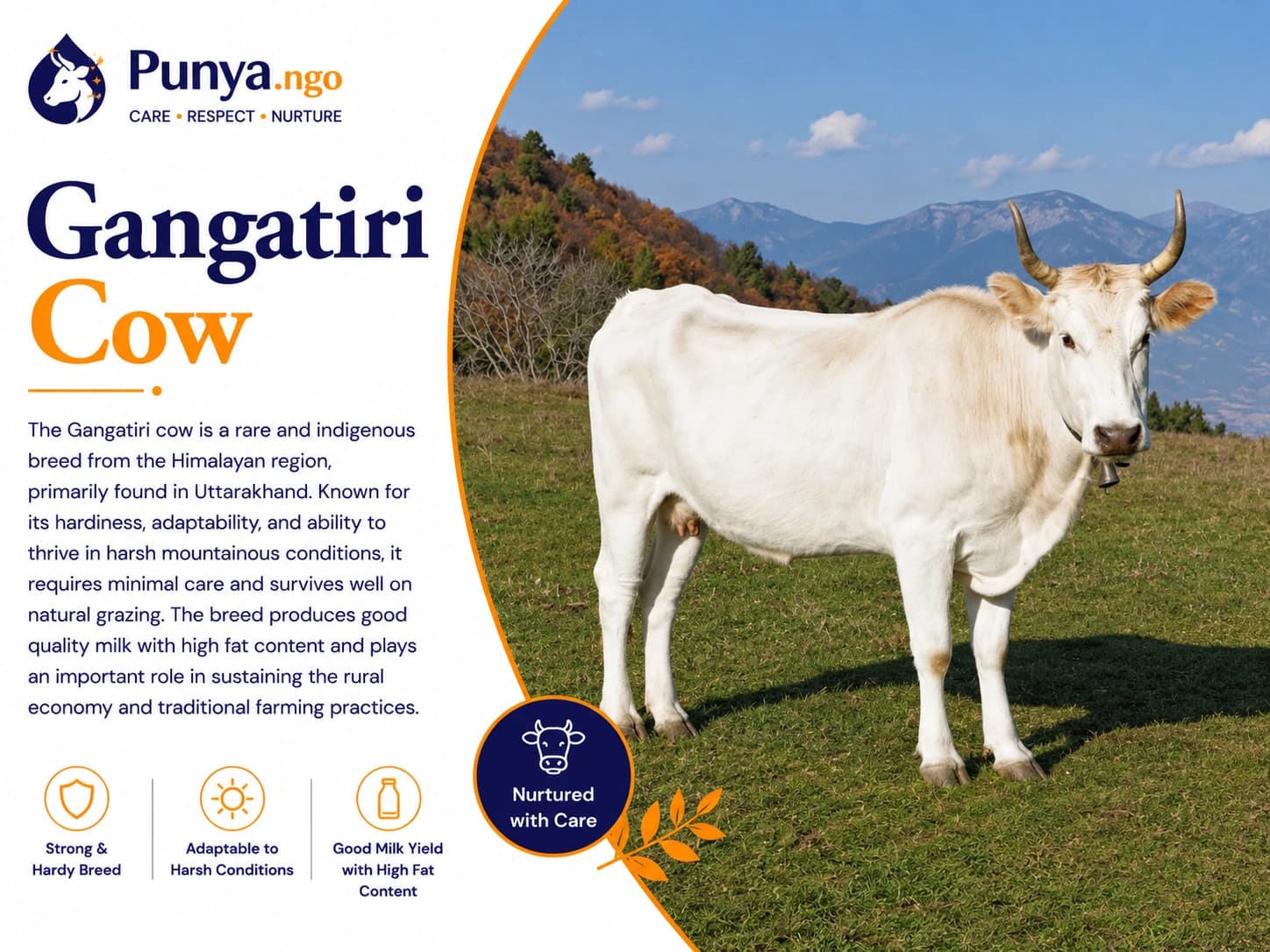
The Gangatiri Cow Breed in India is an indigenous cattle breed primarily found in the fertile Gangetic plains of eastern Uttar Pradesh and western Bihar. Known for its adaptability, moderate milk production, strong work ability, and resilience under local farming conditions, this breed remains an important asset for rural farmers. It is valued for providing both milk and agricultural utility, making it a practical choice for mixed farming systems.
Takeaway: The Gangatiri Cow Breed in India is a hardy dual-purpose indigenous breed valued for milk production and farm utility.
What is Gangatiri Cow Breed in India?
The Gangatiri Cow Breed in India is a recognized indigenous breed of Indian cattle developed naturally in the Gangetic region. It is classified as a dual-purpose breed because it supports both dairy farming and agricultural work.
Farmers appreciate Gangatiri cattle for their ability to perform well under traditional management systems, utilize locally available feed resources efficiently, and maintain good health under varying environmental conditions.
Takeaway: Gangatiri is a versatile desi cow breed that combines milk production with practical farming utility.
Origin and Native Region
The Gangatiri Cow Breed in India originated in the Gangetic plains, especially in districts located along the border regions of eastern Uttar Pradesh and western Bihar.
Over generations, the breed adapted to local climatic conditions, agricultural practices, and available feed resources, resulting in a strong and resilient indigenous cattle population.
Native Distribution
- Eastern Uttar Pradesh
- Western Bihar
- Gangetic river basin regions
- Rural mixed-farming zones
The breed remains closely associated with traditional farming communities living near the Ganga River.
Takeaway: Gangatiri cattle evolved naturally in the Gangetic plains and are highly adapted to local conditions.
Physical Characteristics
The Gangatiri Cow Breed in India possesses several identifiable physical features that distinguish it from other Indian cattle breeds.
| Characteristic | Description |
|---|---|
| Body Size | Medium to large |
| Coat Color | White, grey, or white with black patches |
| Build | Strong and muscular |
| Horns | Medium-sized and curved |
| Hump | Well-developed |
| Legs | Strong and sturdy |
| Ears | Medium-sized |
| Tail | Long with black switch |
The breed's physical structure contributes to its endurance, work ability, and adaptability.
Takeaway: Gangatiri cattle have a sturdy body structure suited for both milk production and agricultural work.
Milk Production and Dairy Value
One of the major strengths of the Gangatiri Cow Breed in India is its dependable milk production under field conditions.
Although it is not a specialized high-yield dairy breed, it provides satisfactory milk output while requiring relatively low inputs compared to many commercial dairy breeds.
Milk Production Features
- Moderate milk yield
- Suitable for household dairy needs
- Performs well under traditional feeding systems
- Good reproductive efficiency
- Supports small-scale dairy farming
Milk yield can vary depending on nutrition, genetics, management, and overall herd health.
Dairy Farming Value
For many rural farmers, reliability is often more important than maximum milk production. Gangatiri cows offer steady milk output while remaining relatively easy to manage.
Takeaway: Gangatiri cattle provide reliable milk production with manageable feeding and care requirements.
Temperament and Behavior
The Gangatiri Cow Breed in India is generally known for its calm and manageable temperament.
Common Behavioral Traits
- Docile nature
- Easy handling
- Good adaptability to human interaction
- Strong maternal instincts
- Suitable for family-operated farms
Their calm behavior makes them easier to manage compared to more temperamental cattle.
Takeaway: Gangatiri cattle are farmer-friendly and relatively easy to handle.
Climate Adaptability
Climate adaptability is one of the most valuable characteristics of the Gangatiri Cow Breed in India.
The breed has evolved under conditions that include:
- Hot summers
- Humid monsoons
- Seasonal feed fluctuations
- Variable temperatures
Adaptation Strengths
- Good heat tolerance
- Strong adaptability to local environments
- Efficient use of available fodder
- Better resilience than many exotic breeds
- Suitable for rural farming systems
These qualities help farmers maintain productive cattle even in challenging conditions.
Takeaway: Gangatiri cattle are well suited to the climatic conditions of northern India's Gangetic plains.
Feeding and Management
Proper feeding and management play a crucial role in maximizing the productivity of the Gangatiri Cow Breed in India.
Recommended Feeding Practices
- Green fodder
- Dry fodder
- Crop residues
- Seasonal grasses
- Mineral mixtures
- Clean drinking water
Management Guidelines
- Routine vaccination
- Deworming programs
- Clean housing
- Proper breeding management
- Adequate ventilation
Even though the breed is hardy, consistent management improves milk production and reproductive performance.
Takeaway: Balanced nutrition and preventive healthcare are key to maintaining productive Gangatiri cattle.
Advantages of Gangatiri Cow Breed in India
The breed offers several practical benefits for Indian farmers.
Key Advantages
- Indigenous genetic strength
- Moderate milk production
- Good heat tolerance
- Adaptation to local conditions
- Lower maintenance requirements
- Strong disease resistance
- Dual-purpose utility
- Efficient use of local feed resources
These qualities make the breed attractive for sustainable and low-input farming systems.
Takeaway: Gangatiri cattle combine resilience, utility, and dependable productivity.
Limitations or Practical Considerations
Like any livestock breed, the Gangatiri Cow Breed in India has certain limitations.
Practical Considerations
- Milk yield is lower than specialized dairy breeds
- Availability of quality breeding stock may be limited in some regions
- Productivity depends on proper nutrition and care
- Large commercial dairy farms may prefer higher-yielding breeds
Understanding these realities helps farmers make informed breed-selection decisions.
Takeaway: Gangatiri cattle prioritize adaptability and sustainability over maximum milk production.
Best Use Cases for Farmers
The Gangatiri Cow Breed in India is particularly suitable for farmers seeking a balanced and practical livestock option.
Ideal Farming Situations
- Smallholder dairy farms
- Mixed crop-livestock systems
- Traditional rural agriculture
- Organic farming operations
- Low-input farming environments
- Indigenous breed conservation programs
The breed performs best where resilience and versatility are valued alongside milk production.
Takeaway: Gangatiri cattle are ideal for sustainable, resource-efficient farming systems.
Comparison with Similar Indian Cow Breeds
Gangatiri vs Sahiwal
| Feature | Gangatiri | Sahiwal |
|---|---|---|
| Primary Use | Dual-purpose | Dairy-focused |
| Milk Yield | Moderate | Higher |
| Adaptability | Excellent | Excellent |
| Maintenance | Lower | Moderate |
| Rural Utility | High | Moderate |
| Farm Work Ability | Better | Lower |
While Sahiwal is preferred when higher milk production is the primary objective, Gangatiri offers greater versatility in mixed farming environments.
Takeaway: Sahiwal excels in dairy production, while Gangatiri provides a better balance between milk and farm utility.
Conclusion
The Gangatiri Cow Breed in India represents an important part of India's indigenous cattle heritage. Developed in the Gangetic region, the breed is known for its adaptability, moderate milk production, climate resilience, and practical utility in rural farming systems.
For farmers seeking a dependable desi cow capable of thriving under local conditions, Gangatiri remains a valuable choice. While it may not compete with specialized dairy breeds in terms of milk yield, it offers long-term advantages through hardiness, versatility, and lower management demands.
Takeaway: The Gangatiri Cow Breed in India is a resilient indigenous breed that delivers balanced value through milk production, adaptability, and farm utility.
FAQs About Gangatiri Cow Breed in India
1. What is the Gangatiri Cow Breed in India known for?
It is known for moderate milk production, adaptability, and dual-purpose utility in rural farming systems.
2. Where is the Gangatiri breed mainly found?
The breed is primarily found in eastern Uttar Pradesh and western Bihar.
3. Is Gangatiri a dairy breed?
It is considered a dual-purpose breed that supports both milk production and agricultural work.
4. How adaptable is the Gangatiri breed?
The breed has excellent adaptability to heat, humidity, and local farming conditions.
5. Is the Gangatiri breed suitable for small farmers?
Yes, its low-maintenance nature makes it suitable for small and medium-scale farmers.
6. What type of feed is best for Gangatiri cattle?
Green fodder, dry fodder, crop residues, mineral supplements, and clean water are recommended.
7. How does Gangatiri compare with Sahiwal cattle?
Sahiwal generally produces more milk, while Gangatiri offers stronger dual-purpose utility and adaptability.
8. Why are indigenous breeds like Gangatiri important?
They support sustainable farming through climate resilience, disease resistance, and efficient utilization of local resources.