Ghumusari Cow Breed in India | Complete Guide
Learn about the Ghumusari Cow Breed in India, its origin, characteristics, milk production, adaptability, advantages, and farming value.
Ghumusari Cow Breed in India: Origin, Characteristics, Milk Production, and Farming Value
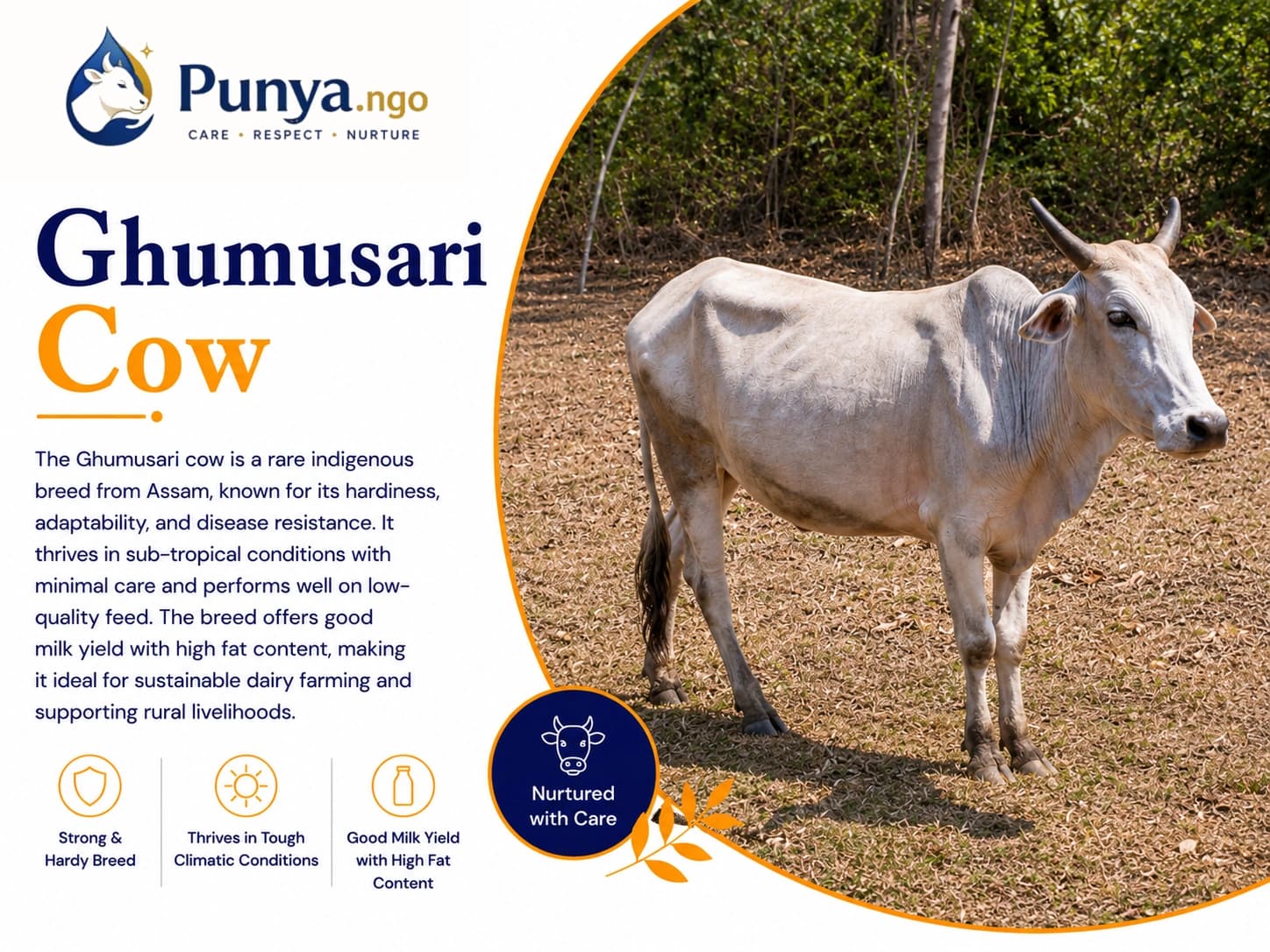
Ghumusari Cow Breed in India is an indigenous cattle breed associated with the eastern region of India, particularly parts of Odisha. Known for its adaptability to local conditions and usefulness in rural farming systems, this desi cow breed has traditionally supported small and marginal farmers through milk production, agricultural work, and overall farm sustainability.
While it is not among the most widely commercialized Indian cattle breeds, the Ghumusari cow remains valuable in areas where resilience, low-input management, and climate adaptability are important.
Takeaway: The Ghumusari Cow Breed in India is valued for its adaptability, utility, and suitability for traditional rural farming systems.
What is Ghumusari Cow Breed in India?
The Ghumusari Cow Breed in India is a native cattle breed developed through generations of adaptation to local environmental conditions. Like many indigenous breeds, it has evolved to thrive under relatively simple management practices and local feeding systems.
Farmers have traditionally relied on this breed for multiple purposes, including milk production and agricultural support. Its ability to perform under local climatic conditions makes it an important part of regional livestock heritage.
Takeaway: Ghumusari is an indigenous breed known for practical utility and adaptation rather than intensive commercial production.
Origin and Native Region
The Ghumusari Cow Breed in India is primarily associated with Odisha, particularly areas that historically formed part of the Ghumusar region. Over time, local farming communities maintained and developed the breed through selective breeding and traditional husbandry practices.
Native Distribution
| Aspect | Details |
|---|---|
| Breed Type | Indigenous Indian cattle |
| Native State | Odisha |
| Traditional Use | Milk and farm utility |
| Farming System | Rural and smallholder farming |
| Adaptability | High adaptability to local conditions |
The breed developed under local environmental pressures, which contributed to its hardiness and ability to survive in challenging farming conditions.
Takeaway: The breed's roots in Odisha have shaped its strong adaptation to regional farming environments.
Physical Characteristics
The Ghumusari Cow Breed in India displays typical characteristics associated with many indigenous Indian cattle breeds.
Key Physical Features
- Medium-sized body structure
- Strong legs and sturdy frame
- Well-developed hump in males
- Moderately developed dewlap
- Alert facial expression
- Strong hooves suited to rural terrain
- Generally hardy appearance
Coat color can vary among animals, and local populations may show some differences based on breeding practices and regional influences.
Quick Overview
| Characteristic | Description |
|---|---|
| Body Size | Medium |
| Build | Strong and compact |
| Horns | Present, varying shapes |
| Hump | Moderately developed |
| Heat Tolerance | Good |
| Disease Resistance | Generally strong |
Takeaway: The breed is built for endurance, mobility, and long-term performance in rural conditions.
Milk Production and Dairy Value
The Ghumusari Cow Breed in India is generally considered a moderate milk-producing indigenous breed. While it does not match specialized dairy breeds in milk yield, it can produce milk consistently under low-input farming systems.
Dairy Characteristics
- Suitable for household milk needs
- Performs under traditional feeding systems
- Lower maintenance costs
- Consistent production in local environments
- Useful for small-scale dairy farming
Milk yield depends on nutrition, genetics, management practices, and overall animal health.
Takeaway: Ghumusari cows provide practical dairy value through dependable production and manageable feeding requirements.
Temperament and Behavior
The Ghumusari Cow Breed in India is generally known for a manageable and cooperative nature.
Behavioral Traits
- Calm temperament
- Easy handling under routine management
- Adapted to village farming systems
- Suitable for family-operated farms
- Performs well in mixed farming environments
Proper handling and regular interaction often improve animal behavior and productivity.
Takeaway: A calm temperament makes the breed suitable for small and medium-scale farmers.
Climate Adaptability
One of the strongest qualities of the Ghumusari Cow Breed in India is its ability to adapt to local environmental conditions.
Adaptation Strengths
- Good heat tolerance
- Performs well in humid climates
- Efficient use of local fodder
- Resilient under grazing systems
- Adapted to seasonal weather changes
These qualities help reduce management challenges in traditional farming regions.
Takeaway: Climate adaptability is one of the breed's most valuable traits.
Feeding and Management
Proper feeding and healthcare improve the productivity and longevity of the Ghumusari Cow Breed in India.
Feeding Recommendations
Green Fodder
- Seasonal grasses
- Napier grass
- Leguminous fodder crops
Dry Fodder
- Straw
- Hay
- Crop residues
Concentrates
- Oilseed cakes
- Grain mixtures
- Mineral supplements
Management Practices
- Clean drinking water
- Regular vaccination
- Deworming schedules
- Proper housing
- Routine health checks
Takeaway: Balanced nutrition and preventive healthcare help maximize breed performance.
Advantages of Ghumusari Cow Breed in India
Major Advantages
1. Indigenous Adaptation
Naturally suited to local environmental conditions.
2. Heat Tolerance
Performs effectively in warm climates.
3. Low Input Requirement
Can thrive with relatively simple management.
4. Rural Farming Compatibility
Works well within integrated farming systems.
5. Disease Resilience
Generally capable of handling local environmental stresses.
6. Sustainable Farming Value
Supports eco-friendly livestock production.
Takeaway: The breed combines resilience, adaptability, and economic practicality.
Limitations or Practical Considerations
Every breed has strengths and weaknesses, and the Ghumusari Cow Breed in India is no exception.
Considerations
- Lower milk yield compared to specialized dairy breeds
- Limited organized breeding programs
- Availability of quality breeding stock may vary
- Less suitable for intensive commercial dairy operations
Farmers should select the breed according to their production goals and local conditions.
Takeaway: Ghumusari is better suited for sustainable farming than intensive milk production systems.
Best Use Cases for Farmers
The Ghumusari Cow Breed in India is particularly suitable for:
- Smallholder dairy farming
- Rural livestock systems
- Integrated crop-livestock farms
- Low-input production systems
- Indigenous cattle conservation
- Areas with hot and humid climates
Takeaway: The breed performs best where sustainability and adaptability are more important than maximum milk output.
Comparison with Similar Indian Cow Breeds
| Feature | Ghumusari | Tharparkar | Gir |
|---|---|---|---|
| Origin | Odisha | Rajasthan | Gujarat |
| Climate Adaptability | High | High | High |
| Milk Yield | Moderate | Moderate to High | High |
| Management Needs | Low to Moderate | Moderate | Moderate |
| Rural Suitability | Excellent | Excellent | Good |
| Heat Tolerance | Strong | Strong | Strong |
Compared with Gir cattle, Ghumusari cattle generally require lower inputs and are better suited to traditional local farming systems, although Gir cattle usually produce more milk.
Takeaway: Ghumusari offers practicality and adaptability, while Gir focuses more on dairy productivity.
Conclusion
The Ghumusari Cow Breed in India is an important indigenous cattle breed that reflects the adaptability and resilience of Indian livestock. Its strengths lie in climate suitability, low-input management, rural farming compatibility, and sustainable production.
Although it may not be the first choice for high-output commercial dairies, it remains a valuable option for farmers seeking dependable cattle that perform well under local conditions.
Takeaway: The Ghumusari Cow Breed in India is a practical, climate-resilient, and sustainable choice for traditional and small-scale farming systems.
FAQs
1. What is the Ghumusari Cow Breed in India?
The Ghumusari cow is an indigenous cattle breed associated with Odisha and valued for adaptability and rural farming utility.
2. Which state is the Ghumusari breed mainly found in?
The breed is primarily found in Odisha.
3. Is Ghumusari a dairy breed?
Yes, it is used for milk production, although it is generally considered a moderate milk-producing indigenous breed.
4. Is the Ghumusari cow heat tolerant?
Yes, the breed is known for good heat tolerance and adaptation to warm climates.
5. Is Ghumusari suitable for small farmers?
Yes, its low-input requirements make it suitable for small and marginal farmers.
6. What type of feeding does the breed require?
The breed performs well on a combination of green fodder, dry fodder, concentrates, and mineral supplementation.
7. How does Ghumusari compare with Gir cattle?
Gir cattle generally produce more milk, while Ghumusari cattle are valued for adaptability and low-cost management.
8. Why is the Ghumusari Cow Breed in India important?
It helps preserve indigenous cattle genetics while supporting sustainable and climate-resilient farming systems.
Takeaway: Ghumusari cattle continue to provide value through adaptability, resilience, and practical utility in rural India.