Gir Cow Breed in India | Complete Guide
Learn about the Gir Cow Breed in India, its origin, milk production, characteristics, advantages, feeding, management, and farming value.
Gir Cow Breed in India: Origin, Milk Production, Benefits, and Farming Value
The Gir Cow Breed in India is one of the most respected indigenous cattle breeds for dairy farming because it combines good milk value, heat tolerance, and strong adaptability to Indian farm conditions. It is widely known as a desi cow breed from western India, and farmers value it not only for milk production but also for its calm nature and practical utility in rural farming.
For readers looking for a reliable Indian cattle breed that fits warmer climates and traditional dairy systems, the Gir cow stands out as a strong and time-tested choice.
Takeaway: The Gir Cow Breed in India is important because it is a native dairy breed known for utility, adaptability, and steady farm value.
What is Gir Cow Breed in India?
The Gir Cow Breed in India is an indigenous Indian cow breed mainly developed for milk production and local farm usefulness. It belongs to the zebu group of cattle and is recognized for its distinctive appearance, hardy body, and ability to handle heat better than many exotic breeds.
This breed has been used in rural farming for generations. In simple terms, the Gir cow is a desi cow that suits Indian weather, Indian feed conditions, and Indian dairy goals more naturally than many imported breeds.
Simple definition
A Gir cow is a native Indian dairy cow breed known for:
- strong heat tolerance
- decent milk yield
- calm temperament
- adaptability to dry and semi-dry regions
- usefulness in sustainable dairy farming
Takeaway: The Gir Cow Breed in India is a native dairy breed built for Indian conditions, not a foreign breed adapted later.
Origin and native region
The Gir Cow Breed in India originated in the Gir forest and surrounding areas of the Kathiawar region in Gujarat. This native region is one of the main reasons the breed developed strong climate resilience, because the animals evolved under heat, seasonal feed variation, and rural grazing conditions.
Gir cattle are closely linked with western India, especially Gujarat, but their value has spread across many dairy farms in India due to their practical traits. As an indigenous breed, the Gir cow represents the long history of Indian cattle breeding and rural dairy culture.
Why origin matters
A breed’s native region often explains its behavior, feeding needs, and climate suitability. The Gir cow’s background helps explain why it performs well in hot areas and why farmers often prefer it in low-input dairy systems.
Takeaway: The native region of the Gir Cow Breed in India explains its strength in heat, grazing, and local farming conditions.
Physical characteristics
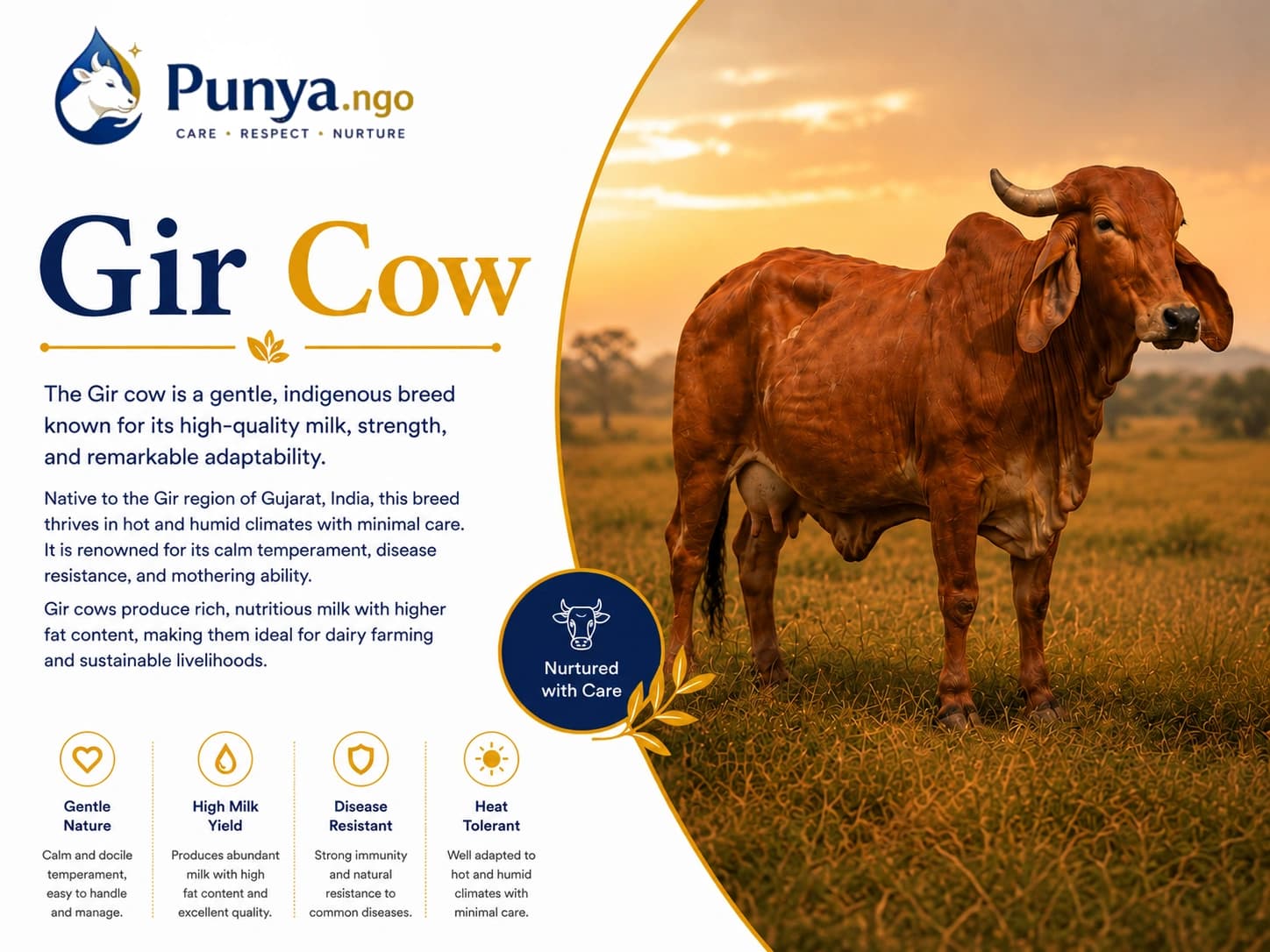
The Gir Cow Breed in India has a very recognizable look. It is known for a broad forehead, long ears, a prominent hump, and a strong body frame. The coat color may vary, but the breed often shows red, white, or mottled patterns.
Common physical traits
- medium to large body size
- long pendulous ears
- curved horns
- domed or broad forehead
- deep chest and strong legs
- loose skin, which helps with heat management
These features are not just cosmetic. They support the breed’s survival in warm climates and make it physically suited for field conditions and basic rural care.
Takeaway: The Gir Cow Breed in India is easy to identify by its large frame, long ears, and heat-adapted body structure.
Milk production and dairy value
The Gir Cow Breed in India is valued for milk production, especially in traditional and sustainable dairy farming systems. Its milk is often appreciated for quality rather than extreme volume alone. Many farmers choose Gir cows because they offer a balance between milk yield, animal health, and manageable care.
The breed is not usually the highest-volume milk producer compared with specialized exotic dairy cattle, but it is often seen as dependable, especially under Indian farm conditions where heat, feed quality, and management can vary.
Why dairy farmers value Gir cows
- good adaptability in hot regions
- useful milk output under practical farm conditions
- lower dependence on intensive management
- strong fit for indigenous dairy models
The milk from Gir cows is also popularly associated with Indian desi cow farming and small-scale rural dairy businesses.
Takeaway: The dairy value of the Gir Cow Breed in India lies in steady milk production, practical management, and strong suitability for local farms.
Temperament and behavior
The Gir Cow Breed in India is generally known for a calm and manageable temperament. This makes it easier to handle in dairy sheds, during feeding, and during routine health care. A calm cow is often more useful in daily farm operations because it reduces stress for both animals and farmers.
Gir cows are also known to be responsive and adaptable when managed properly. Like any cattle breed, behavior depends on handling, housing, and feeding. Good care usually results in easier management and better overall productivity.
Practical behavior notes
- usually docile when handled consistently
- suitable for family farms and small dairy units
- easier to manage in traditional systems
- benefits from calm, regular handling
Takeaway: The Gir Cow Breed in India is preferred by many farmers because its temperament supports smooth daily management.
Climate adaptability
One of the strongest reasons for the popularity of the Gir Cow Breed in India is its climate suitability. It handles heat better than many non-native dairy breeds, which makes it useful in many parts of India where summer temperatures can be harsh.
The Gir cow’s natural ability to tolerate warm weather and seasonal stress gives it an edge in regions where climate conditions are not ideal for high-maintenance cattle. This is especially important for rural farming, where cooling systems and intensive shed management may be limited.
Why climate adaptability matters
In Indian dairy farming, the breed must survive not only for milk production but also for long-term utility. The Gir cow’s heat tolerance helps farmers maintain productivity with lower environmental stress.
Takeaway: The Gir Cow Breed in India is well suited to hot climates, which makes it a practical indigenous dairy breed.
Feeding and management
Good feeding and proper management are essential for getting the best results from the Gir Cow Breed in India. Even though it is a hardy breed, it still needs balanced nutrition, clean water, hygienic housing, and regular health attention.
Feeding basics
A Gir cow typically does better with:
- green fodder
- dry roughage
- balanced concentrate feed
- mineral mixture
- clean and adequate water
Management basics
Good management usually includes:
- clean and ventilated shelter
- protection from extreme heat and rain
- regular milking hygiene
- vaccination and deworming
- observation for udder health and body condition
A common mistake is assuming that indigenous breeds require very little care. That is not true. A Gir cow may be hardier than some breeds, but strong production still depends on proper feeding and consistent management.
Takeaway: The Gir Cow Breed in India performs best when hardy breed traits are supported by clean housing, balanced feed, and regular care.
Advantages of Gir Cow Breed in India
The Gir Cow Breed in India offers several practical advantages for dairy farmers and rural households.
Main advantages
- strong heat tolerance
- indigenous and well adapted to Indian conditions
- useful for sustainable dairy farming
- calm and manageable temperament
- suitable for rural farming systems
- valued in desi cow milk markets
- better fit for low-to-moderate input farms
One of the biggest benefits is that the breed fits naturally into Indian environments. Farmers do not need to rely entirely on high-cost systems to keep the cows productive.
Takeaway: The biggest strength of the Gir Cow Breed in India is its balance of adaptability, utility, and farm practicality.
Limitations or practical considerations
No cattle breed is perfect for every situation, and the Gir Cow Breed in India is no exception. One honest limitation is that its milk yield may not match high-output exotic dairy breeds under intensive commercial systems.
Practical considerations
- not always the top choice for maximum commercial milk volume
- needs proper nutrition for steady performance
- farm results depend heavily on management quality
- breeding selection matters for productivity and health
For farmers focused only on peak milk volume, the Gir cow may seem modest. But for those who want resilience, better climate fit, and indigenous cattle value, it can be a smarter long-term choice.
Takeaway: The Gir Cow Breed in India is not the highest-yield breed for every business model, but it is often a more balanced choice for real farm conditions.
Best use cases for farmers
The Gir Cow Breed in India is especially useful for farmers who want a breed that is dependable, climate-friendly, and aligned with indigenous dairy farming.
Best suited for
- small and medium dairy farms
- rural farming households
- warm and dry regions
- farmers looking for desi cow breeds
- sustainable dairy setups
- low-to-moderate input dairy systems
It is also a sensible option for farmers who care about breed conservation and want to work with Indian cattle rather than rely only on crossbred animals.
Takeaway: The Gir Cow Breed in India is best for farmers who want a practical indigenous breed with long-term utility.
Comparison with similar Indian cow breeds
A useful comparison can be made between the Gir Cow Breed in India and the Sahiwal breed.
Gir cow vs Sahiwal
Both are respected indigenous dairy breeds and both are known for heat tolerance. However:
- Gir cows are especially recognized for their distinctive physical traits and strong adaptability in western Indian conditions.
- Sahiwal cows are often discussed for their dairy value and calm nature in different northern and western environments.
In practical terms, both are strong Indian cattle breeds, but the right choice depends on local climate, feed availability, and the farmer’s dairy goals.
What this comparison shows
The Gir cow is not alone in the indigenous dairy space. It belongs to a wider group of valuable Indian cow breeds that support climate-smart dairy farming.
Takeaway: Compared with Sahiwal, the Gir Cow Breed in India offers similar indigenous strength, with strong value in warmer western regions.
Conclusion
The Gir Cow Breed in India remains one of the most important indigenous cow breeds for farmers who value climate suitability, practical milk production, and rural farming utility. It is not just a cow breed with historical significance. It is a working, useful, and resilient animal that fits the needs of many Indian dairy systems.
For farmers who want a desi cow that can handle heat, adapt to local conditions, and support sustainable dairy farming, the Gir cow is a credible and practical choice. Its value comes from balance, not hype: steady milk, manageable temperament, and strong native adaptation.
Takeaway: The Gir Cow Breed in India is a dependable indigenous breed that offers real farming value, especially in warm Indian conditions.
FAQs
1. What is the Gir Cow Breed in India known for?
The Gir Cow Breed in India is known for heat tolerance, indigenous origin, manageable temperament, and practical dairy value.
2. Where did the Gir cow originate?
It originated in the Gir forest region and nearby areas of Gujarat.
3. Is the Gir cow good for milk production?
Yes, the Gir cow is useful for milk production, especially in farms that value indigenous breeds and climate adaptability.
4. Is the Gir cow suitable for hot climates?
Yes, it is one of the better Indian cattle breeds for warm weather and heat tolerance.
5. Is the Gir cow easy to manage?
Generally, yes. It is known for a calm temperament and works well in routine dairy management systems.
6. How is the Gir cow different from crossbred cows?
The Gir cow is an indigenous breed adapted to Indian conditions, while crossbred cows are usually developed for higher output but often need more intensive care.
7. What type of farmers should choose the Gir cow?
Farmers running rural dairy systems, small farms, or sustainable indigenous cattle units often find the Gir cow a practical choice.
8. Is the Gir cow a good desi cow breed?
Yes, it is one of the most respected desi cow breeds in India because of its native strength and farm usefulness.