Hallikar Cow Breed in India | A Complete Guide
Learn about the Hallikar Cow Breed in India, its Karnataka origin, draught utility, climate adaptability, milk value, management, and farming benefits.
Hallikar Cow Breed in India: Origin, Traits, Milk Value, and Farming Use
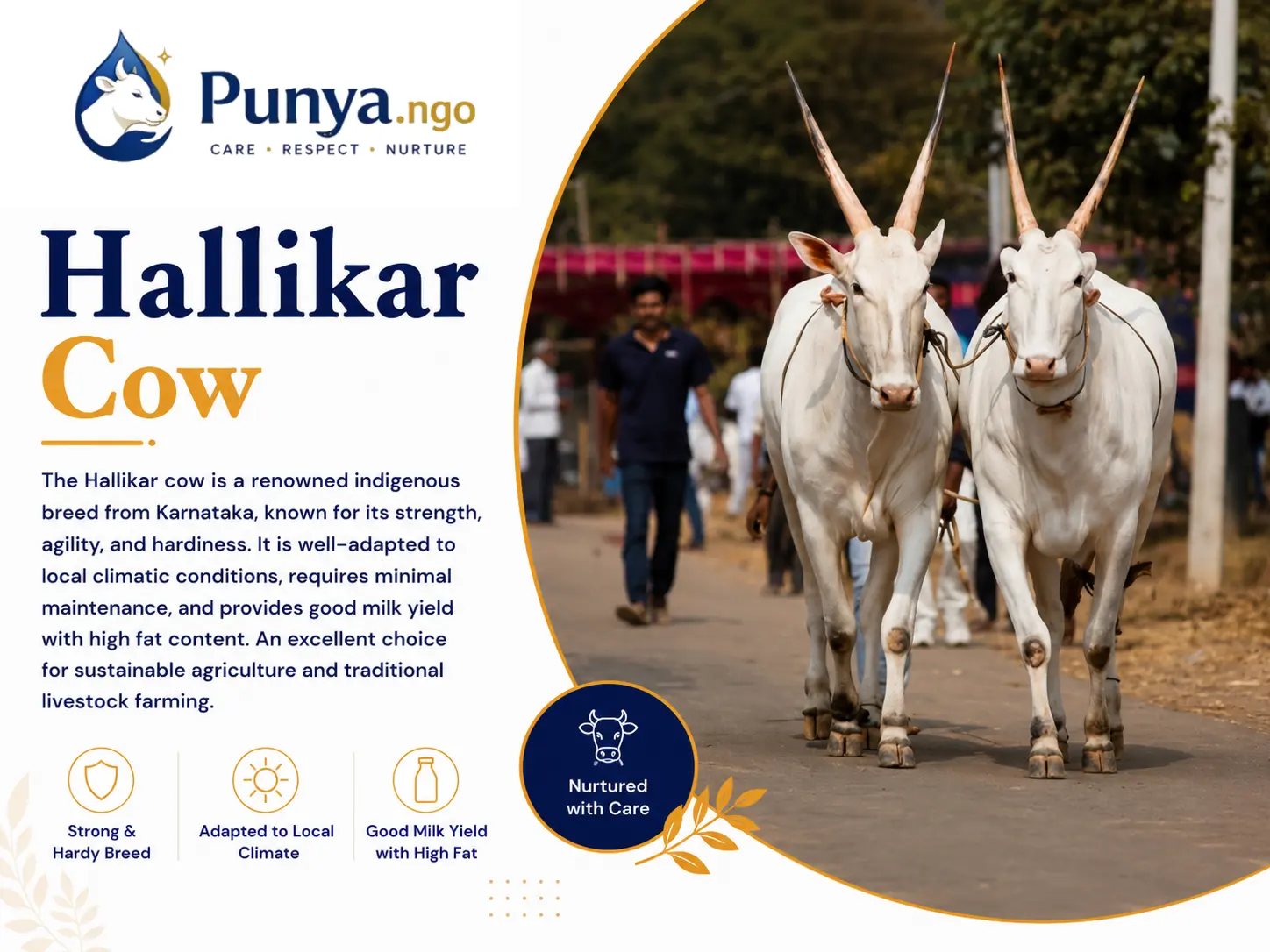
The Hallikar Cow Breed in India is one of the most recognized indigenous cattle breeds of Karnataka. Known primarily for its exceptional draught ability, endurance, and adaptability, this desi cow breed has supported rural farming communities for generations. While it is not considered a high-milk-producing breed, its strength, resilience, and ability to thrive in challenging conditions make it highly valuable in traditional farming systems.
Takeaway: The Hallikar cow is valued more for strength, endurance, and adaptability than for commercial milk production.
What is Hallikar Cow Breed in India?
The Hallikar Cow Breed in India is an indigenous cattle breed originating from Karnataka. It belongs to the Bos indicus group and is traditionally classified as a draught breed. Farmers have historically used Hallikar cattle for ploughing fields, pulling carts, and performing various agricultural tasks.
Its reputation comes from its stamina, efficiency, and ability to work long hours under hot climatic conditions.
Takeaway: Hallikar is primarily a working cattle breed developed for agricultural utility.
Origin and Native Region
The Hallikar Cow Breed in India originated in Karnataka, particularly in regions surrounding Mysuru, Mandya, Hassan, and Tumakuru districts.
The breed has a deep connection with the agricultural heritage of southern India. Many livestock experts consider Hallikar an important foundation breed that contributed to the development of other South Indian cattle breeds.
Native Areas
- Mysuru
- Mandya
- Hassan
- Tumakuru
- Surrounding regions of southern Karnataka
Because of its long history in these areas, Hallikar cattle are well adapted to local environmental and farming conditions.
Takeaway: Hallikar cattle are native to Karnataka and form an important part of the state's livestock heritage.
Physical Characteristics
The Hallikar Cow Breed in India possesses several distinctive physical features that make it easily recognizable.
| Characteristic | Description |
|---|---|
| Breed Type | Indigenous draught cattle |
| Body Size | Medium |
| Body Structure | Muscular and compact |
| Coat Color | Grey to dark grey |
| Hump | Well developed |
| Horns | Long and curved backward |
| Legs | Strong and sturdy |
| Build | Athletic and work-oriented |
Hallikar bulls are especially known for their strength and endurance. Their body structure reflects generations of selection for agricultural work rather than milk production.
Takeaway: Hallikar cattle have a strong, muscular build designed for endurance and farm work.
Milk Production and Dairy Value
Milk production in the Hallikar Cow Breed in India is generally modest when compared with specialized dairy breeds.
Milk Yield
- Suitable for household consumption
- Supports small-scale dairy needs
- Not considered a commercial high-yield dairy breed
Farmers who prioritize large milk output often choose dedicated dairy breeds. However, Hallikar cows can still provide useful quantities of milk while offering additional benefits through their hardiness and low maintenance requirements.
Takeaway: Hallikar cattle provide moderate milk production but are not primarily bred for dairy farming.
Temperament and Behavior
The Hallikar Cow Breed in India is known for its energetic yet manageable nature.
Common behavioral traits include:
- High stamina
- Strong work ethic
- Alert temperament
- Good responsiveness to training
- Reliable performance during farm operations
When properly handled, Hallikar cattle become dependable working animals capable of performing demanding agricultural tasks.
Takeaway: Hallikar cattle combine strength, alertness, and dependable working behavior.
Climate Adaptability
One of the biggest strengths of the Hallikar Cow Breed in India is its ability to adapt to harsh environmental conditions.
Adaptation Advantages
- Excellent heat tolerance
- Performs well in tropical climates
- Suitable for semi-arid regions
- Can utilize low-quality fodder efficiently
- Better resilience under stressful weather conditions
This adaptability makes Hallikar cattle particularly valuable for farmers operating in resource-limited areas.
Takeaway: Hallikar cattle are highly adapted to hot climates and challenging farming environments.
Feeding and Management
The Hallikar Cow Breed in India generally performs well under traditional feeding systems.
Feeding Requirements
- Green fodder
- Dry fodder
- Crop residues
- Grazing resources
- Mineral supplementation
- Clean drinking water
Management Practices
- Routine vaccination
- Parasite control
- Proper shelter
- Regular health monitoring
- Adequate exercise and grazing
Although Hallikar cattle are hardy, proper nutrition and management significantly improve their overall productivity and longevity.
Takeaway: Hallikar cattle thrive under low-input systems but still benefit from good management practices.
Advantages of Hallikar Cow Breed in India
The breed offers several practical benefits for farmers.
Key Advantages
- Exceptional draught power
- High endurance levels
- Strong heat tolerance
- Adaptability to local conditions
- Lower maintenance requirements
- Efficient use of available feed resources
- Important indigenous genetic resource
For many traditional farmers, these benefits outweigh the breed's lower milk production capacity.
Takeaway: Hallikar cattle provide strength, adaptability, and long-term farming utility.
Limitations or Practical Considerations
No cattle breed is perfect for every farming objective.
Limitations
- Lower milk yield compared to dairy breeds
- Less suitable for commercial dairy enterprises
- Economic value depends heavily on farm requirements
- Demand may vary depending on mechanization levels
Farmers should choose Hallikar cattle based on their specific farming goals rather than expecting high dairy returns.
Takeaway: Hallikar is best suited for utility-focused farming rather than intensive dairy production.
Best Use Cases for Farmers
The Hallikar Cow Breed in India is particularly suitable for:
Ideal Farming Situations
- Traditional farming systems
- Mixed farming operations
- Dryland agriculture
- Low-input farming
- Indigenous breed conservation
- Small and medium-sized farms
- Rural agricultural households
Its versatility makes it a practical option for farmers who value resilience and utility.
Takeaway: Hallikar performs best where strength, adaptability, and low-input management are priorities.
Comparison with Similar Indian Cow Breeds
Hallikar vs Amritmahal
| Feature | Hallikar | Amritmahal |
|---|---|---|
| Origin | Karnataka | Karnataka |
| Primary Purpose | Draught | Draught |
| Historical Significance | Foundation breed | Developed breed |
| Adaptability | Excellent | Excellent |
| Milk Production | Moderate | Moderate |
| Endurance | High | High |
Many livestock experts consider Hallikar to have contributed significantly to the development of the Amritmahal breed.
Takeaway: Hallikar and Amritmahal share similar strengths, but Hallikar is often viewed as the foundational native breed.
Conclusion
The Hallikar Cow Breed in India remains one of the country's most respected indigenous cattle breeds. Its value lies not in exceptional milk production but in its ability to support sustainable agriculture through strength, endurance, climate adaptability, and low-input management.
For farmers seeking a hardy desi cow capable of thriving in challenging environments, Hallikar continues to be a practical and reliable choice. Its historical significance and continued usefulness ensure that it remains an important part of India's livestock heritage.
Takeaway: Hallikar is a resilient indigenous breed that excels in utility, adaptability, and traditional farming systems.
FAQs
1. What is the primary use of the Hallikar Cow Breed in India?
The breed is primarily used for draught work such as ploughing fields and pulling carts.
2. Which state is the native home of Hallikar cattle?
Hallikar cattle originate from Karnataka.
3. Is Hallikar a high milk-producing breed?
No. It produces moderate quantities of milk and is mainly valued for its working ability.
4. Is Hallikar suitable for hot climates?
Yes. The breed is known for excellent heat tolerance and climate adaptability.
5. What color is the Hallikar cow?
Most Hallikar cattle are grey to dark grey in color.
6. Is Hallikar suitable for small farmers?
Yes. Its low maintenance needs and adaptability make it suitable for small and medium-scale farmers.
7. What type of farming system suits Hallikar cattle?
Traditional, mixed, and low-input farming systems are ideal for Hallikar cattle.
8. What is the biggest limitation of Hallikar cattle?
Their milk production is lower than specialized dairy breeds.