
Himachali Pahari Cow Breed in India | Guide
Learn about Himachali Pahari Cow Breed in India, its origin, milk production, adaptability, management, advantages, and farming value.
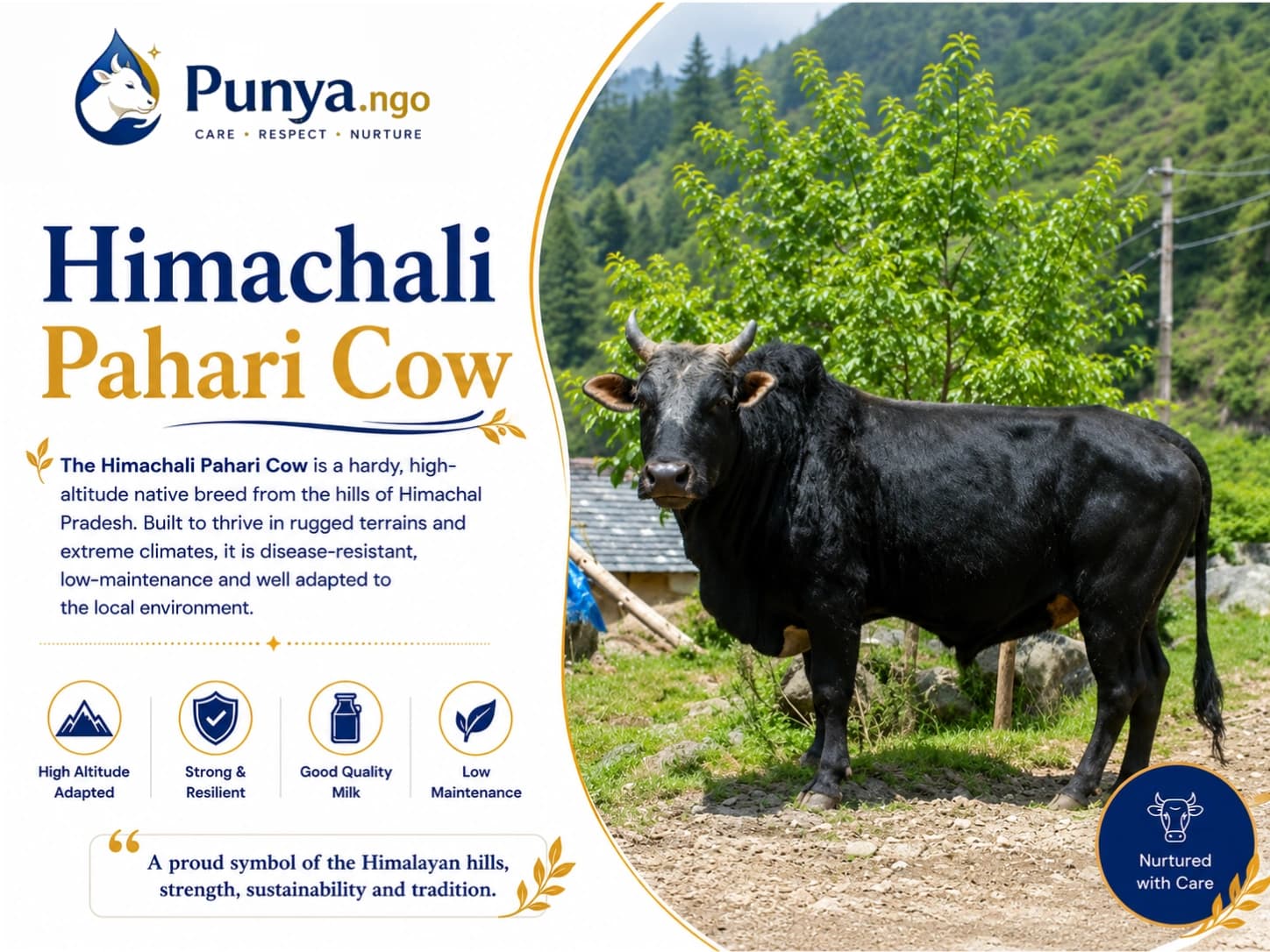
Himachali Pahari Cow Breed in India: Characteristics, Milk Yield, Farming Value & Management
Himachali Pahari Cow Breed in India is a traditional hill cattle breed found mainly in the mountainous regions of Himachal Pradesh. This indigenous breed has evolved under challenging terrain and climatic conditions, making it well-suited for rural farming systems in hilly areas. Although it is not known as a high-yielding dairy breed, it remains valuable for small farmers because of its hardiness, adaptability, low maintenance needs, and ability to thrive on locally available resources.
Takeaway: Himachali Pahari Cow Breed in India is valued more for adaptability, resilience, and suitability to hill farming than for high milk production.
What is Himachali Pahari Cow Breed in India?
Himachali Pahari Cow Breed in India refers to a group of indigenous hill cattle traditionally reared in the Himalayan regions of Himachal Pradesh. These cattle have adapted naturally over generations to survive and perform in steep landscapes, cold winters, and limited-resource farming systems.
Unlike specialized dairy breeds, Himachali Pahari Cow cattle are appreciated for their reliability, endurance, and ability to support traditional rural livelihoods.
Takeaway: The breed is an indigenous hill cattle population adapted to the unique environmental conditions of the Himalayas.
Origin and Native Region
The Himachali Pahari Cow Breed in India originates from the hill districts of Himachal Pradesh. It has historically been raised by farming communities living in mountainous regions where agriculture depends heavily on local resources and mixed farming practices.
Native Distribution
| Factor | Details |
|---|---|
| State | Himachal Pradesh |
| Geographic Region | Himalayan Hills |
| Farming System | Mixed Crop-Livestock Farming |
| Terrain | Mountainous and Sloping Areas |
| Traditional Utility | Milk, Manure, and Farm Support |
The breed evolved through natural adaptation rather than intensive selective breeding, resulting in cattle that are highly suited to local conditions.
Takeaway: The Himalayan origin of the breed explains its strong adaptability and rugged nature.
Physical Characteristics
The Himachali Pahari Cow Breed in India possesses several traits that help it perform efficiently in mountainous environments.
Key Physical Features
- Small to medium body size
- Strong and compact frame
- Well-developed legs
- Durable hooves suitable for rocky terrain
- Variable coat colors
- Alert facial appearance
- Good stamina and mobility
Their body structure emphasizes endurance and efficiency rather than maximum production.
Takeaway: Strong legs, compact size, and rugged build make the breed well-suited to hill farming.
Milk Production and Dairy Value
The Himachali Pahari Cow Breed in India is primarily a low to moderate milk-producing indigenous breed.
Dairy Characteristics
- Suitable for household milk requirements
- Performs under low-input systems
- Can utilize local fodder efficiently
- Maintains productivity under challenging conditions
- Supports small-scale dairy farming
Milk yield varies depending on nutrition, management, health status, and genetics. While not comparable to elite dairy breeds, the breed remains useful where adaptability matters more than maximum output.
Dairy Value Summary
| Aspect | Performance |
|---|---|
| Milk Yield | Moderate |
| Dairy Farming Suitability | Small-Scale |
| Feed Efficiency | Good |
| Commercial Dairy Potential | Limited |
| Household Milk Supply | Good |
Takeaway: The breed provides dependable milk production under low-input rural farming systems.
Temperament and Behavior
The Himachali Pahari Cow Breed in India is generally known for its manageable temperament and adaptability.
Behavioral Traits
- Calm nature
- Easy handling
- Good grazing instincts
- Active and alert
- Suitable for traditional farming systems
These qualities make the breed practical for small farmers who rely on grazing-based management.
Takeaway: Calm temperament and strong grazing behavior contribute to easy farm management.
Climate Adaptability
Adaptability is one of the strongest features of the Himachali Pahari Cow Breed in India.
Why the Breed Adapts Well
Cold Climate Tolerance
The breed performs effectively in cooler Himalayan climates and can handle seasonal temperature variations.
Mountain Terrain Adaptation
Strong limbs and durable hooves help animals navigate steep slopes and uneven paths.
Efficient Resource Utilization
These cattle can survive and remain productive on locally available fodder and natural grazing.
Local Environmental Adaptation
As an indigenous breed, it is naturally suited to the conditions of its native region.
Takeaway: Climate resilience and terrain adaptability are among the breed's greatest strengths.
Feeding and Management
Proper management helps maintain the health and productivity of the Himachali Pahari Cow Breed in India.
Feeding Practices
- Green fodder
- Seasonal grasses
- Dry fodder
- Crop residues
- Mineral mixture supplementation
- Continuous access to clean water
Management Practices
Shelter
Provide protection from excessive rain, snowfall, and strong winds.
Health Care
Follow routine vaccination and deworming schedules.
Grazing Management
Allow controlled grazing to maintain body condition and reduce feed expenses.
Breeding Selection
Choose healthy and productive animals for breeding purposes.
Takeaway: Balanced nutrition and preventive healthcare significantly improve long-term performance.
Advantages of Himachali Pahari Cow Breed in India
1. Excellent Hill Adaptation
Naturally suited to mountainous and hilly regions.
2. Low Maintenance Requirements
Requires fewer inputs than many specialized breeds.
3. Efficient Feed Utilization
Can thrive on locally available fodder resources.
4. Suitable for Small Farmers
Fits well into traditional and family-based farming systems.
5. Indigenous Genetic Resource
Helps preserve India's native cattle diversity.
6. Climate Resilience
Performs reliably under varying environmental conditions.
Takeaway: Adaptability, resilience, and low-input suitability make the breed valuable for rural farming.
Limitations or Practical Considerations
While the Himachali Pahari Cow Breed in India offers several benefits, farmers should also consider its limitations.
Practical Limitations
- Lower milk production compared to specialized dairy breeds
- Limited suitability for intensive dairy operations
- Productivity can vary between local populations
- Less commercial demand than high-yielding breeds
Farmers focused exclusively on maximizing milk production may find specialized dairy breeds more suitable.
Takeaway: The primary limitation is lower milk yield when compared with dedicated dairy breeds.
Best Use Cases for Farmers
The Himachali Pahari Cow Breed in India is particularly beneficial in specific farming situations.
Ideal Applications
- Smallholder farming
- Hill agriculture
- Sustainable farming systems
- Family dairy production
- Indigenous breed conservation
- Mixed farming operations
- Low-input livestock management
The breed performs best where environmental adaptation and sustainability are priorities.
Takeaway: The breed is ideal for farmers seeking reliability and sustainability in mountainous regions.
Comparison with Similar Indian Cow Breeds
Himachali Pahari vs Sahiwal
| Feature | Himachali Pahari | Sahiwal |
|---|---|---|
| Origin | Himachal Pradesh Hills | Punjab Region |
| Milk Production | Moderate | High |
| Terrain Adaptation | Excellent | Moderate |
| Feed Requirement | Lower | Moderate |
| Commercial Dairy Suitability | Limited | High |
| Climate Preference | Hills and Mountains | Plains and Warm Regions |
Sahiwal cattle are generally preferred for commercial milk production, while Himachali Pahari Cow Breed in India is better suited for difficult mountain environments.
Takeaway: Sahiwal excels in milk yield, whereas Himachali Pahari Cow excels in hill adaptability and resilience.
Conclusion
The Himachali Pahari Cow Breed in India is an important indigenous cattle breed that reflects the farming traditions of the Himalayan region. Its strength lies in adaptability, efficient resource utilization, ruggedness, and suitability for low-input farming systems.
Although it does not compete with specialized dairy breeds in terms of milk yield, it remains highly valuable for farmers living in hilly regions where resilience and sustainability matter most. As interest in indigenous livestock conservation continues to grow, the breed remains an important part of India's native cattle heritage.
Takeaway: Himachali Pahari Cow Breed in India is a practical, resilient, and sustainable cattle breed for hill farming systems.
FAQs
1. What is Himachali Pahari Cow Breed in India?
It is an indigenous hill cattle breed traditionally found in the mountainous regions of Himachal Pradesh.
2. Is Himachali Pahari Cow a good dairy breed?
It provides moderate milk production and is mainly suitable for household and small-scale dairy farming.
3. Where is the Cow breed commonly found?
The breed is primarily found in the hill districts of Himachal Pradesh.
4. What is the major strength of the Cow breed?
Its ability to thrive in mountainous terrain and challenging climatic conditions.
5. Is the breed suitable for commercial dairy farming?
It is generally better suited for small-scale and traditional dairy systems than intensive commercial dairying.
6. What feed is suitable for Himachali Pahari Cow cattle?
Green fodder, grasses, crop residues, dry fodder, mineral supplements, and clean water are commonly used.
7. How does Himachali Pahari Cow compare with Sahiwal cattle?
Sahiwal produces more milk, while Himachali Pahari Cow performs better in hill environments.
8. Why is conservation of indigenous Cow breeds important?
It helps preserve valuable traits such as climate adaptability, disease resilience, and sustainable farming suitability.