Khariar Cow Breed in India | Complete Guide
Learn about Khariar Cow Breed in India, its origin, characteristics, milk production, adaptability, advantages, and farming value.
Khariar Cow Breed in India: Origin, Characteristics, Milk Production, and Farming Value
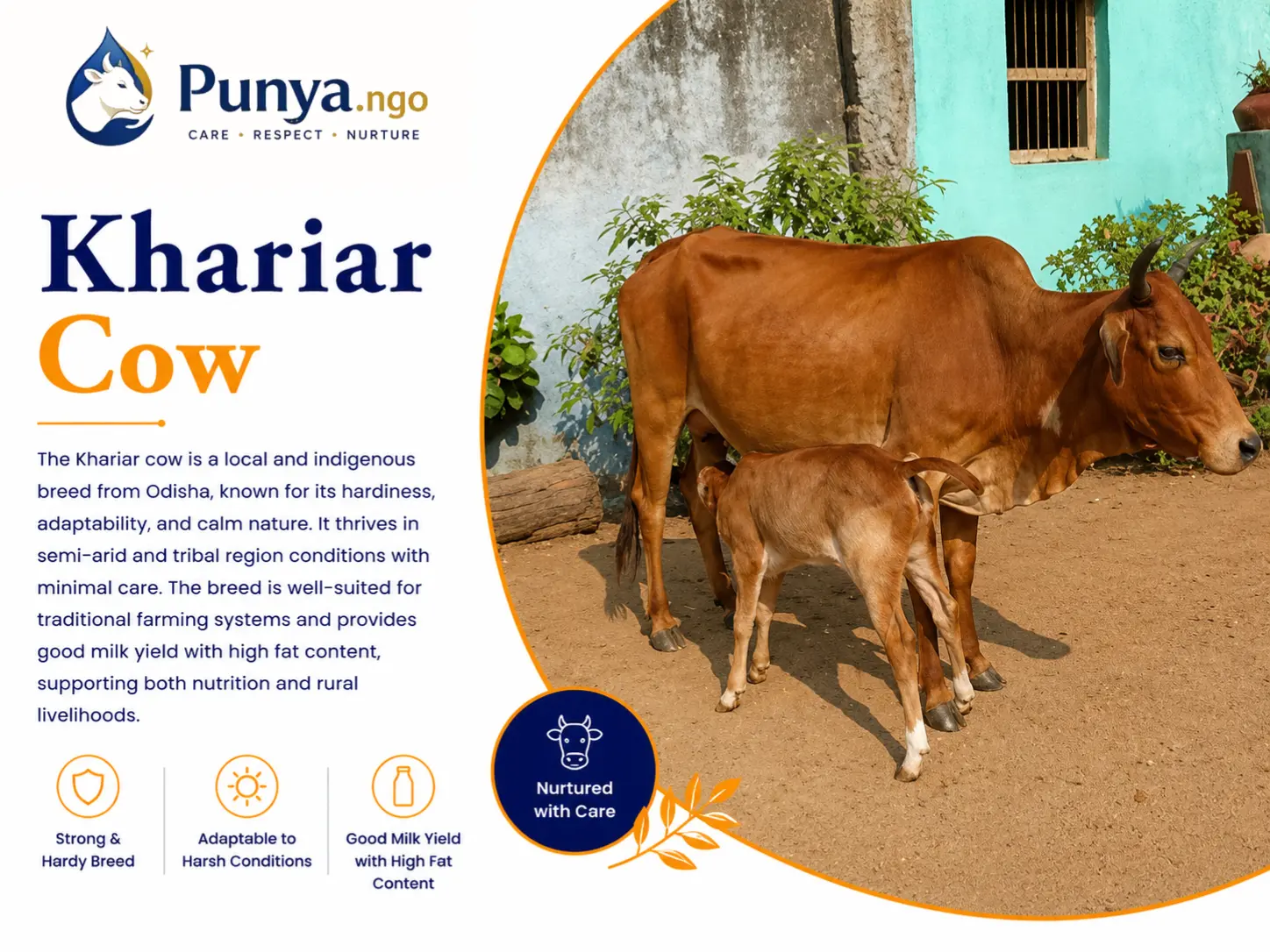
Khariar Cow Breed in India is an indigenous cattle breed traditionally associated with the Khariar region of Odisha. Known for its adaptability to local conditions, resilience, and utility in rural farming systems, this breed has supported farmers for generations. Although it is not considered a high-yield dairy breed, it remains valuable because of its hardiness, low maintenance needs, and ability to thrive under traditional farming conditions.
Takeaway: Khariar Cow Breed in India is a hardy indigenous breed valued for adaptability, sustainability, and rural farming utility.
What is Khariar Cow Breed in India?
The Khariar Cow Breed in India is a native Indian cattle breed found primarily in parts of Odisha. It evolved over time through natural selection and local farming practices, resulting in cattle that are well adapted to the region's environmental conditions.
Like many indigenous breeds, Khariar cattle are appreciated for their disease resistance, heat tolerance, and ability to perform under low-input management systems.
Takeaway: Khariar is a multipurpose indigenous cattle breed known for resilience and adaptability.
Origin and Native Region
The breed derives its name from the Khariar area of Odisha, particularly in the western part of the state. This region experiences warm temperatures, seasonal rainfall, and predominantly agricultural livelihoods.
Local farmers traditionally maintained cattle that could survive harsh weather conditions, utilize local fodder resources, and contribute to household farming activities. These factors helped shape the breed's unique characteristics.
Quick Overview Table
| Feature | Details |
|---|---|
| Breed Name | Khariar |
| Breed Type | Indigenous Indian cattle |
| Native Region | Odisha |
| Primary Use | Milk and agricultural utility |
| Climate Suitability | Tropical and semi-arid conditions |
| Heat Tolerance | Good |
| Farming System | Rural and smallholder farming |
| Maintenance Level | Low to moderate |
Takeaway: The Khariar breed developed naturally in Odisha and is closely linked to traditional farming systems.
Physical Characteristics
The Khariar Cow Breed in India possesses several physical traits commonly found in indigenous Indian cattle breeds.
Key Physical Features
- Medium-sized body frame
- Strong and sturdy legs
- Durable hooves suitable for grazing
- Prominent hump, especially in males
- Compact and muscular structure
- Well-adapted skin for warm climates
- Moderate udder development in cows
- Active and alert appearance
Color patterns may vary among animals, and slight regional differences can be observed.
Takeaway: Khariar cattle are built for endurance, mobility, and long-term survival under field conditions.
Milk Production and Dairy Value
Milk production in the Khariar Cow Breed in India is generally moderate. Actual milk yield depends on genetics, feeding quality, management practices, and environmental conditions.
While the breed may not match specialized dairy breeds in production, it offers dependable milk output with relatively low maintenance costs.
Dairy Farming Value
- Suitable for household milk requirements
- Useful for small-scale dairy operations
- Performs well under traditional management
- Efficient use of local fodder resources
- Lower input costs compared to some high-producing breeds
For many rural farmers, overall sustainability matters as much as milk quantity.
Takeaway: Khariar cattle provide practical and sustainable milk production for small farming households.
Temperament and Behavior
The Khariar Cow Breed in India is generally known for a manageable and cooperative nature.
Common Behavioral Traits
- Calm temperament
- Easy handling under traditional systems
- Good adaptation to village environments
- Strong grazing instincts
- Suitable for family-operated farms
Proper handling and regular interaction further improve animal behavior.
Takeaway: Khariar cattle are generally easy to manage and fit well into traditional farming households.
Climate Adaptability
One of the strongest qualities of the Khariar Cow Breed in India is its ability to adapt to local climatic conditions.
Having evolved in a warm environment, the breed demonstrates natural tolerance to heat and seasonal fluctuations.
Adaptability Strengths
- Good heat tolerance
- Ability to graze over long distances
- Adaptation to local fodder availability
- Resilience during environmental stress
- Suitable for tropical farming conditions
These traits make the breed particularly useful in regions where weather conditions can be challenging.
Takeaway: Strong [climate}(https://en.wikipedia.org/wiki/Climate) adaptability is one of the biggest strengths of the Khariar breed.
Feeding and Management
Proper nutrition and care significantly influence the health and productivity of the Khariar Cow Breed in India.
Feeding Recommendations
- Green fodder whenever available
- Dry fodder during lean seasons
- Crop residues from farms
- Mineral mixture supplementation
- Continuous access to clean drinking water
Management Practices
- Maintain clean housing
- Follow regular vaccination schedules
- Conduct periodic health checks
- Provide shade during extreme heat
- Monitor reproductive health carefully
Even hardy breeds perform better when basic management practices are consistently followed.
Takeaway: Good feeding and routine management improve both productivity and animal welfare.
Advantages of Khariar Cow Breed in India
The breed offers several practical benefits that make it attractive to rural farmers.
Major Advantages
- Indigenous adaptation
- Good heat tolerance
- Lower maintenance requirements
- Suitable for low-input farming systems
- Efficient use of local feed resources
- Useful in mixed farming systems
- Strong survival ability
- Reliable performance under rural conditions
These qualities contribute to the breed's continued importance in traditional agriculture.
Takeaway: Khariar cattle offer resilience, adaptability, and cost-effective utility for farmers.
Limitations or Practical Considerations
Every cattle breed has strengths and limitations, and Khariar cattle are no exception.
Practical Considerations
- Milk yield is generally lower than specialized dairy breeds
- Productivity depends heavily on management quality
- Purebred animals may be difficult to locate in some regions
- Commercial dairy farms may prefer higher-producing breeds
Understanding these limitations helps farmers make informed decisions.
Takeaway: Khariar cattle are best suited for sustainable rural farming rather than intensive commercial dairy production.
Best Use Cases for Farmers
The Khariar Cow Breed in India is particularly suitable for farmers seeking dependable and adaptable livestock.
Ideal Farming Situations
- Small-scale dairy farming
- Mixed crop-livestock systems
- Resource-limited farms
- Traditional agricultural operations
- Farmers interested in indigenous cattle
- Areas with hot climatic conditions
The breed performs best where sustainability and adaptability are valued over maximum production.
Takeaway: Khariar cattle are ideal for low-input and sustainable farming systems.
Comparison with Similar Indian Cow Breeds
| Feature | Khariar | Tharparkar | Rathi |
|---|---|---|---|
| Origin | Odisha | Rajasthan | Rajasthan |
| Milk Production | Moderate | Higher | Higher |
| Heat Tolerance | Good | Excellent | Excellent |
| Maintenance Need | Low | Moderate | Moderate |
| Rural Suitability | High | High | High |
| Climate Adaptation | Strong | Strong | Strong |
Compared with Tharparkar and Rathi cattle, Khariar cows are generally more valued for local adaptability and survival under traditional farming conditions than for high milk production.
Takeaway: Khariar prioritizes resilience and practicality, while Tharparkar and Rathi are often selected for stronger dairy performance.
Conclusion
Khariar Cow Breed in India represents the strength of indigenous cattle developed through generations of adaptation to local environments. The breed's value lies in its resilience, heat tolerance, low-input management requirements, and suitability for rural farming systems.
Although it may not produce as much milk as specialized dairy breeds, it remains a dependable option for farmers seeking sustainable livestock that can thrive under practical field conditions.
Takeaway: The true strength of the Khariar breed lies in its adaptability, reliability, and long-term suitability for rural Indian agriculture.
FAQs
1. What is the Khariar Cow Breed in India?
The Khariar cow is an indigenous cattle breed from Odisha known for adaptability and rural farming utility.
2. Where does the Khariar breed originate?
The breed originates from the Khariar region of Odisha.
3. Is the Khariar cow suitable for dairy farming?
Yes, it is suitable for small-scale dairy farming and household milk production.
4. What is the main advantage of the Khariar breed?
Its biggest advantage is adaptability to local conditions with relatively low maintenance requirements.
5. Is the Khariar cow heat tolerant?
Yes, the breed demonstrates good heat tolerance and performs well in warm climates.
6. Is Khariar considered a desi cow breed?
Yes, it is an indigenous or desi cattle breed of India.
7. What type of farmers benefit most from Khariar cattle?
Smallholders, rural farmers, and mixed farming operations benefit most from the breed.
8. How does Khariar compare with Tharparkar cattle?
Khariar cattle are generally more focused on local adaptability, while Tharparkar cattle are often preferred for higher milk production.