Khillari Cow Breed in India | Complete Guide
Learn about the Khillari Cow Breed in India, its origin, milk yield, characteristics, farming value, adaptability, and management practices.
Khillari Cow Breed in India: Complete Guide to Origin, Milk Production, Farming Value, and Management
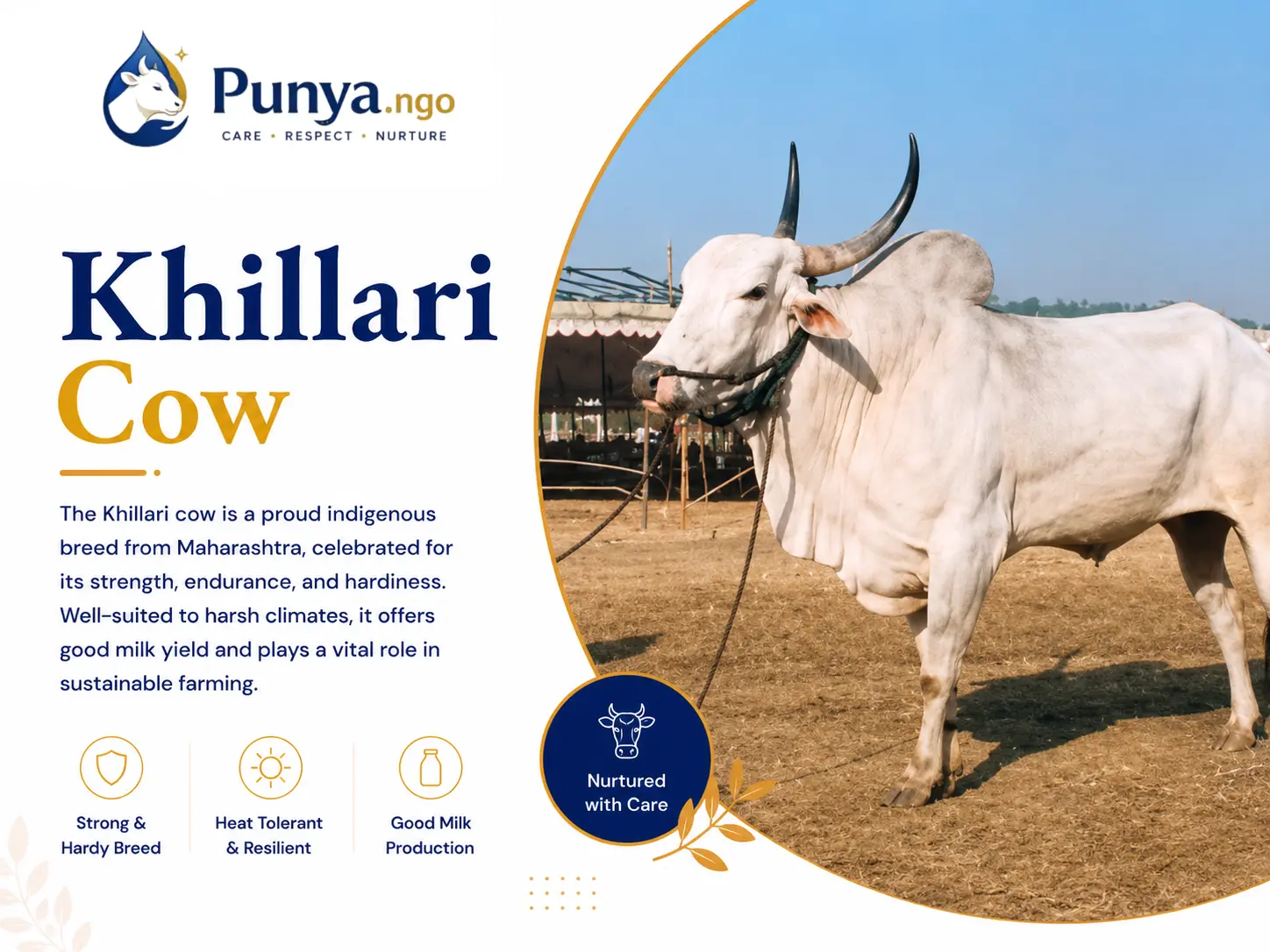
Khillari Cow Breed in India is one of the most respected indigenous cattle breeds of western India. It is primarily known for its exceptional strength, stamina, and ability to perform well in harsh climatic conditions. Originating from the dry regions of Maharashtra, this breed has played a significant role in traditional agriculture for generations.
Unlike specialized dairy breeds, Khillari cattle are valued mainly for their utility and adaptability. Their ability to thrive under low-input farming systems makes them an important asset for many rural farmers.
Takeaway: The Khillari Cow Breed in India is a hardy indigenous breed valued for strength, endurance, and adaptability rather than high milk production.
What is Khillari Cow Breed in India?
The Khillari Cow Breed in India is a native Indian cattle breed traditionally developed for agricultural work. Farmers have historically relied on Khillari cattle for plowing fields, transportation, and other farm operations due to their remarkable stamina and working ability.
Today, the breed remains relevant in areas where sustainable livestock farming and indigenous cattle conservation are important.
Quick Overview
| Feature | Details |
|---|---|
| Breed Type | Indigenous Indian cattle |
| Primary Purpose | Draught and utility |
| Native Region | Maharashtra |
| Milk Production | Moderate to low |
| Climate Suitability | Hot and semi-arid regions |
| Heat Tolerance | High |
| Farming Type | Rural and traditional farming |
| Temperament | Alert and hardworking |
Takeaway: Khillari cattle are primarily utility animals that contribute to sustainable rural farming systems.
Origin and Native Region
The Khillari Cow Breed in India originated in the Deccan Plateau region, particularly in Maharashtra. The breed evolved naturally in dry and semi-arid areas where cattle needed to withstand high temperatures and limited feed availability.
Over generations, selective breeding by local farmers emphasized physical strength, endurance, and working efficiency. This process created a breed perfectly suited to traditional agricultural conditions.
Major populations are traditionally found in western India, particularly in regions with challenging climatic conditions.
Takeaway: Khillari cattle developed in Maharashtra's dry environment, resulting in excellent resilience and adaptability.
Physical Characteristics
The Khillari Cow Breed in India possesses a distinctive appearance that reflects its working heritage.
Key Physical Features
- Medium to large-sized body
- Lean and muscular frame
- Long, sharp, upward-curving horns
- Strong and sturdy legs
- Deep chest structure
- Well-developed hump in bulls
- Compact body build
- Usually grey, white-grey, or silver-grey coat color
The breed's physical structure allows it to move efficiently across long distances while maintaining endurance for agricultural work.
Distinctive Appearance
| Characteristic | Description |
|---|---|
| Body Structure | Lean and muscular |
| Horn Shape | Long and upward-curving |
| Coat Color | Grey to silver-grey |
| Legs | Strong and durable |
| Build | Athletic and compact |
Takeaway: Every physical trait of the Khillari breed supports stamina, mobility, and agricultural performance.
Milk Production and Dairy Value
When discussing the Khillari Cow Breed in India, it is important to recognize that milk production is not its primary strength.
Khillari cows generally produce moderate to low quantities of milk compared to specialized dairy breeds. However, many farmers appreciate the breed because it provides both utility and household milk requirements.
Dairy Characteristics
- Moderate milk yield
- Suitable for family consumption
- Performs under low-input systems
- Lower maintenance costs than some exotic breeds
- Adapted to local feeding resources
For commercial dairy operations focused entirely on maximizing milk yield, specialized dairy breeds may be more suitable.
Takeaway: Khillari cows offer practical milk production while maintaining their traditional utility value.
Temperament and Behavior
The Khillari Cow Breed in India is known for its alert, energetic, and active nature.
These cattle are intelligent and responsive, making them effective working animals. Their strong work ethic has been one of the reasons for their popularity among farmers.
Behavioral Traits
- Alert and attentive
- Energetic movement
- Strong working instinct
- High endurance
- Responsive to training
With proper handling and management, Khillari cattle are generally manageable and productive.
Takeaway: Khillari cattle are hardworking animals with a naturally active temperament.
Climate Adaptability
One of the strongest advantages of the Khillari Cow Breed in India is its climate adaptability.
The breed evolved in areas characterized by:
- High summer temperatures
- Seasonal drought
- Semi-arid landscapes
- Limited grazing resources
Adaptability Benefits
- Excellent heat tolerance
- Efficient utilization of local fodder
- Strong environmental resilience
- Suitable for low-input farming systems
These qualities make the breed highly valuable in regions where climate conditions can be challenging.
Takeaway: Khillari cattle are exceptionally well-suited for hot and dry agricultural environments.
Feeding and Management
Proper feeding and management practices help maintain the productivity and health of the Khillari Cow Breed in India.
Feeding Requirements
Green Fodder
- Napier grass
- Berseem
- Maize fodder
- Seasonal green forage
Dry Fodder
- Wheat straw
- Paddy straw
- Hay
- Crop residues
Supplements
- Mineral mixture
- Salt supplementation
- Protein-rich concentrates when needed
Management Practices
- Ensure clean drinking water
- Maintain hygienic housing
- Follow vaccination schedules
- Conduct regular deworming
- Provide shade during extreme heat
Because Khillari cattle are naturally hardy, they often perform well even under relatively simple management systems.
Takeaway: Balanced nutrition and preventive healthcare support long-term productivity and health.
Advantages of Khillari Cow Breed in India
Major Benefits
Strong Draught Power
The breed is highly valued for agricultural work.
Exceptional Endurance
Khillari cattle can perform strenuous tasks for long periods.
High Heat Tolerance
They thrive in hot climates where many breeds struggle.
Low-Input Adaptability
They perform well under traditional farming conditions.
Rural Farming Utility
Useful for mixed farming systems.
Indigenous Breed Advantage
Adapted to local environments and farming practices.
Takeaway: Strength, endurance, and climate resilience are the defining advantages of Khillari cattle.
Limitations or Practical Considerations
The Khillari Cow Breed in India has several strengths, but farmers should also consider certain limitations.
Practical Limitations
- Lower milk yield than commercial dairy breeds
- Less suitable for intensive dairy operations
- Reduced demand for draught animals due to mechanization
- Active temperament may require experienced handling
Selecting a breed should always depend on farm objectives rather than breed popularity alone.
Takeaway: Khillari cattle excel in utility roles but are not ideal for farmers focused solely on maximum milk production.
Best Use Cases for Farmers
The Khillari Cow Breed in India is particularly suitable for:
Ideal Situations
- Traditional farming systems
- Mixed agriculture operations
- Semi-arid regions
- Sustainable livestock farming
- Indigenous cattle conservation programs
- Low-input farming environments
Farmers seeking resilient and multipurpose cattle often find Khillari cattle to be a practical choice.
Takeaway: Khillari cattle are best suited for farmers prioritizing adaptability, utility, and sustainability.
Comparison with Similar Indian Cow Breeds
| Feature | Khillari | Hallikar | Amrit Mahal |
|---|---|---|---|
| Primary Use | Draught | Draught | Draught |
| Heat Tolerance | High | High | High |
| Milk Yield | Moderate-Low | Low | Low |
| Endurance | Excellent | Excellent | Excellent |
| Climate Adaptability | Excellent | Very Good | Very Good |
| Rural Utility | High | High | High |
Khillari vs Hallikar
Both breeds are renowned draught cattle. However, Khillari cattle are especially associated with Maharashtra's dry conditions, while Hallikar cattle are traditionally linked to Karnataka's agricultural systems.
Takeaway: Khillari shares many traits with Hallikar and Amrit Mahal but remains uniquely adapted to western India's environment.
Conclusion
The Khillari Cow Breed in India continues to hold an important place in Indian agriculture. Its combination of endurance, strength, heat tolerance, and adaptability makes it valuable for traditional farming systems and sustainable livestock management.
Although it is not a specialized dairy breed, it offers practical benefits that many rural farmers appreciate. As interest in indigenous cattle grows, the Khillari breed remains a strong example of India's livestock heritage and agricultural resilience.
Takeaway: The Khillari Cow Breed in India is a dependable indigenous breed best suited for farmers seeking durability, adaptability, and long-term utility.
FAQs About Khillari Cow Breed in India
1. What is the primary use of the Khillari cow breed?
Khillari cattle are primarily used for draught work, agricultural operations, and rural farming activities.
2. Where did the Khillari breed originate?
The breed originated in Maharashtra and the Deccan Plateau region of western India.
3. Is Khillari a good dairy breed?
It provides moderate milk production but is not considered a high-yield commercial dairy breed.
4. Is the Khillari breed suitable for hot climates?
Yes. The breed is known for excellent heat tolerance and adaptability to semi-arid regions.
5. What is the typical color of Khillari cattle?
Most Khillari cattle are grey, silver-grey, or white-grey in color.
6. Are Khillari cattle easy to manage?
They are hardy and adaptable, though their energetic nature benefits from proper handling.
7. What type of farming is best suited for Khillari cattle?
Traditional farming, mixed agriculture, and low-input livestock systems are ideal.
8. How does Khillari compare with Hallikar cattle?
Both are excellent indigenous draught breeds, but Khillari cattle are particularly adapted to Maharashtra's dry climatic conditions.
Takeaway: Khillari cattle remain one of India's most respected indigenous utility breeds because of their endurance, adaptability, and contribution to rural farming.