
Konkan Kapila Cow Breed in India | Complete Guide
Learn about the Konkan Kapila Cow Breed in India, including origin, milk yield, characteristics, climate adaptability, feeding, and farming benefits.
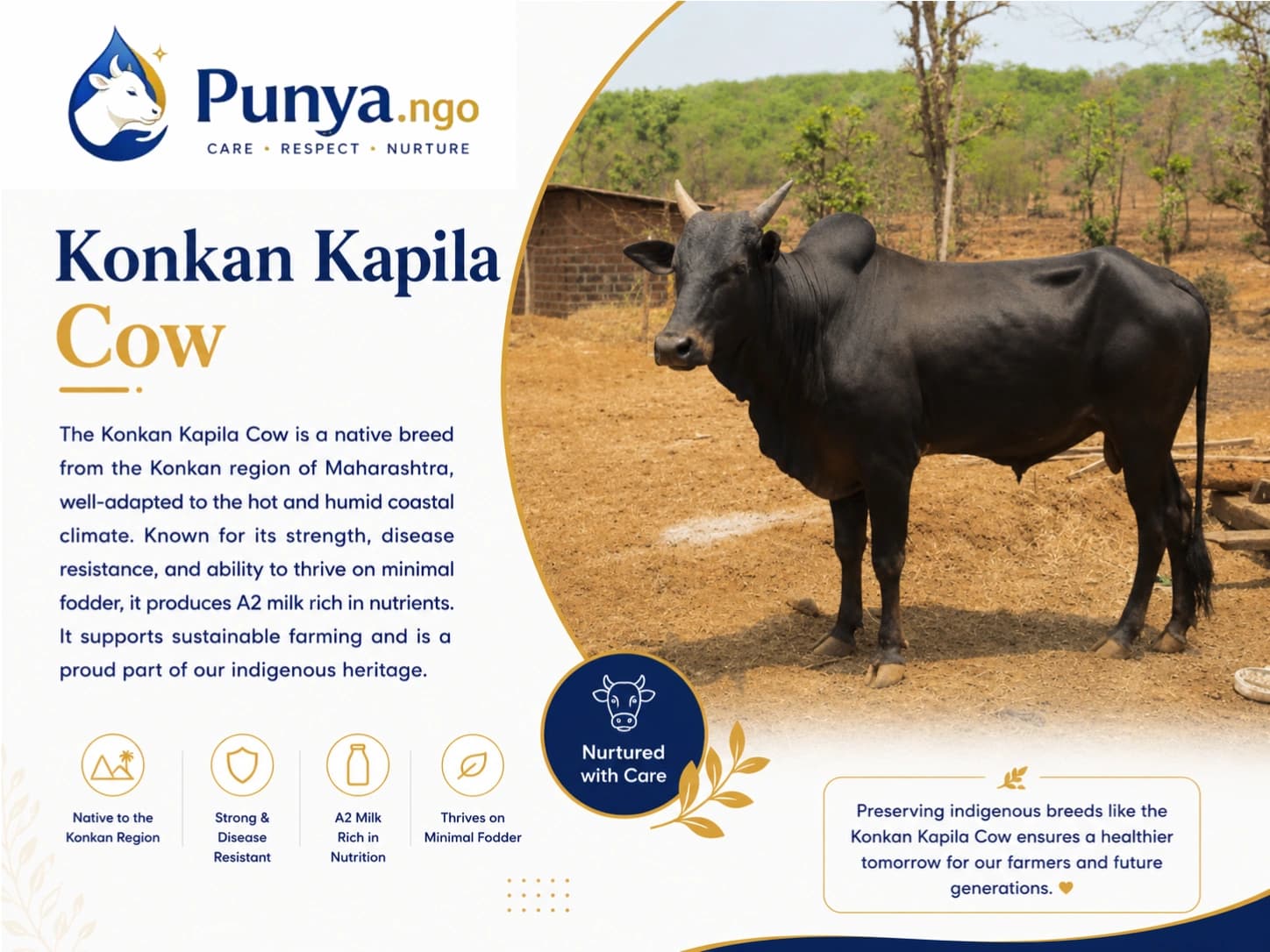
Konkan Kapila Cow Breed in India: Origin, Milk Yield, Characteristics and Farming Value
Konkan Kapila Cow Breed in India is an indigenous cattle breed native to the Konkan coastal region of Maharashtra. Known for its adaptability, resilience, and ability to thrive under low-input farming conditions, this desi cow plays an important role in rural livelihoods. While it is not considered a high-yield dairy breed, it is valued for its hardiness, heat tolerance, and suitability for traditional farming systems.
India is home to many indigenous cattle breeds, each developed over generations to suit local climates and farming practices. Among them, the Konkan Kapila Cow Breed in India stands out as a breed that reflects the unique environmental conditions of the western coastal belt.
Takeaway: Konkan Kapila is a hardy indigenous breed valued more for adaptability and sustainability than for high milk production.
What is Konkan Kapila Cow Breed in India?
The Konkan Kapila Cow Breed in India is an indigenous cattle breed traditionally reared in the Konkan region along India's western coast. It belongs to the group of native Indian cattle that have evolved naturally under local climatic conditions.
Farmers mainly keep this breed for milk, manure, and its contribution to mixed farming systems. Its ability to survive on locally available feed resources makes it particularly useful for small and marginal farmers.
Unlike specialized dairy breeds that require intensive management, Konkan Kapila cattle are generally maintained under traditional rural farming conditions.
Takeaway: Konkan Kapila is a low-maintenance indigenous breed suited to traditional and sustainable farming systems.
Origin and Native Region
The Konkan Kapila Cow Breed in India originates from the Konkan coastal belt of Maharashtra, particularly in districts characterized by high rainfall, humidity, and rugged terrain.
Native Areas
| Feature | Details |
|---|---|
| Origin State | Maharashtra |
| Region | Konkan Coast |
| Farming System | Smallholder and mixed farming |
| Terrain | Coastal, hilly, and humid |
| Breed Type | Indigenous Indian cattle |
The breed has adapted over centuries to local environmental conditions, enabling it to perform reasonably well despite climatic challenges.
The strong connection between the breed and its native ecosystem is one reason why it continues to remain relevant in rural communities.
Takeaway: The Konkan Kapila breed is closely linked to the coastal farming landscapes of Maharashtra's Konkan region.
Physical Characteristics
The Konkan Kapila Cow Breed in India is generally small to medium in size and displays characteristics commonly associated with hardy indigenous cattle.
Common Physical Traits
- Compact and sturdy body
- Strong legs and hooves
- Well-adapted frame for hilly terrain
- Small to medium-sized horns
- Alert facial expression
- Good disease resistance compared to many exotic breeds
Coat color can vary among animals, with shades ranging from reddish-brown to darker tones depending on local breeding populations.
The breed's body structure reflects functionality rather than high production specialization.
Takeaway: Konkan Kapila cattle are compact, sturdy, and physically adapted to challenging coastal environments.
Milk Production and Dairy Value
Milk production in the Konkan Kapila Cow Breed in India is generally moderate to low when compared with specialized dairy breeds.
However, evaluating the breed solely on milk volume does not provide a complete picture of its value.
Dairy Characteristics
| Aspect | General Observation |
|---|---|
| Milk Yield | Low to Moderate |
| Milk Quality | Valued in local markets |
| Maintenance Cost | Relatively Low |
| Feed Requirement | Moderate |
| Suitability | Small-scale Dairy Farming |
Many farmers appreciate indigenous breeds because they often require fewer purchased inputs and can efficiently utilize local fodder resources.
For households that prioritize sustainability over maximum milk output, Konkan Kapila remains a practical option.
Takeaway: Konkan Kapila offers modest milk production but compensates through lower maintenance requirements.
Temperament and Behavior
The Konkan Kapila Cow Breed in India is generally known for a calm and manageable temperament.
Behavioral Traits
- Adaptable to village farming conditions
- Familiar with human handling
- Suitable for family-operated farms
- Good grazing behavior
- Active and alert in open environments
Temperament can vary between individual animals, but the breed is generally considered manageable under traditional farming systems.
Takeaway: Konkan Kapila cattle are typically calm, adaptable, and easy to manage in rural settings.
Climate Adaptability
One of the strongest advantages of the Konkan Kapila Cow Breed in India is its environmental adaptability.
The breed evolved in a region characterized by:
- High humidity
- Heavy monsoon rainfall
- Seasonal fodder fluctuations
- Warm temperatures
Adaptation Strengths
- Good heat tolerance
- Performs well in humid climate
- Efficient utilization of local grazing resources
- Better resilience under low-input systems
These characteristics make the breed especially useful in areas where exotic dairy cattle may struggle.
Takeaway: Climate adaptability is one of the most valuable traits of the Konkan Kapila breed.
Feeding and Management
Proper feeding and management help maintain the health and productivity of the Konkan Kapila Cow Breed in India.
Feeding Recommendations
Green Fodder
- Seasonal grasses
- Fodder crops
- Local grazing resources
Dry Fodder
- Hay
- Crop residues
- Straw
Supplements
- Mineral mixture
- Clean drinking water
- Salt supplementation
Management Practices
- Regular vaccination
- Deworming schedules
- Clean housing
- Proper ventilation
- Routine health monitoring
Although the breed is hardy, good management significantly improves overall performance.
Takeaway: Even resilient indigenous cattle benefit from balanced nutrition and preventive healthcare.
Advantages of Konkan Kapila Cow Breed in India
Key Benefits
1. Excellent Local Adaptation
The breed is naturally suited to coastal and humid environments.
2. Lower Input Requirement
Farmers can maintain animals with relatively modest feeding costs.
3. Disease Resilience
Indigenous cattle often show better adaptation to local disease challenges.
4. Suitable for Small Farmers
The breed fits well into mixed farming systems.
5. Sustainable Farming Value
Provides milk, manure, and agricultural support in traditional systems.
Takeaway: Konkan Kapila offers resilience, affordability, and sustainability for small-scale farming.
Limitations or Practical Considerations
Every breed has strengths and limitations.
Considerations for Farmers
- Lower milk yield compared to specialized dairy breeds.
- Limited commercial dairy potential for intensive milk businesses.
- Availability of quality breeding stock may vary by region.
- Productivity depends heavily on management and nutrition.
Farmers focused exclusively on maximum milk production may prefer specialized dairy breeds.
Takeaway: Konkan Kapila is best suited for sustainable farming rather than high-output commercial dairying.
Best Use Cases for Farmers
The Konkan Kapila Cow Breed in India is particularly suitable for:
- Smallholder farmers
- Rural households
- Integrated farming systems
- Low-input dairy operations
- Coastal farming regions
- Organic and sustainable agriculture models
It is often a practical choice where resilience and affordability matter more than maximum production.
Takeaway: The breed performs best in traditional, low-input, and sustainable farming environments.
Comparison with Similar Indian Cow Breeds
| Feature | Konkan Kapila | Malnad Gidda |
|---|---|---|
| Region | Maharashtra Coast | Karnataka |
| Size | Small to Medium | Small |
| Milk Production | Low to Moderate | Low |
| Heat Tolerance | Good | Good |
| Maintenance Cost | Low | Low |
| Farming System | Coastal Rural Farms | Hilly Rural Farms |
Both breeds are indigenous cattle known for adaptability rather than high milk yield. However, Konkan Kapila is specifically adapted to the humid coastal conditions of the Konkan region.
Takeaway: Konkan Kapila and Malnad Gidda share similar resilience traits, but each is optimized for its native environment.
Conclusion
The Konkan Kapila Cow Breed in India represents the practical strengths of indigenous Indian cattle. It may not compete with specialized dairy breeds in terms of milk volume, but it offers qualities that remain highly valuable for rural farming—adaptability, resilience, low maintenance needs, and suitability for local conditions.
For farmers operating in coastal or low-input environments, Konkan Kapila can be a dependable livestock option that supports sustainable agriculture and long-term farm stability.
Takeaway: Konkan Kapila is a resilient indigenous breed best suited for sustainable farming rather than intensive dairy production.
FAQs
What is Konkan Kapila Cow Breed in India?
Konkan Kapila is an indigenous cattle breed native to the Konkan coastal region of Maharashtra.
Is Konkan Kapila a good dairy breed?
It provides low to moderate milk production and is better suited for small-scale dairy farming than intensive commercial dairies.
Which state is associated with Konkan Kapila cattle?
The breed is primarily associated with Maharashtra, especially the Konkan region.
Is Konkan Kapila suitable for hot climates?
Yes. The breed has good heat tolerance and performs well in warm and humid environments.
What makes Konkan Kapila different from exotic dairy breeds?
Its strengths lie in adaptability, disease resilience, and lower maintenance requirements rather than maximum milk yield.
Can small farmers raise Konkan Kapila cattle profitably?
Yes. The breed is often suitable for smallholders due to its modest feeding needs and adaptability.
What type of feeding is recommended for Konkan Kapila cows?
A combination of green fodder, dry fodder, mineral supplements, and clean water is generally recommended.
Why is Konkan Kapila Cow Breed in India important?
It helps preserve indigenous cattle genetics and supports sustainable rural farming systems.