Kosali Cow Breed in India | Complete Guide
Learn about the Kosali Cow Breed in India, its origin, milk production, characteristics, adaptability, advantages, and farming value.
Kosali Cow Breed in India: Origin, Characteristics, Milk Production, and Farming Value
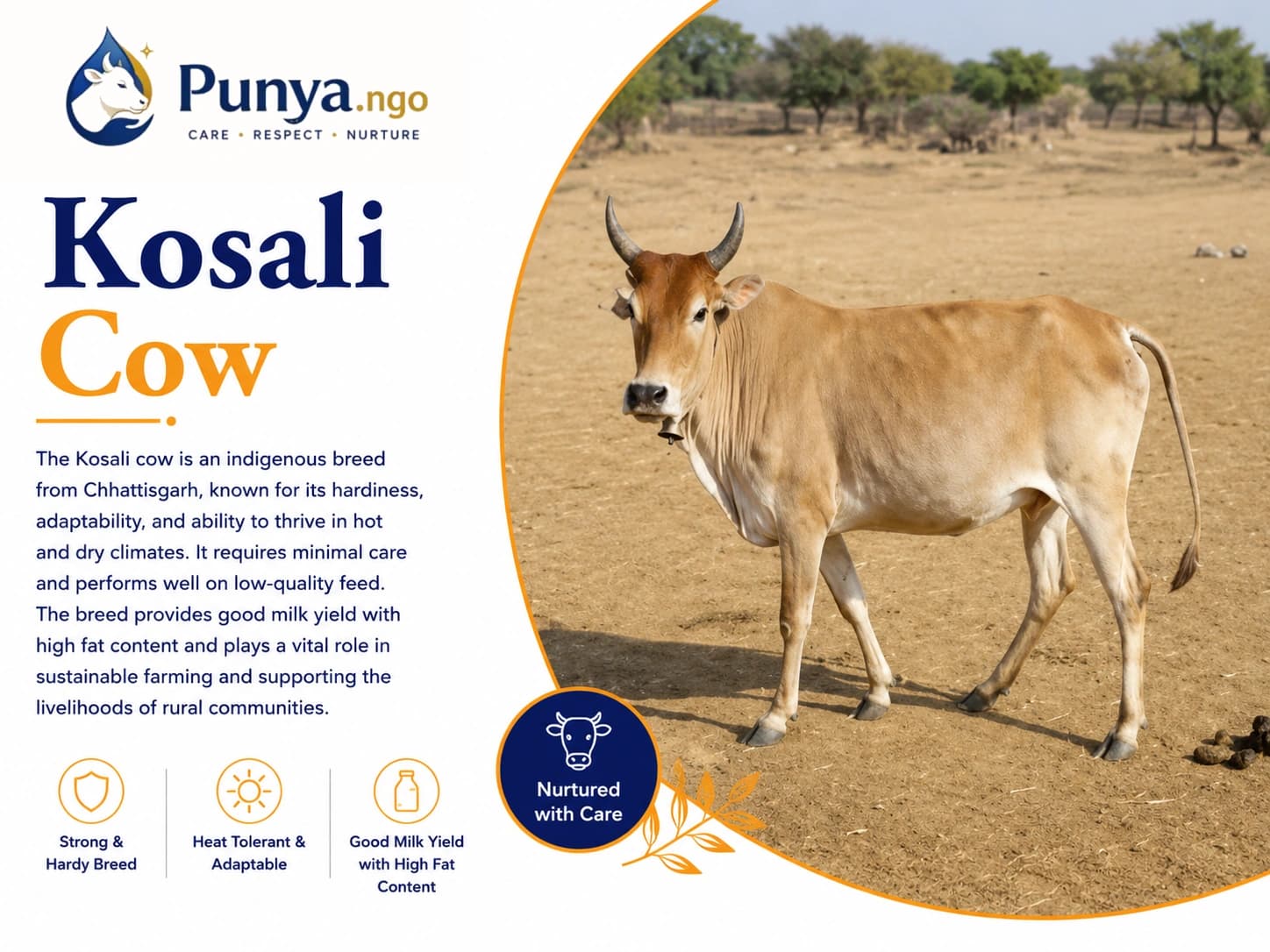
Kosali Cow Breed in India is an indigenous cattle breed traditionally associated with the state of Chhattisgarh. This native breed is known for its adaptability, resilience, and ability to perform well under local farming conditions. For generations, rural communities have relied on Kosali cattle for milk, agricultural support, and sustainable livestock farming.
Unlike specialized dairy breeds developed primarily for high milk output, the Kosali Cow Breed in India is valued for its ability to thrive in challenging environments with relatively modest inputs. Its heat tolerance, disease resistance, and suitability for traditional farming systems make it an important part of India's indigenous cattle heritage.
Takeaway: The Kosali Cow Breed in India is a hardy indigenous breed valued for adaptability, sustainability, and practical usefulness in rural farming.
What is Kosali Cow Breed in India?
The Kosali Cow Breed in India is a traditional desi cattle breed native to central India, particularly the Chhattisgarh region. It belongs to the group of indigenous Indian cattle that have evolved naturally over centuries under local climatic and farming conditions.
Farmers often choose Kosali cattle because they can maintain productivity even in low-input farming systems. The breed is well-suited to smallholder agriculture where cattle are expected to contribute to both milk production and overall farm sustainability.
Takeaway: Kosali is a native Indian cow breed known for its resilience and compatibility with traditional farming systems.
Origin and Native Region
The Kosali Cow Breed in India originates from Chhattisgarh, where it has historically been reared by farming communities across the plains and agricultural regions.
Quick Overview
| Feature | Details |
|---|---|
| Breed Name | Kosali |
| Breed Type | Indigenous Indian cattle |
| Native Region | Chhattisgarh |
| Category | Desi cow breed |
| Primary Utility | Milk and rural farming |
| Climate Suitability | Tropical and semi-tropical regions |
Over time, the breed became naturally adapted to local weather patterns, feed resources, and farming practices. This adaptation remains one of its strongest advantages today.
Takeaway: The Kosali breed is deeply connected to the agricultural traditions of Chhattisgarh and central India.
Physical Characteristics
The Kosali Cow Breed in India typically exhibits many of the features associated with indigenous zebu cattle.
Common Physical Traits
- Medium-sized body frame
- Strong and sturdy legs
- Distinct hump over the shoulders
- Moderate dewlap
- Alert appearance
- Well-balanced body structure
- Moderate-sized horns
- Variable coat colors depending on lineage
These physical characteristics help the breed travel long distances, graze efficiently, and withstand local environmental conditions.
Takeaway: Kosali cattle are built for endurance, mobility, and long-term adaptability.
Milk Production and Dairy Value
Milk production is one of the important functions of the Kosali Cow Breed in India. However, the breed is generally considered a moderate milk producer rather than a high-yield commercial dairy breed.
Milk Yield
Milk yield can vary depending on:
- Genetics
- Nutrition
- Water availability
- Health care
- Farm management
Under traditional conditions, production remains moderate but dependable. Many farmers value consistency and resilience more than maximum output.
Dairy Farming Benefits
The breed offers:
- Reliable milk production
- Lower maintenance costs
- Suitability for village dairy systems
- Contribution to household nutrition
- Sustainable dairy farming potential
Takeaway: Kosali cows provide dependable milk production under practical rural farming conditions.
Temperament and Behavior
The Kosali Cow Breed in India is generally known for its manageable temperament.
Behavioral Characteristics
- Calm nature
- Easy handling
- Strong herd instincts
- Adaptability to village environments
- Good response to routine management
These qualities make daily activities such as feeding, milking, and transportation easier for farmers.
Takeaway: Kosali cattle are generally cooperative and suitable for small-scale farming operations.
Climate Adaptability
One of the biggest strengths of the Kosali Cow Breed in India is its excellent adaptation to local environmental conditions.
Heat Tolerance
Kosali cattle are well suited to:
- High temperatures
- Seasonal climate variations
- Humid weather
- Open grazing systems
Natural Resilience
Like many indigenous breeds, Kosali cattle are often considered more resilient under local conditions than some exotic breeds. Proper veterinary care remains essential, but their adaptation offers an important advantage.
Takeaway: Strong heat tolerance and environmental adaptability make Kosali cattle valuable in tropical regions.
Feeding and Management
Proper nutrition and management significantly improve the productivity of the Kosali Cow Breed in India.
Recommended Feeding Program
A balanced diet should include:
- Green fodder
- Dry fodder
- Crop residues
- Mineral supplements
- Fresh clean water
Management Practices
Housing
- Dry and clean shelter
- Proper ventilation
- Protection from extreme weather
Health Care
- Regular vaccinations
- Scheduled deworming
- Routine veterinary checkups
Breeding Management
- Selection of healthy breeding animals
- Proper breeding records
- Timely reproductive care
Takeaway: Basic scientific management can significantly improve the performance of Kosali cattle.
Advantages of Kosali Cow Breed in India
The breed offers several practical advantages for farmers.
Key Benefits
- Excellent climate adaptability
- Strong heat tolerance
- Suitable for low-input systems
- Lower maintenance requirements
- Good survival ability
- Indigenous genetic resource
- Useful for sustainable agriculture
- Suitable for small and marginal farmers
These characteristics help reduce farming risks in challenging environments.
Takeaway: The biggest strength of Kosali cattle is their ability to remain productive under practical rural conditions.
Limitations or Practical Considerations
Every cattle breed has strengths and limitations.
Practical Challenges
- Milk production is lower than specialized dairy breeds.
- Commercial dairy farms may prefer higher-yielding breeds.
- Pure breeding stock availability can vary by region.
- Breed improvement programs may not be equally developed everywhere.
Understanding these factors helps farmers make realistic decisions.
Takeaway: Kosali cattle prioritize adaptability and sustainability rather than maximum milk production.
Best Use Cases for Farmers
The Kosali Cow Breed in India is best suited for specific farming situations.
Ideal For
- Smallholder dairy farming
- Rural farming households
- Mixed crop-livestock systems
- Sustainable agriculture
- Low-input dairy production
- Indigenous breed conservation
Farmers seeking resilient and manageable cattle often find the breed well suited to their needs.
Takeaway: Kosali cattle are most valuable in sustainable and resource-efficient farming systems.
Comparison with Similar Indian Cow Breeds
Kosali vs Sahiwal
| Feature | Kosali | Sahiwal |
|---|---|---|
| Origin | Chhattisgarh | Punjab |
| Milk Production | Moderate | Higher |
| Heat Tolerance | Excellent | Excellent |
| Maintenance Requirement | Lower | Moderate |
| Rural Adaptability | Very High | High |
| Commercial Dairy Suitability | Limited | Strong |
While Sahiwal cattle are recognized for superior milk production, the Kosali Cow Breed in India often requires fewer inputs and adapts well to traditional farming conditions.
Takeaway: Sahiwal offers higher milk yield, while Kosali provides greater simplicity and adaptability for rural farmers.
Conclusion
The Kosali Cow Breed in India represents an important part of India's indigenous livestock heritage. Developed under the climatic and agricultural conditions of central India, this breed has earned a reputation for hardiness, heat tolerance, and practical utility.
Although it may not compete with specialized dairy breeds in terms of milk yield, its adaptability and low-input requirements make it highly relevant for small-scale and sustainable farming systems. As interest in indigenous cattle conservation continues to grow, Kosali cattle remain valuable for both rural livelihoods and agricultural resilience.
Takeaway: The Kosali Cow Breed in India remains a practical, sustainable, and farmer-friendly indigenous cattle breed.
FAQs About Kosali Cow Breed in India
1. What is the Kosali Cow Breed in India?
The Kosali is an indigenous cattle breed associated primarily with Chhattisgarh and known for adaptability and rural farming value.
2. Which state is the native home of Kosali cattle?
Kosali cattle are traditionally associated with Chhattisgarh.
3. Is Kosali a good dairy breed?
Yes, it is suitable for small-scale dairy farming, although milk production is generally moderate.
4. How much milk does a Kosali cow produce?
Milk yield varies based on feeding, genetics, health, and management practices.
5. Is the Kosali cow heat tolerant?
Yes, heat tolerance is one of the breed's major strengths.
6. Is Kosali an indigenous Indian cattle breed?
Yes, it is a native Indian desi cow breed.
7. What type of farmers should choose Kosali cattle?
Smallholders, rural farmers, and those practicing sustainable farming often benefit most from the breed.
8. What is the biggest advantage of the Kosali Cow Breed in India?
Its greatest advantage is strong adaptability to local climatic conditions and low-input farming systems.