
Ladakhi Cow Breed in India | Complete Guide
Learn about Ladakhi Cow Breed in India, its origin, characteristics, utility, adaptability, management, and farming value.
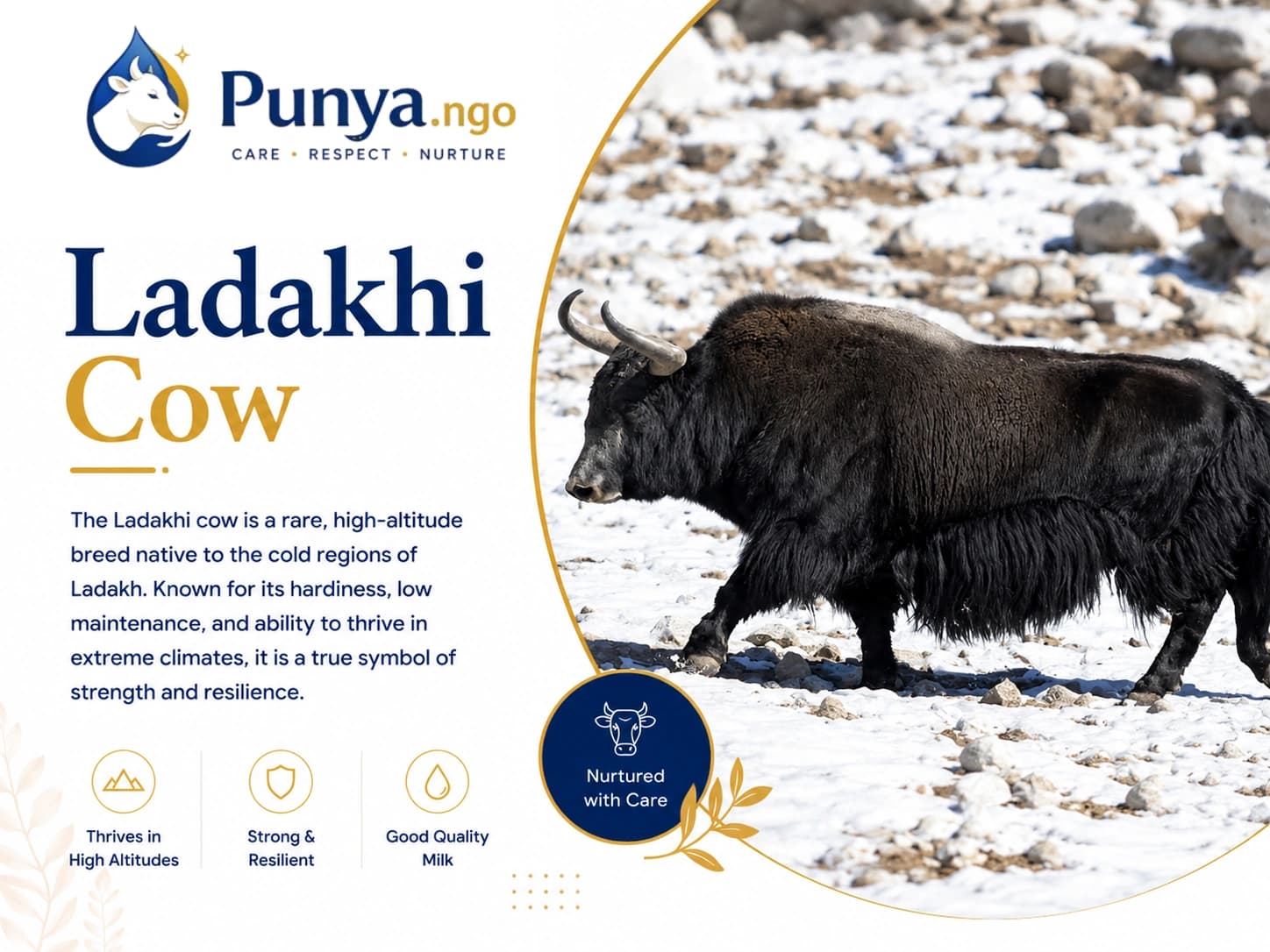
Ladakhi Cow Breed in India: Characteristics, Uses, Adaptability, and Farming Value
Ladakhi Cow Breed in India is an indigenous cattle breed native to the high-altitude Himalayan region of Ladakh. Developed naturally under extreme climatic conditions, this breed is known for its hardiness, adaptability, and ability to survive where many commercial cattle breeds struggle.
Unlike specialized dairy breeds that are selected primarily for milk production, Ladakhi Cow Breed in India has traditionally been valued for its overall utility, including milk, manure, transportation, and support to rural farming systems.
Takeaway: Ladakhi Cow Breed in India is a hardy indigenous cattle breed best known for its adaptation to high-altitude and cold desert conditions.
What is Ladakhi Cow Breed in India?
Ladakhi Cow Breed in India is a native Indian cattle breed found primarily in the Ladakh region. It belongs to the group of indigenous breeds that have evolved naturally according to local environmental conditions.
The breed plays an important role in supporting traditional livestock-based livelihoods in mountainous regions where farming conditions are often difficult and resources are limited.
Key Highlights
- Indigenous cattle breed
- Native to Ladakh
- Adapted to cold desert climate
- Useful for small-scale farming
- Known for endurance and resilience
Takeaway: The breed's value comes from survival ability and utility rather than maximum production.
Origin and Native Region
The origin of Ladakhi Cow Breed in India can be traced to the cold desert ecosystem of Ladakh in northern India.
The region is characterized by:
- High altitude
- Low oxygen levels
- Harsh winters
- Sparse vegetation
- Rocky terrain
Over centuries, local communities have maintained these cattle under traditional management systems, allowing the breed to develop traits that are uniquely suited to Himalayan conditions.
Quick Facts Table
| Feature | Details |
|---|---|
| Breed Name | Ladakhi Cow |
| Breed Type | Indigenous cattle breed |
| Native Region | Ladakh, India |
| Primary Utility | Milk, manure, farm work |
| Climate Suitability | Cold desert and high altitude |
| Farming System | Traditional and rural farming |
| Temperament | Calm and manageable |
| Adaptability | Very high |
Takeaway: The breed's origin is closely connected to the Himalayan environment and traditional rural livelihoods.
Physical Characteristics
The physical appearance of Ladakhi Cow Breed in India reflects its adaptation to extreme mountain conditions.
Common Characteristics
- Medium-sized body
- Compact frame
- Strong limbs
- Durable hooves
- Dense protective coat
- Good stamina
Strong Hooves
The breed possesses strong hooves that allow movement across rocky and uneven terrain.
Compact Body Structure
Its compact body helps conserve energy and withstand cold temperatures.
Efficient Resource Utilization
The breed can survive on limited feed resources that would challenge many commercial breeds.
Takeaway: Every major physical characteristic supports endurance, mobility, and survival in mountainous regions.
Milk Production and Dairy Value
Milk production in Ladakhi Cow Breed in India is generally moderate to low when compared with specialized dairy breeds.
However, the breed remains valuable because it can produce milk under environmental conditions where many high-yield cattle would struggle.
Dairy Characteristics
- Suitable for household milk needs
- Performs under low-input conditions
- Requires relatively modest feeding
- Supports subsistence farming
For many rural families in Ladakh, reliability and adaptability are often more important than achieving the highest possible milk yield.
Takeaway: The breed offers dependable milk production under difficult climatic conditions rather than maximum dairy output.
Temperament and Behavior
The temperament of Ladakhi Cow Breed in India is generally calm and manageable.
Behavioral Traits
- Easy to handle
- Adaptable to local farming systems
- Good endurance
- Strong herd behavior
These characteristics make the breed suitable for traditional livestock management practices.
Takeaway: A calm temperament and strong endurance make the breed practical for everyday rural farming.
Climate Adaptability
Climate adaptability is one of the greatest strengths of Ladakhi Cow Breed in India.
Adapted to Extreme Conditions
The breed can tolerate:
- Freezing temperatures
- High altitude
- Thin air
- Dry climate
- Limited grazing resources
Heat Tolerance
While highly adapted to cold weather, the breed may not perform as efficiently in hot and humid regions.
Takeaway: The breed is exceptionally suited to cold and high-altitude environments.
Feeding and Management
Proper feeding and management help maintain the productivity and health of Ladakhi Cow Breed in India.
Feeding Practices
- Natural grazing
- Local grasses
- Crop residues
- Seasonal fodder
Management Tips
Provide Winter Nutrition
Animals require additional energy during extremely cold periods.
Ensure Clean Water
Continuous access to water remains important throughout the year.
Follow Preventive Health Care
Regular vaccination and deworming improve overall herd health.
Provide Shelter
Basic protection from severe snow and strong winds can improve welfare.
Takeaway: Good nutrition and preventive care help maximize the breed's natural strengths.
Advantages of Ladakhi Cow Breed in India
Excellent Adaptability
Thrives in harsh environments where many breeds struggle.
Low Maintenance Requirements
Requires fewer inputs than intensive dairy breeds.
Strong Environmental Resilience
Well adapted to local climatic challenges.
Suitable for Sustainable Farming
Works effectively within traditional farming systems.
Valuable Indigenous Genetics
Represents important livestock biodiversity.
Takeaway: Adaptability, sustainability, and resilience are the breed's greatest advantages.
Limitations or Practical Considerations
Every cattle breed has strengths and weaknesses.
Lower Milk Yield
Not suitable for farmers seeking maximum commercial dairy production.
Regional Suitability
Performs best within environments similar to its native region.
Limited Availability
The breed is less common outside Ladakh.
Commercial Constraints
May not provide the same financial returns as specialized dairy breeds in intensive systems.
Takeaway: The breed is most valuable where environmental suitability matters more than production intensity.
Best Use Cases for Farmers
Ladakhi Cow Breed in India is particularly suitable for:
- High-altitude farming
- Cold desert agriculture
- Smallholder livestock systems
- Low-input farming
- Sustainable rural agriculture
- Mixed farming operations
Takeaway: The breed is ideal for farmers operating in challenging climatic conditions with limited resources.
Comparison with Similar Indian Cow Breeds
| Feature | Ladakhi | Sahiwal | Tharparkar |
|---|---|---|---|
| Native Region | Ladakh | Punjab Region | Rajasthan Region |
| Milk Production | Low to Moderate | High | Moderate to High |
| Climate Suitability | Cold Desert | Hot Plains | Arid Regions |
| Feed Requirement | Low | Moderate | Moderate |
| High Altitude Adaptation | Excellent | Limited | Limited |
Practical Comparison
Compared with Sahiwal cattle, Ladakhi Cow Breed in India produces less milk but demonstrates significantly better adaptation to high-altitude and cold desert environments.
Takeaway: Environmental adaptability is the major advantage of the Ladakhi Cow breed when compared with dairy-focused breeds.
Conclusion
Ladakhi Cow Breed in India remains an important indigenous cattle breed because of its ability to thrive in one of the most challenging environments in the country.
Although it is not a high-yield dairy breed, it offers dependable performance, strong adaptability, and long-term sustainability for farmers living in high-altitude regions. Its continued conservation is important for preserving valuable genetic traits and supporting climate-resilient livestock farming.
Takeaway: Ladakhi Cow Breed in India is a resilient and practical indigenous breed that delivers reliable value in Himalayan farming systems.
FAQs
Is Ladakhi Cow Breed in India a dairy breed?
Yes, but it is primarily valued for adaptability and utility rather than high milk production.
Where is Ladakhi Cow Breed in India found?
The breed is mainly found in the Ladakh region of northern India.
What is the primary use of Ladakhi Cow Breed in India?
Milk production, manure, farm utility, and support for traditional rural farming.
Is Ladakhi Cow Breed in India suitable for hot climates?
The breed is best suited to cold and high-altitude environments.
Why is Ladakhi Cow Breed in India important?
It preserves valuable indigenous genetics and supports sustainable livestock farming in harsh climates.
Does Ladakhi Cow Breed in India require intensive feeding?
No. The breed can perform effectively under relatively low-input management systems.
What makes Ladakhi Cow Breed in India unique?
Its exceptional ability to survive and remain productive in cold desert and high-altitude conditions.