Mewati Cow Breed in India | Milk Yield & Farming Value
Learn about Mewati Cow Breed in India, its origin, milk production, characteristics, adaptability, management, and farming benefits.
Mewati Cow Breed in India: Complete Guide for Farmers and Dairy Enthusiasts
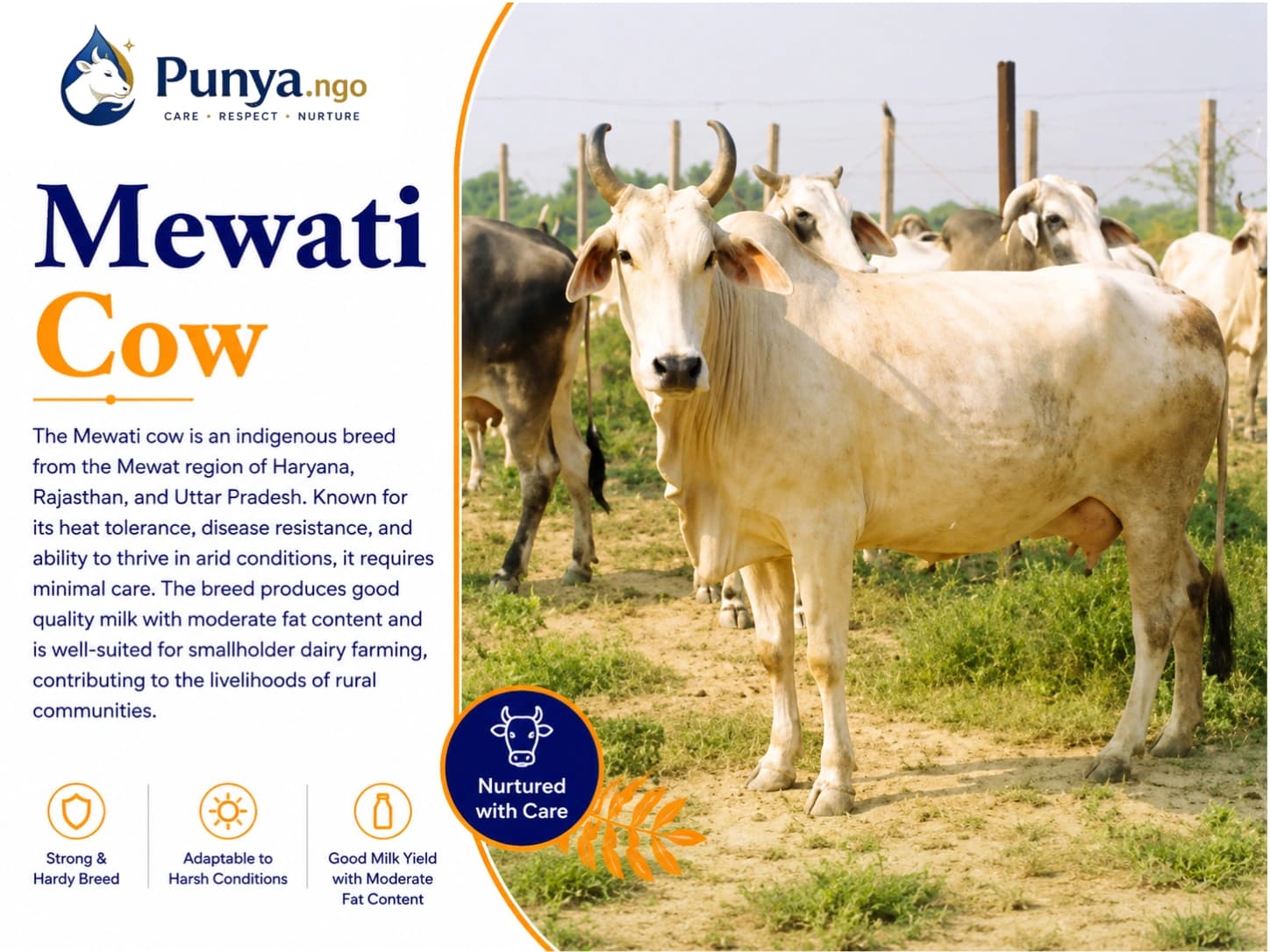
Mewati Cow Breed in India is an indigenous cattle breed known for its dual-purpose utility, serving both milk production and agricultural work. Originating from the Mewat region of North India, this breed has traditionally supported rural farming systems due to its adaptability, strength, and ability to perform under challenging climatic conditions.
For farmers looking for a hardy desi cow that can contribute to dairy farming while also fitting into traditional mixed farming systems, the Mewati breed remains a practical option.
Takeaway: The Mewati Cow Breed in India is valued for its balanced combination of milk production, work capacity, and adaptability to local farming conditions.
What is Mewati Cow Breed in India?
The Mewati Cow Breed in India is a native cattle breed primarily associated with the Mewat region of North India. It has historically been reared for both milk production and draught purposes, making it a versatile choice for rural farming communities.
Unlike highly specialized dairy breeds, Mewati cattle are appreciated for their ability to contribute to multiple farming activities while maintaining resilience in local conditions.
Takeaway: Mewati cattle are best known as a dual-purpose indigenous breed supporting both dairy and agricultural operations.
Origin and Native Region
The Mewati Cow Breed in India originates from the historic Mewat region, which spans parts of:
- Rajasthan
- Haryana
- Western Uttar Pradesh
The breed evolved under semi-arid environmental conditions where cattle needed to withstand heat, seasonal feed shortages, and long working hours.
Native Region Overview
| Factor | Details |
|---|---|
| Origin Region | Mewat |
| States | Rajasthan, Haryana, Uttar Pradesh |
| Climate | Semi-arid |
| Primary Utility | Milk and draught work |
| Farming System | Mixed crop-livestock farming |
The environmental conditions of the region helped shape the breed's endurance and adaptability.
Takeaway: The Mewati breed developed naturally in North India's semi-arid farming belt, giving it strong environmental resilience.
Physical Characteristics
The Mewati Cow Breed in India possesses a strong and functional body structure suited for both dairy and farm work.
Key Physical Features
- Medium to large body size
- Predominantly white or light grey coat color
- Darker shading around the neck and shoulders in some animals
- Broad forehead
- Long face
- Medium-sized horns
- Well-developed hump in males
- Strong legs and durable hooves
- Deep body with good muscular development
These characteristics contribute to the breed's strength, mobility, and working ability.
Takeaway: Mewati cattle have a sturdy body structure that supports both productivity and physical endurance.
Milk Production and Dairy Value
Milk production is one of the important attributes of the Mewati Cow Breed in India.
Milk Yield
Mewati cows generally produce moderate quantities of milk compared with specialized dairy breeds.
Milk yield depends on:
- Genetics
- Nutrition
- Management
- Lactation stage
- Overall health
Dairy Farming Value
Farmers appreciate Mewati cattle because they:
- Perform reliably under traditional farming systems
- Utilize locally available feed resources efficiently
- Require comparatively lower maintenance
- Fit well into small-scale dairy operations
Although not considered a high-yield dairy breed, Mewati cattle offer dependable milk production under practical farm conditions.
Takeaway: Mewati cows provide moderate but reliable milk production, especially in low-input rural farming systems.
Temperament and Behavior
The Mewati Cow Breed in India is generally known for its calm and manageable nature.
Common Behavioral Traits
- Docile temperament
- Easy handling
- Good adaptation to routine farm management
- Strong maternal instincts
- Suitable for family-operated farms
These qualities make the breed easier to manage compared to more sensitive cattle breeds.
Takeaway: Mewati cattle are farmer-friendly animals that fit well into traditional farming environments.
Climate Adaptability
One of the biggest strengths of the Mewati Cow Breed in India is its ability to adapt to challenging climatic conditions.
Adaptability Features
- High heat tolerance
- Ability to perform in semi-arid environments
- Efficient use of available fodder
- Good resilience during seasonal fluctuations
- Adaptation to local environmental stress
Suitable Regions
The breed performs particularly well in:
- Rajasthan
- Haryana
- Western Uttar Pradesh
- Similar dry and semi-arid regions
Takeaway: Strong climate adaptability makes Mewati cattle suitable for areas where heat and limited resources can challenge other breeds.
Feeding and Management
Proper feeding and management help maximize the productivity of the Mewati Cow Breed in India.
Feeding Practices
A balanced feeding plan should include:
- Green fodder
- Dry fodder
- Crop residues
- Mineral supplements
- Clean drinking water
Housing Management
- Well-ventilated shelters
- Dry and clean flooring
- Proper drainage
- Protection from extreme weather
Health Care
- Routine vaccination
- Regular deworming
- Clean housing conditions
- Timely veterinary attention
Breeding Management
- Selection of healthy breeding stock
- Monitoring reproductive performance
- Maintaining breeding records
Takeaway: Consistent nutrition and preventive healthcare are essential for maintaining productivity and herd health.
Advantages of Mewati Cow Breed in India
The breed offers several practical advantages to farmers.
Major Benefits
- Indigenous breed adapted to Indian conditions
- Good heat tolerance
- Strong work capacity
- Moderate milk production
- Efficient feed utilization
- Suitable for low-input farming systems
- Durable and hardy nature
- Useful for mixed farming operations
These strengths make the breed particularly valuable in traditional agricultural settings.
Takeaway: Mewati cattle provide a balanced combination of utility, adaptability, and economic sustainability.
Limitations or Practical Considerations
Every cattle breed has limitations, and Mewati cattle are no exception.
Practical Considerations
- Milk yield is lower than specialized dairy breeds
- Availability of purebred animals may vary by region
- Commercial dairy farms focused solely on maximum milk production may prefer dedicated dairy breeds
- Genetic improvement resources may not be widely available everywhere
Farmers should choose the breed based on their specific farming objectives.
Takeaway: Mewati cattle are ideal for balanced farming systems but may not suit intensive dairy operations focused exclusively on milk volume.
Best Use Cases for Farmers
The Mewati Cow Breed in India is suitable for several farming situations.
Ideal Applications
Small and Marginal Farmers
The breed's low-input nature supports cost-effective farming.
Mixed Farming Systems
Mewati cattle integrate well with crop cultivation.
Semi-Arid Areas
Their heat tolerance helps maintain productivity.
Traditional Dairy Farms
Families seeking dependable milk production often benefit from the breed.
Sustainable Agriculture
Efficient use of local resources aligns well with sustainable farming practices.
Takeaway: Mewati cattle are particularly useful for smallholder, mixed, and climate-resilient farming systems.
Comparison with Similar Indian Cow Breeds
Mewati vs Tharparkar
| Feature | Mewati | Tharparkar |
|---|---|---|
| Origin | Mewat Region | Rajasthan-Sindh Region |
| Utility | Dual Purpose | Primarily Dairy |
| Heat Tolerance | High | High |
| Milk Production | Moderate | Generally Higher |
| Adaptability | Excellent | Excellent |
| Farming Suitability | Mixed Farming | Dairy-Oriented Systems |
Farmers seeking a versatile dual-purpose animal may prefer Mewati cattle, while those prioritizing higher milk production often consider Tharparkar cattle.
Takeaway: Mewati and Tharparkar are both valuable indigenous breeds, but their strengths align with different farming goals.
Conclusion
The Mewati Cow Breed in India remains an important indigenous cattle breed that combines moderate milk production, work capacity, and strong climate adaptability. Developed in the challenging environment of the Mewat region, it continues to serve farmers who value resilience, versatility, and sustainability.
For smallholders and mixed farming operations, Mewati cattle offer a practical balance between dairy value and agricultural utility. While they may not match specialized dairy breeds in milk output, their adaptability and dependable performance make them a valuable part of India's livestock heritage.
Takeaway: The Mewati Cow Breed in India remains a dependable choice for farmers seeking a hardy, adaptable, and multipurpose indigenous cattle breed.
FAQs
1. What is the Mewati Cow Breed in India known for?
It is known for its dual-purpose utility, providing both milk production and agricultural work capacity.
2. Where does the Mewati breed originate?
The breed originates from the Mewat region covering parts of Rajasthan, Haryana, and western Uttar Pradesh.
3. Is the Mewati breed suitable for dairy farming?
Yes. It provides moderate milk production and performs well in traditional dairy systems.
4. Can Mewati cattle tolerate hot climates?
Yes. The breed is recognized for strong heat tolerance and adaptability to semi-arid regions.
5. Are Mewati cows easy to manage?
Generally, yes. Their calm temperament makes them suitable for small and medium-sized farms.
6. What do Mewati cattle eat?
They thrive on green fodder, dry fodder, crop residues, mineral supplements, and adequate clean water.
7. How does Mewati compare with Tharparkar cattle?
Mewati cattle are valued for balanced farm utility, while Tharparkar cattle are often preferred for relatively higher milk production.
8. Is the Mewati Cow Breed in India suitable for sustainable farming?
Yes. Its adaptability, efficient resource utilization, and compatibility with mixed farming systems support sustainable agriculture.
Takeaway: Mewati cattle continue to offer practical value for farmers seeking a resilient and multipurpose indigenous breed.