Nari Cow Breed in India | Origin, Milk Yield & Farming Value
Learn about Nari Cow Breed in India, its origin, characteristics, milk production, adaptability, feeding, advantages, and farming value.
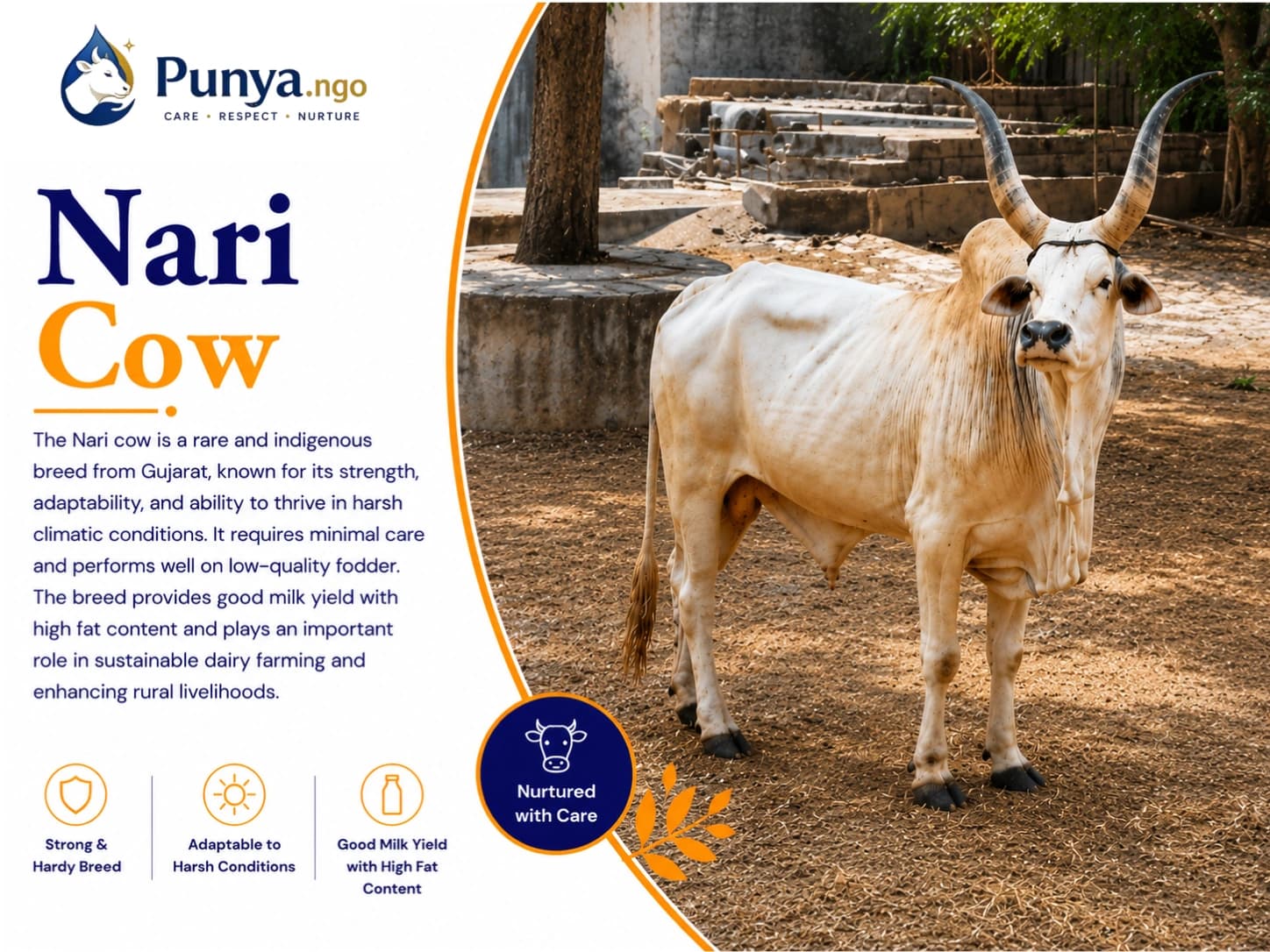
Nari Cow Breed in India: Origin, Characteristics, Milk Production and Farming Value
Nari Cow Breed in India is a lesser-known indigenous cattle type valued for its adaptability, resilience, and usefulness in traditional farming systems. It is generally maintained by local farming communities and contributes to sustainable livestock management through moderate milk production and strong environmental adaptability.
Unlike highly commercial dairy breeds, Nari Cow Breed in India is appreciated for its ability to perform under practical field conditions with relatively modest inputs. This makes it relevant for many small and medium-scale farmers across rural India.
Takeaway: Nari Cow Breed in India is valued for sustainability, adaptability, and practical utility in traditional farming systems.
What is Nari Cow Breed in India?
Nari Cow Breed in India is an indigenous cattle population associated with local farming traditions. Like many native Indian cattle breeds, it has developed characteristics that allow it to thrive in regional conditions while supporting rural livelihoods.
The breed is primarily used for milk production, manure generation, and overall farm utility. Farmers often appreciate indigenous breeds because they can perform reliably even when resources are limited.
Quick Overview Table
| Feature | Details |
|---|---|
| Breed Type | Indigenous cattle |
| Primary Utility | Milk production and farming utility |
| Category | Desi cow breed |
| Climate Suitability | Warm and semi-arid regions |
| Heat Tolerance | Good |
| Farming System | Traditional and smallholder farms |
| Maintenance Requirement | Moderate to low |
| Temperament | Generally manageable |
Takeaway: Nari cattle are practical livestock animals developed around local farming needs rather than intensive commercial production.
Origin and Native Region
The historical documentation available for Nari Cow Breed in India is relatively limited compared with famous breeds such as Gir or Sahiwal. However, the breed is recognized as a local indigenous cattle population that has evolved through generations of natural adaptation and farmer-led breeding practices.
Native cattle often develop characteristics that suit their environment, including disease resistance, efficient grazing habits, and the ability to cope with seasonal changes.
Importance of Native Adaptation
Local adaptation helps cattle:
- Utilize available fodder efficiently
- Tolerate climatic stress
- Maintain reproductive performance
- Survive in low-input systems
- Support sustainable farming
Takeaway: The value of Nari cattle largely comes from their adaptation to local environmental and farming conditions.
Physical Characteristics
The exact appearance of Nari Cow Breed in India may vary between regions and herds. However, indigenous cattle generally possess features that support endurance and long-term survival.
Common Physical Traits
- Medium-sized body frame
- Strong legs and hooves
- Durable skeletal structure
- Efficient grazing ability
- Functional body conformation
- Good mobility under field conditions
Unlike specialized dairy breeds, the physical build of Nari cattle emphasizes endurance and adaptability.
Takeaway: Nari cattle are built for practical farm performance rather than specialized dairy production.
Milk Production and Dairy Value
Milk production remains one of the primary reasons farmers maintain Nari Cow Breed in India.
Indigenous breeds typically produce moderate milk yields when compared with high-yield exotic or specialized dairy breeds. However, they often compensate through lower maintenance costs and better adaptability.
Dairy Farming Value
Benefits include:
- Consistent household milk supply
- Lower production costs
- Better adaptation to local conditions
- Reduced management challenges
- Suitability for mixed farming systems
Milk production depends on:
- Genetics
- Nutrition
- Health care
- Water availability
- Lactation stage
Because verified breed-specific production data remains limited, farmers should rely on local performance records whenever possible.
Takeaway: Nari cattle are often better suited for sustainable dairy farming than intensive commercial milk production systems.
Temperament and Behavior
Temperament is an important factor in livestock management. Farmers generally prefer cattle that are easy to handle and integrate well into daily farm activities.
Behavioral Characteristics
- Calm nature under regular management
- Suitable for family-operated farms
- Adaptable to village conditions
- Comfortable in grazing systems
- Responsive to routine handling
A manageable temperament helps reduce labor requirements and simplifies daily care.
Takeaway: Good behavioral traits make Nari cattle practical for small and medium-scale farming operations.
Climate Adaptability
One of the strongest qualities associated with Nari Cow Breed in India is environmental adaptability.
Climate Suitability
The breed is generally capable of adapting to:
- High temperatures
- Seasonal weather variations
- Open grazing conditions
- Resource-constrained environments
Heat Tolerance
Like many indigenous Indian cattle breeds, Nari cattle are believed to possess good natural heat tolerance. This characteristic becomes increasingly valuable as temperatures rise and climate patterns become less predictable.
Takeaway: Climate resilience is one of the key strengths of Nari cattle.
Feeding and Management
Proper nutrition and routine management significantly influence the productivity and health of any cattle breed.
Green Fodder
Recommended options include:
- Napier grass
- Berseem
- Maize fodder
- Seasonal green forage
Dry Fodder
Suitable sources include:
- Wheat straw
- Paddy straw
- Dry grasses
Concentrate Feeding
Additional concentrate feed may be provided during:
- Peak lactation
- Pregnancy
- Nutritional stress periods
Water Requirements
Ensure:
- Continuous access to clean water
- Increased water intake during summer
- Hygienic drinking areas
Health Management
Routine care should include:
- Vaccination schedules
- Deworming programs
- Parasite control
- Clean housing
- Veterinary monitoring
Takeaway: Consistent nutrition and preventive healthcare often have a greater impact than expensive inputs.
Advantages of Nari Cow Breed in India
1. Strong Adaptability
Performs well under local farming conditions.
2. Good Heat Tolerance
Suitable for warm climatic regions.
3. Lower Input Requirement
Can often utilize locally available feed resources effectively.
4. Rural Farming Compatibility
Fits naturally into mixed crop-livestock systems.
5. Indigenous Genetic Importance
Supports the preservation of local cattle diversity.
Takeaway: Nari cattle offer a balanced combination of adaptability, resilience, and practical farm utility.
Limitations or Practical Considerations
Every cattle breed has strengths and limitations.
Practical Challenges
- Limited breed documentation
- Moderate rather than high milk production
- Restricted availability in some regions
- Limited organized breeding programs
Farmers seeking maximum commercial milk output may prefer specialized dairy breeds. Those prioritizing sustainability and resilience may find Nari cattle more suitable.
Takeaway: Nari cattle prioritize adaptability and sustainability over maximum milk production.
Best Use Cases for Farmers
Smallholder Dairy Farms
Suitable for farmers looking for moderate milk production with manageable costs.
Mixed Farming Systems
Works effectively alongside crop production activities.
Low-Input Livestock Systems
Can perform under limited-resource conditions.
Indigenous Breed Conservation
Supports preservation of local livestock genetics.
Takeaway: Nari cattle are particularly valuable for sustainable and resource-efficient farming systems.
Comparison with Similar Indian Cow Breeds
| Feature | Nari Cow | Gir Cow | Sahiwal Cow |
|---|---|---|---|
| Breed Type | Indigenous | Indigenous | Indigenous |
| Milk Production | Moderate | Higher | Higher |
| Heat Tolerance | Good | Excellent | Excellent |
| Adaptability | Strong | Strong | Strong |
| Small Farm Suitability | High | High | High |
| Input Requirement | Moderate | Moderate | Moderate |
Practical Comparison
While Gir and Sahiwal cattle are widely recognized for superior dairy performance, Nari Cow Breed in India may appeal more to farmers seeking locally adapted livestock that perform reliably under traditional management systems.
Takeaway: Nari cattle focus on adaptability and sustainability, while Gir and Sahiwal are often preferred for higher milk production.
Conclusion
Nari Cow Breed in India highlights the importance of indigenous livestock in sustainable agriculture. Although it may not compete with specialized dairy breeds in terms of maximum milk yield, it offers valuable strengths such as adaptability, heat tolerance, practical management requirements, and compatibility with rural farming systems.
For farmers seeking dependable cattle that fit local conditions and require relatively modest inputs, Nari cattle can be a worthwhile option. Preserving indigenous cattle populations also contributes to maintaining India's rich livestock diversity for future generations.
Takeaway: Nari Cow Breed in India is best suited for farmers who prioritize resilience, sustainability, and long-term adaptability over maximum production.
FAQs
What is Nari Cow Breed in India?
It is an indigenous cattle population valued for adaptability, rural farming utility, and moderate milk production.
Is Nari cow a desi cow breed?
Yes. It is considered part of India's indigenous cattle heritage.
Is Nari Cow Breed in India suitable for dairy farming?
Yes, particularly for small and medium-scale dairy systems focused on sustainability rather than maximum milk yield.
Does Nari cattle tolerate hot weather?
Yes. Indigenous cattle are generally known for good heat tolerance and environmental adaptability.
What is the primary use of Nari cattle?
Milk production, manure generation, and general farming utility.
What should Nari cows be fed?
A balanced diet consisting of green fodder, dry fodder, concentrate feed when necessary, mineral supplements, and clean water.
How does Nari cattle compare with Gir cattle?
Gir cattle are generally known for higher milk production, while Nari cattle may offer advantages in local adaptation and low-input farming systems.
Why is preserving indigenous cattle important?
Indigenous cattle contribute to genetic diversity, climate resilience, and sustainable livestock farming.