
Nimari Cow Breed in India | Complete Guide
Learn about the Nimari Cow Breed in India, its origin, characteristics, milk yield, climate adaptability, advantages, and farming value.
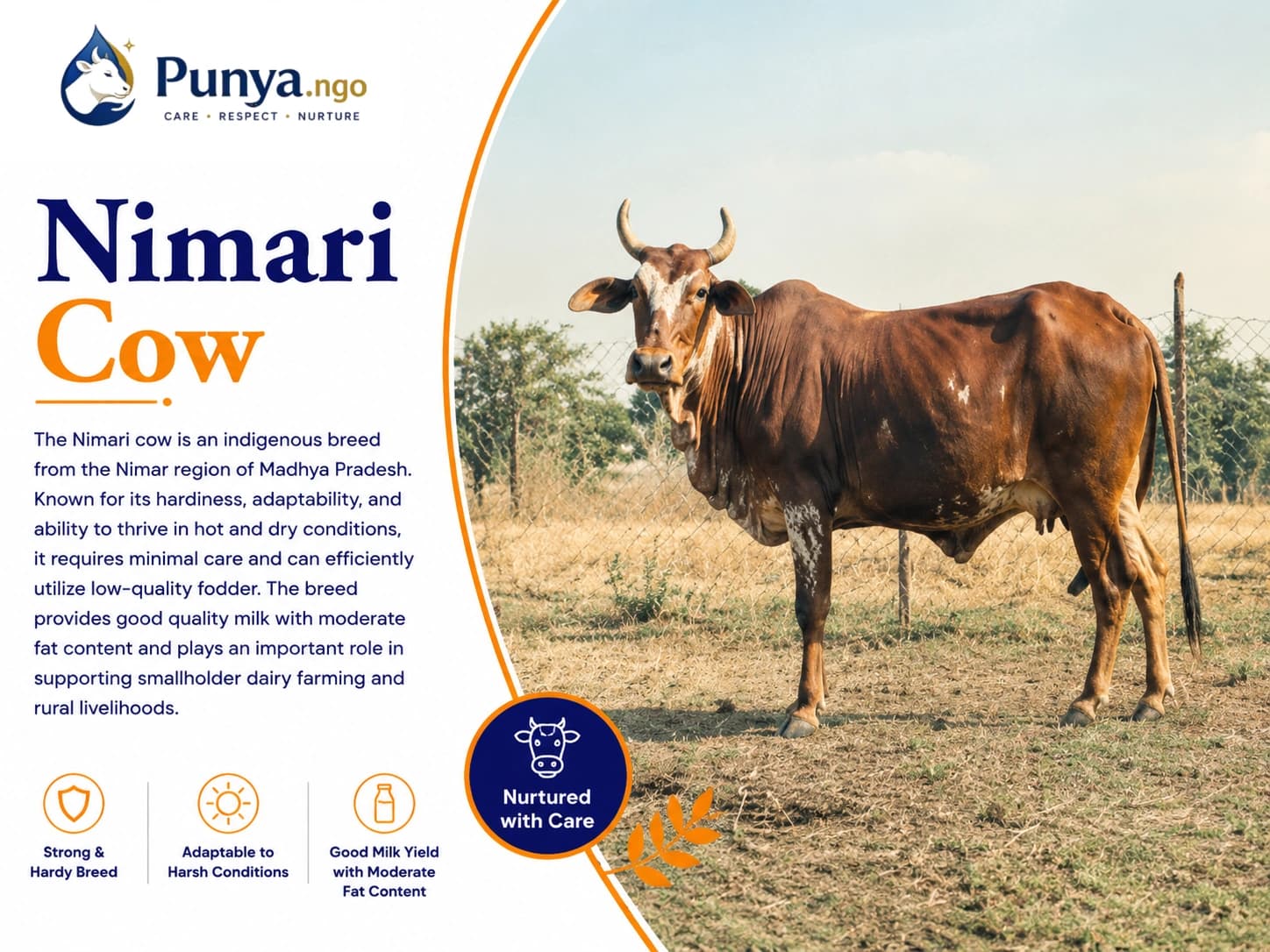
Nimari Cow Breed in India: Origin, Characteristics, Milk Production, and Farming Value
Nimari Cow Breed in India is an indigenous cattle breed known for its adaptability, hardiness, and usefulness in traditional farming systems. Native to the Nimar region of Madhya Pradesh, this desi cattle breed has long supported rural households through milk production and agricultural work.
Although it is not among India's highest milk-yielding breeds, the Nimari cow remains valuable because of its ability to thrive under local conditions, tolerate heat, and perform well with modest management. For many farmers in central India, it represents a practical and sustainable livestock option.
Takeaway: The Nimari Cow Breed in India is a resilient indigenous breed valued for adaptability, utility, and suitability to rural farming conditions.
What is Nimari Cow Breed in India?
The Nimari Cow Breed in India is a native cattle breed originating from the Nimar region of Madhya Pradesh. It is considered an important local breed that developed through natural adaptation to the area's climate, feed resources, and farming practices.
Traditionally, Nimari cattle have been used for both milk production and agricultural purposes. Their ability to survive in relatively harsh environments has made them an important part of rural livestock systems.
Takeaway: Nimari cattle are a locally adapted indigenous breed developed to meet the practical needs of farmers in central India.
Origin and Native Region
The Nimari breed is associated with the historic Nimar region located in southwestern Madhya Pradesh. The breed is commonly found in districts around the Narmada River basin and neighboring agricultural areas.
Native Distribution
| Feature | Details |
|---|---|
| Breed Name | Nimari |
| Breed Type | Indigenous Indian cattle |
| Primary State | Madhya Pradesh |
| Native Region | Nimar region |
| Utility | Milk production and draught work |
| Climate Suitability | Hot and semi-arid conditions |
| Farming System | Rural and mixed farming |
The breed evolved under local environmental conditions, resulting in strong adaptability and resilience.
Takeaway: The Nimari breed is deeply connected to the agricultural landscape of Madhya Pradesh's Nimar region.
Physical Characteristics
The Nimari Cow Breed in India possesses traits commonly seen in hardy indigenous cattle.
Key Physical Features
- Medium-sized body structure
- Strong and compact frame
- Well-developed legs suitable for field movement
- Generally sturdy hooves
- Moderate hump in males
- Loose skin that helps with heat regulation
- Coat color may vary, often showing shades of red, brown, white, or mixed patterns
The breed's appearance reflects functionality rather than specialization for extreme milk production.
Takeaway: Nimari cattle are built for endurance, mobility, and survival under practical farming conditions.
Milk Production and Dairy Value
Milk production from the Nimari Cow Breed in India is generally considered moderate compared to specialized dairy breeds.
Dairy Performance
Nimari cows are mainly maintained by farmers who value reliability and low maintenance requirements rather than maximum milk output. Their milk yield can vary depending on genetics, nutrition, management, and environmental conditions.
In traditional systems, the breed contributes a useful amount of milk for household consumption and local markets.
Why Farmers Still Value the Breed
- Consistent performance under local conditions
- Lower management demands
- Ability to utilize locally available feed resources
- Good survival during challenging seasons
Takeaway: Nimari cows may not be elite dairy animals, but they provide dependable milk production under practical rural conditions.
Temperament and Behavior
The Nimari Cow Breed in India is generally known for its manageable temperament and working ability.
Behavioral Traits
- Calm under familiar handling
- Adapted to village-based farming systems
- Responsive to routine management
- Suitable for mixed-use farming operations
Like most cattle breeds, behavior depends on handling practices, training, and overall management.
Takeaway: Properly managed Nimari cattle are generally cooperative and suitable for small and medium-scale farms.
Climate Adaptability
One of the strongest qualities of the Nimari Cow Breed in India is climate adaptability.
Heat Tolerance
The breed has evolved in a region characterized by:
- High summer temperatures
- Seasonal rainfall variations
- Dry periods
- Variable grazing conditions
Because of this adaptation, Nimari cattle can perform reasonably well where many high-producing exotic breeds may struggle.
Environmental Resilience
Their natural heat tolerance and ability to utilize available resources make them attractive for low-input farming systems.
Takeaway: Heat tolerance and environmental adaptability are among the biggest strengths of the Nimari breed.
Feeding and Management
Successful rearing of the Nimari Cow Breed in India depends on balanced feeding and good husbandry practices.
Feeding Recommendations
Roughage Sources
- Green fodder
- Dry fodder
- Crop residues
- Grazing resources
Concentrate Feeding
- Oilseed cakes
- Grain mixtures
- Mineral supplementation when needed
Management Practices
- Maintain clean housing
- Ensure access to clean drinking water
- Follow vaccination schedules
- Practice parasite control
- Monitor body condition regularly
Although the breed is hardy, proper nutrition significantly improves health and milk performance.
Takeaway: Even resilient breeds like Nimari cattle benefit greatly from balanced feeding and preventive healthcare.
Advantages of Nimari Cow Breed in India
1. Strong Heat Tolerance
The breed performs well in hot climatic conditions common in central India.
2. Indigenous Adaptation
Being a native breed, it is naturally suited to local farming environments.
3. Lower Maintenance Needs
Compared with some specialized dairy breeds, management requirements are generally simpler.
4. Utility in Rural Farming
The breed supports both dairy and traditional agricultural activities.
5. Disease Resilience
Many indigenous breeds, including Nimari cattle, are valued for their ability to cope with local environmental challenges.
Takeaway: Adaptability, resilience, and practical utility make Nimari cattle valuable for rural farmers.
Limitations or Practical Considerations
No cattle breed is perfect, and the Nimari Cow Breed in India also has certain limitations.
Important Considerations
- Milk production is generally lower than specialized dairy breeds.
- Commercial dairy farms seeking maximum milk output may prefer high-yielding breeds.
- Genetic improvement programs may be necessary to enhance productivity in some herds.
- Market recognition is lower compared to famous breeds like Gir or Sahiwal.
Farmers should match breed selection with their production goals.
Takeaway: Nimari cattle excel in adaptability but may not be the best choice for intensive milk-focused commercial dairies.
Best Use Cases for Farmers
The Nimari Cow Breed in India is particularly suitable for:
Small Farmers
Farmers seeking dependable cattle with manageable feeding requirements.
Mixed Farming Systems
Operations combining crop cultivation and livestock production.
Low-Input Agriculture
Areas where high-cost feeding programs are not practical.
Hot Climate Regions
Locations experiencing prolonged summer temperatures.
Takeaway: Nimari cattle fit best in sustainable, low-input, and mixed farming systems.
Comparison with Similar Indian Cow Breeds
| Feature | Nimari | Gir | Sahiwal |
|---|---|---|---|
| Origin | Madhya Pradesh | Gujarat | Punjab Region |
| Milk Yield | Moderate | High | High |
| Heat Tolerance | Excellent | Excellent | Excellent |
| Management Requirement | Moderate | Moderate | Moderate |
| Rural Suitability | Very Good | Good | Good |
| Dairy Specialization | Moderate | Strong | Strong |
Practical Comparison
While Gir and Sahiwal are generally preferred for higher dairy production, Nimari cattle often appeal to farmers who prioritize adaptability, local suitability, and low-input management.
Takeaway: Nimari may produce less milk than Gir or Sahiwal, but it remains highly valuable where resilience and local adaptation matter most.
Conclusion
The Nimari Cow Breed in India represents an important indigenous cattle resource developed through generations of adaptation in the Nimar region of Madhya Pradesh. Its strengths lie in heat tolerance, resilience, utility, and suitability for traditional farming systems.
While it may not compete with specialized dairy breeds in terms of milk yield, it continues to serve farmers who value dependable performance, lower maintenance requirements, and climate adaptability. For many rural households, the Nimari breed remains a practical and sustainable livestock choice.
Takeaway: The Nimari Cow Breed in India is best viewed as a resilient, locally adapted cattle breed that supports sustainable farming rather than maximum milk production.
FAQs About Nimari Cow Breed in India
1. What is the Nimari Cow Breed in India?
It is an indigenous cattle breed native to the Nimar region of Madhya Pradesh and traditionally used for milk production and farming activities.
2. Which state is the Nimari breed mainly found in?
The breed is primarily associated with Madhya Pradesh.
3. Is Nimari a good dairy breed?
It offers moderate milk production and is valued more for adaptability and reliability than maximum milk yield.
4. Can Nimari cattle tolerate hot weather?
Yes. Heat tolerance is one of the breed's strongest characteristics.
5. Are Nimari cows suitable for small farmers?
Yes. Their adaptability and relatively modest management needs make them suitable for many small and medium-scale farmers.
6. How does Nimari compare with Gir cattle?
Gir cattle generally produce more milk, while Nimari cattle are often appreciated for local adaptation and practical farming utility.
7. What type of farming system suits Nimari cattle best?
Mixed farming and low-input rural farming systems are often well suited to the breed.
8. Why is the Nimari breed important?
It helps preserve India's indigenous cattle diversity while supporting sustainable rural agriculture.