Ongole Cow Breed in India | Traits, Milk & Farming Value
Learn about the Ongole Cow Breed in India, including its origin, milk production, characteristics, climate suitability, feeding, and farming benefits.
Ongole Cow Breed in India
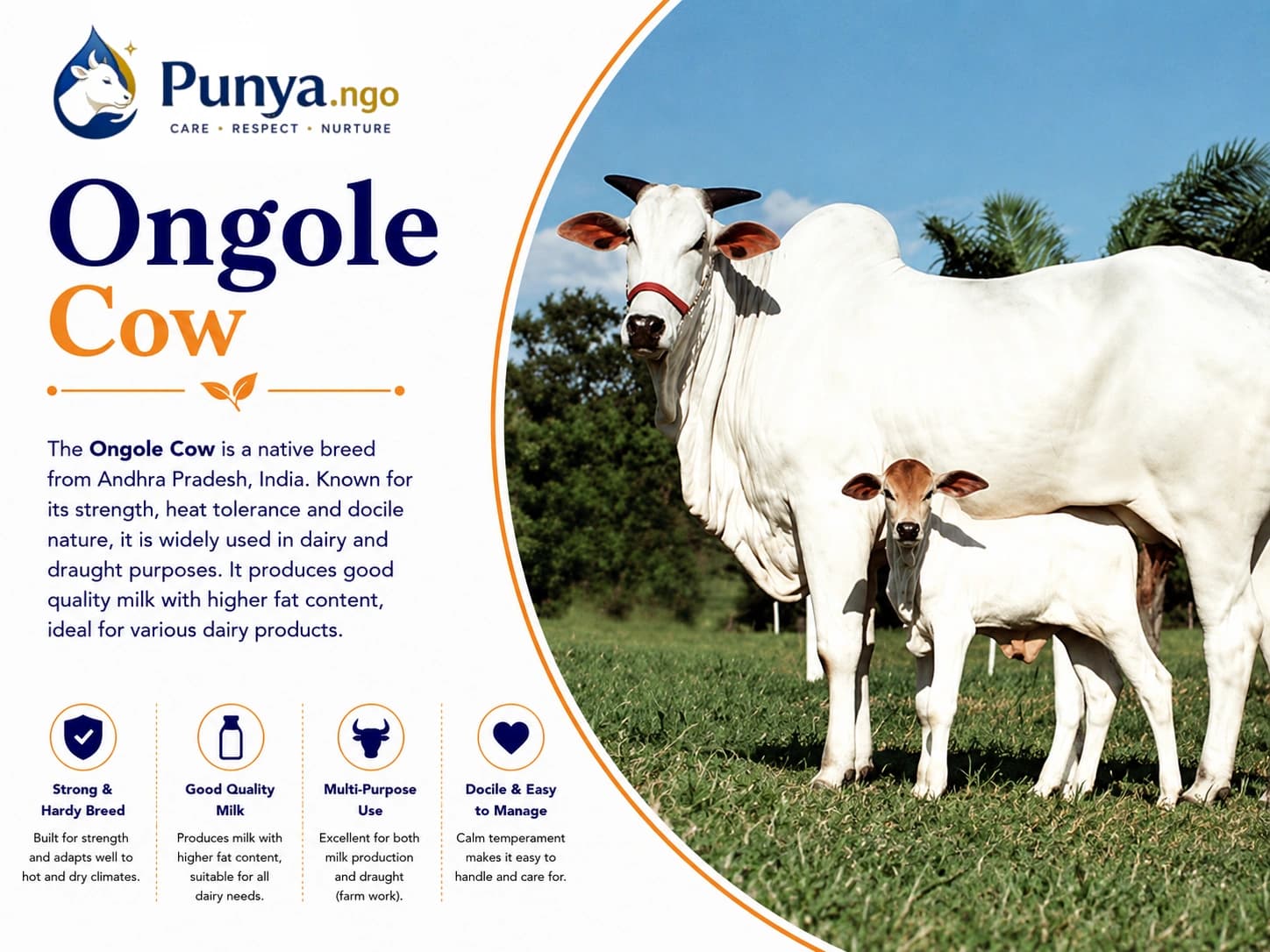
The Ongole Cow Breed in India is a well-known indigenous cattle breed originating from Andhra Pradesh. It is valued for its strength, adaptability, heat tolerance, and practical utility in rural farming systems. While not considered a specialized high-yield dairy breed, it offers a balanced combination of milk production, hardiness, and working ability.
Takeaway: The Ongole Cow Breed in India is a dependable desi cow known for strength, adaptability, and multi-purpose farm utility.
What is Ongole Cow Breed in India?
The Ongole Cow Breed in India is a native Indian cattle breed belonging to the zebu category. It has historically been used for both milk production and agricultural work. Farmers appreciate this breed for its resilience, calm temperament, and ability to thrive under challenging conditions.
Unlike highly specialized dairy breeds, Ongole cattle are valued for their overall usefulness on traditional and mixed farms.
Takeaway: Ongole cattle are versatile indigenous animals suited to practical farming needs.
Origin and Native Region
The Ongole Cow Breed in India originated in the Ongole region of Andhra Pradesh. The breed developed naturally over generations in a hot and dry environment, resulting in exceptional endurance and climate adaptability.
The breed gained recognition not only in India but also internationally due to its strong genetic traits and adaptability.
Origin Overview
| Feature | Details |
|---|---|
| Native State | Andhra Pradesh |
| Native Region | Ongole and surrounding districts |
| Breed Type | Indigenous Zebu Cattle |
| Traditional Use | Draught work and milk production |
Takeaway: The breed's native environment shaped its famous heat tolerance and hardiness.
Physical Characteristics
The Ongole Cow Breed in India has a distinctive appearance that makes it easy to identify.
Key Physical Traits
- Large and muscular body
- White to light grey coat
- Strong legs and hooves
- Prominent hump
- Broad forehead
- Medium to short horns
- Deep chest and sturdy frame
- Loose skin that helps with heat regulation
Mature bulls are especially powerful and are known for their impressive body structure.
Takeaway: Ongole cattle are recognized for their large size, strength, and durable physique.
Milk Production and Dairy Value
Milk production in the Ongole Cow Breed in India is generally moderate. Milk yield depends heavily on feeding practices, genetics, and farm management.
Although not a specialized dairy breed like Sahiwal or Gir, Ongole cows can provide sufficient milk for household consumption and small-scale dairy farming.
Dairy Highlights
| Factor | Observation |
|---|---|
| Milk Yield | Moderate |
| Milk Quality | Good |
| Fat Content | Generally satisfactory |
| Dairy Purpose | Household and small dairy operations |
Farmers often value the breed's reliability more than maximum milk output.
Takeaway: Ongole cows provide practical milk production while maintaining excellent adaptability.
Temperament and Behavior
One of the strengths of the Ongole Cow Breed in India is its manageable temperament.
Behavioral Traits
- Calm and steady nature
- Easy to handle
- Good maternal instincts
- Adaptable to traditional farming systems
- Suitable for small and medium farms
A calm temperament reduces management challenges and improves day-to-day farm operations.
Takeaway: Ongole cattle are generally cooperative and easy to manage.
Climate Adaptability
The Ongole Cow Breed in India is highly suited to hot tropical conditions.
Climate Advantages
- Excellent heat tolerance
- Ability to withstand harsh weather
- Efficient utilization of local feed resources
- Strong disease resistance compared to many exotic breeds
- Performs well in dry regions
This adaptability is one of the primary reasons the breed remains valuable in many parts of India.
Takeaway: Heat tolerance and resilience are among the breed's greatest strengths.
Feeding and Management
Proper feeding and management help maximize the performance of the Ongole Cow Breed in India.
Feeding Recommendations
- Green fodder
- Dry fodder
- Crop residues
- Mineral mixtures
- Clean drinking water
- Seasonal feed supplementation
Management Practices
- Maintain clean housing
- Provide shade during summer
- Follow vaccination schedules
- Deworm regularly
- Ensure adequate ventilation
The breed performs best when basic management practices are consistently followed.
Takeaway: Simple but consistent care helps Ongole cattle remain productive and healthy.
Advantages of Ongole Cow Breed in India
Major Benefits
- Strong and durable body
- Excellent climate adaptability
- Useful for mixed farming
- Good heat tolerance
- Efficient use of local feed resources
- Calm temperament
- Indigenous genetic strength
- Suitable for low-input farming systems
These qualities make Ongole cattle attractive to many traditional farmers.
Takeaway: Ongole offers a practical balance of strength, resilience, and farm utility.
Limitations or Practical Considerations
Every breed has limitations, and the Ongole Cow Breed in India is no exception.
Considerations
- Milk production is moderate rather than very high
- Not ideal for intensive commercial dairy operations
- Large body size requires adequate feeding
- Performance varies based on management quality
Farmers focused solely on maximum milk output may prefer specialized dairy breeds.
Takeaway: Ongole is best viewed as a utility breed rather than a high-production dairy breed.
Best Use Cases for Farmers
The Ongole Cow Breed in India is particularly suitable for:
- Mixed farming systems
- Rural farming operations
- Low-input livestock management
- Indigenous breed conservation
- Small and medium farms
- Farmers seeking hardy cattle
It is especially useful where climate resilience is a priority.
Takeaway: Ongole cattle fit best in practical farming systems that value adaptability and durability.
Comparison with Similar Indian Cow Breeds
Ongole vs Sahiwal
| Feature | Ongole | Sahiwal |
|---|---|---|
| Primary Strength | Utility & endurance | Dairy production |
| Milk Yield | Moderate | Higher |
| Heat Tolerance | Excellent | Excellent |
| Body Size | Larger | Medium |
| Farm Use | Multi-purpose | Dairy-focused |
While Sahiwal is often preferred for milk production, Ongole is valued for its broader utility.
Takeaway: Sahiwal focuses more on milk, while Ongole offers greater all-round farm utility.
Conclusion
The Ongole Cow Breed in India remains one of the country's most respected indigenous cattle breeds. Its combination of strength, adaptability, heat tolerance, and practical usefulness makes it highly relevant for rural farming even today.
Although it may not compete with specialized dairy breeds for maximum milk production, it continues to offer dependable performance under real-world farming conditions.
Takeaway: The Ongole Cow Breed in India is a resilient, versatile, and farmer-friendly breed that excels where adaptability matters most.
FAQs
What is the Ongole Cow Breed in India famous for?
It is famous for strength, heat tolerance, adaptability, and multi-purpose farm utility.
Which state is the native home of the Ongole breed?
The breed originated in Andhra Pradesh.
Is the Ongole Cow Breed in India good for dairy farming?
It can support small-scale dairy farming but is not considered a specialized dairy breed.
Does Ongole cattle tolerate hot climates?
Yes. The breed is known for excellent heat tolerance and climate adaptability.
What color is an Ongole cow?
Most Ongole cattle are white to light grey in color.
Is Ongole a desi cow breed?
Yes. It is one of India's recognized indigenous cattle breeds.
Which is better for milk, Ongole or Sahiwal?
Sahiwal generally produces more milk, while Ongole offers greater overall utility.
Why do farmers still prefer Ongole cattle?
Farmers value the breed's hardiness, low-input suitability, calm temperament, and adaptability.