Poda Thurpu Cow Breed in India | Complete Guide
Learn about the Poda Thurpu Cow Breed in India, its origin, characteristics, milk production, adaptability, advantages, and farming value.
Poda Thurpu Cow Breed in India: Origin, Characteristics, Milk Production, and Farming Value
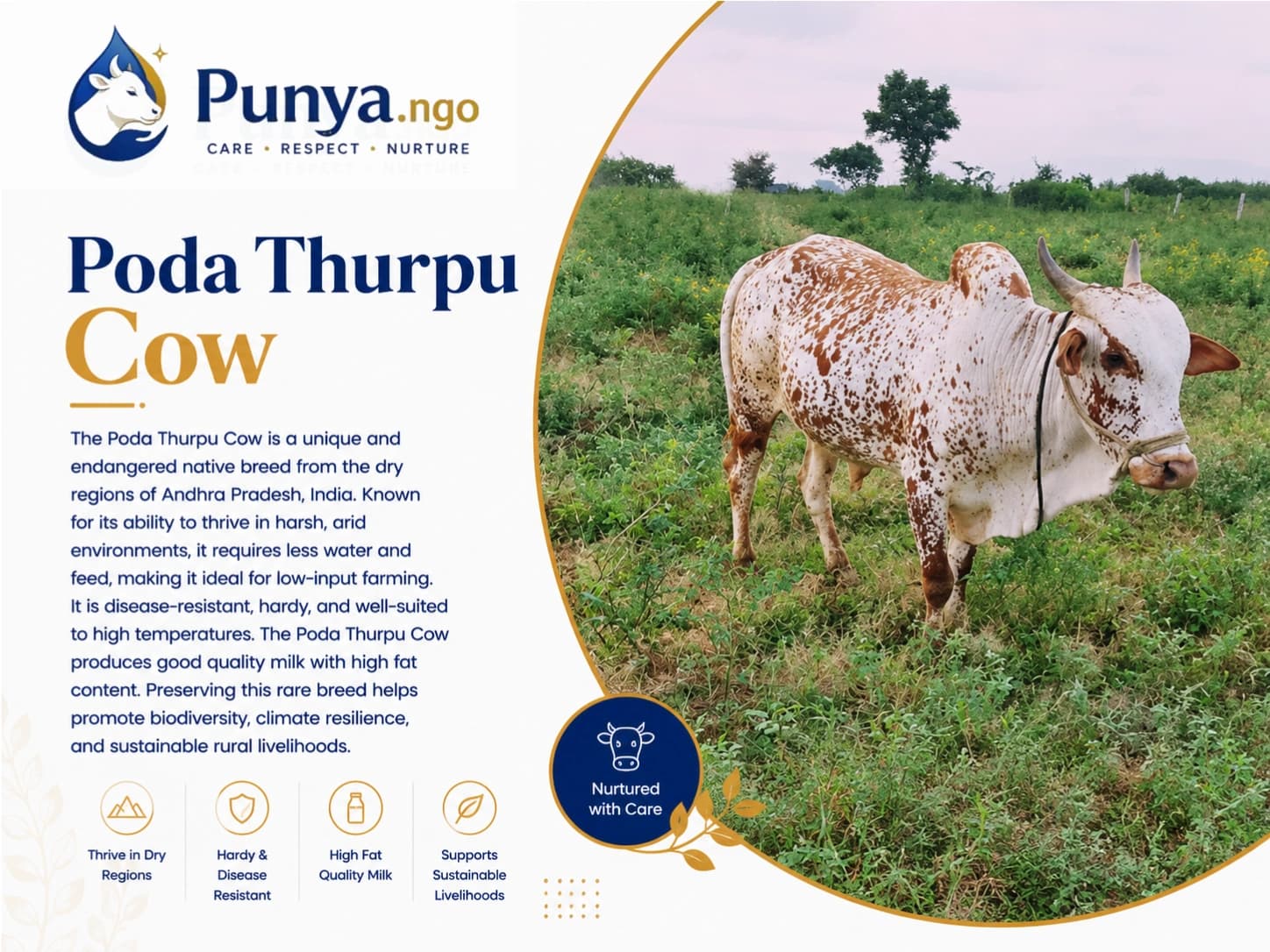
Poda Thurpu Cow Breed in India is a lesser-known indigenous cattle breed traditionally associated with rural farming systems in eastern India. This breed is valued for its hardiness, adaptability, and ability to thrive under local environmental conditions. While it is not primarily known as a high-yield dairy breed, it plays an important role in supporting small-scale farming communities through its resilience and utility.
For farmers seeking a low-maintenance desi cow that can perform well in challenging climates, the Poda Thurpu Cow Breed in India offers practical advantages that go beyond milk production alone.
Takeaway: The Poda Thurpu breed is valued for adaptability, resilience, and suitability for traditional farming systems.
What is Poda Thurpu Cow Breed in India?
The Poda Thurpu Cow Breed in India is an indigenous breed of Indian cattle that has developed naturally through generations of adaptation to local farming conditions. Like many native cattle breeds, it is well suited to extensive grazing systems and low-input management practices.
The breed is traditionally maintained by rural households that depend on cattle for multiple purposes, including milk, manure, and agricultural support.
Key Highlights
| Feature | Description |
|---|---|
| Breed Type | Indigenous Indian cattle |
| Primary Utility | Rural farming and household milk production |
| Climate Suitability | Tropical and semi-tropical regions |
| Maintenance Level | Low to moderate |
| Heat Tolerance | High |
| Farming System | Traditional and mixed farming |
Takeaway: Poda Thurpu is a hardy indigenous cattle breed designed by nature and local farming practices rather than intensive breeding programs.
Origin and Native Region
The Poda Thurpu Cow Breed in India is traditionally associated with the eastern coastal regions of India, particularly areas within present-day Andhra Pradesh and neighboring regions.
Over time, local farmers selected animals that could survive hot weather, seasonal fodder shortages, and extensive grazing conditions. This natural selection contributed to the breed's resilience and adaptability.
Native Environment
- Tropical climate
- Seasonal rainfall patterns
- Open grazing lands
- Smallholder farming systems
- Mixed crop-livestock agriculture
The breed evolved as part of a practical farming ecosystem where cattle were expected to perform efficiently with limited resources.
Takeaway: The breed developed in eastern Indian farming landscapes where adaptability was more important than maximum production.
Physical Characteristics
The Poda Thurpu Cow Breed in India possesses many traits commonly found in indigenous Indian cattle.
Appearance
- Medium-sized body frame
- Strong skeletal structure
- Well-developed legs and hooves
- Moderate hump
- Functional body build suited for grazing
- Alert expression
- Good mobility over long distances
Coat and Color
The coat color can vary among individual animals and local populations. Common shades may include:
- White
- Grey
- Brown
- Mixed color combinations
Structural Strengths
The breed's body structure is designed more for endurance and survival than for specialized dairy production.
Takeaway: Poda Thurpu cattle are built for durability, mobility, and efficient adaptation to rural conditions.
Milk Production and Dairy Value
Milk production in the Poda Thurpu Cow Breed in India is generally considered modest compared to specialized dairy breeds.
Dairy Characteristics
- Suitable for household milk needs
- Can support small-scale dairy activities
- Maintains production under basic feeding conditions
- Performs reasonably well in traditional farming systems
Milk yield can vary depending on:
- Genetics
- Nutrition quality
- Health management
- Environmental conditions
- Availability of fodder
Although milk output is not exceptionally high, farmers often appreciate the breed's ability to remain productive even under resource constraints.
Takeaway: The breed offers dependable milk production under low-input farming conditions rather than maximum dairy output.
Temperament and Behavior
The Poda Thurpu Cow Breed in India is generally known for being active and adaptable.
Behavioral Traits
- Alert in nature
- Strong grazing instinct
- Good movement ability
- Adapted to open-field environments
- Familiar with village-based farming systems
Animals raised with regular human interaction are typically easier to manage and handle.
Takeaway: Poda Thurpu cattle are active, practical animals well suited to traditional grazing systems.
Climate Adaptability
Climate adaptability is one of the most important strengths of the Poda Thurpu Cow Breed in India.
Adaptation Advantages
- Excellent heat tolerance
- Performs well in tropical climates
- Handles seasonal environmental changes
- Utilizes local grazing resources efficiently
- Shows resilience during feed scarcity periods
These qualities make indigenous cattle increasingly valuable in regions facing climate uncertainty and changing weather patterns.
Takeaway: Heat tolerance and environmental resilience are among the breed's strongest advantages.
Feeding and Management
The Poda Thurpu Cow Breed in India can be maintained effectively using locally available feed resources.
Feeding Practices
A balanced feeding plan may include:
- Green fodder
- Dry fodder
- Crop residues
- Agricultural by-products
- Mineral mixtures
- Clean drinking water
Management Recommendations
Housing
- Maintain clean shelters
- Ensure proper ventilation
- Protect animals from extreme weather
Health Care
- Follow vaccination schedules
- Conduct routine deworming
- Monitor animal health regularly
Breeding Management
- Use healthy breeding stock
- Maintain breeding records when possible
- Avoid excessive inbreeding
Grazing Management
- Encourage controlled grazing
- Utilize pasture resources efficiently
Takeaway: Consistent feeding and basic health care are usually sufficient to maintain good performance.
Advantages of Poda Thurpu Cow Breed in India
The Poda Thurpu Cow Breed in India provides several benefits to rural livestock owners.
Major Advantages
- Strong heat tolerance
- Adaptation to local environments
- Lower maintenance costs
- Efficient use of available fodder
- Good disease resistance
- Suitable for small-scale farming
- Compatible with sustainable agriculture
- Performs well in low-input systems
For many farmers, these practical benefits outweigh the limitations of lower milk yield.
Takeaway: Adaptability and low maintenance requirements make this breed highly practical for traditional farming.
Limitations or Practical Considerations
Like all cattle breeds, the Poda Thurpu Cow Breed in India has certain limitations.
Potential Challenges
- Lower milk production than commercial dairy breeds
- Limited use in intensive dairy operations
- Less documented compared to major Indian breeds
- Availability of organized breeding programs may be limited
Farmers focused entirely on commercial milk production may find specialized dairy breeds more suitable.
Takeaway: The breed prioritizes resilience and sustainability over maximum dairy performance.
Best Use Cases for Farmers
The Poda Thurpu Cow Breed in India performs best in situations where adaptability is more important than high production.
Ideal For
Small and Marginal Farmers
Its low maintenance needs make it suitable for limited-resource households.
Traditional Farming Systems
The breed integrates naturally into mixed crop-livestock agriculture.
Sustainable Agriculture
Farmers practicing low-input and environmentally friendly farming can benefit from its hardiness.
Hot Climate Regions
Heat tolerance allows reliable performance in warm conditions.
Rural Dairy Needs
The breed can provide milk for family consumption and local markets.
Takeaway: The breed is best suited for farmers who value sustainability, resilience, and manageable costs.
Comparison with Similar Indian Cow Breeds
| Feature | Poda Thurpu Cow Breed in India | Ongole Cow |
|---|---|---|
| Origin | Eastern India | Andhra Pradesh |
| Body Size | Medium | Large |
| Milk Yield | Moderate to Low | Moderate |
| Heat Tolerance | High | High |
| Feed Efficiency | Good | Good |
| Maintenance Cost | Relatively Low | Moderate |
| Farming Style | Traditional Farming | Dairy and Draught Utility |
The Ongole breed is generally larger and more commercially recognized, while the Poda Thurpu Cow Breed in India is appreciated for local adaptability and efficient performance under traditional farming conditions.
Takeaway: Compared to Ongole cattle, Poda Thurpu is often more suitable for low-input smallholder farming systems.
Conclusion
The Poda Thurpu Cow Breed in India represents the enduring value of indigenous Indian cattle. Although it is not known for high milk production, it provides several practical advantages that remain highly relevant for modern rural agriculture.
Its heat tolerance, adaptability, efficient feed utilization, and low maintenance requirements make it a dependable choice for small farmers and sustainable farming systems. As interest in resilient livestock grows, indigenous breeds like the Poda Thurpu Cow Breed in India continue to play an important role in preserving agricultural sustainability and supporting rural livelihoods.
Takeaway: Poda Thurpu cattle offer a balanced combination of resilience, adaptability, and practical value for traditional Indian farming.
FAQs
What is the Poda Thurpu Cow Breed in India?
The Poda Thurpu Cow Breed in India is an indigenous cattle breed known for adaptability, hardiness, and suitability for traditional farming systems.
Where is the Poda Thurpu breed found?
The breed is mainly associated with eastern and southeastern parts of India, particularly rural farming regions.
Is the Poda Thurpu breed good for dairy farming?
It can provide milk for household and small-scale dairy needs but is not considered a high-yield commercial dairy breed.
What is the biggest advantage of this breed?
Its excellent heat tolerance and ability to thrive under low-input management conditions.
Can Poda Thurpu cattle survive in hot climates?
Yes. The breed is naturally adapted to tropical and warm climatic conditions.
What do Poda Thurpu cattle eat?
They can efficiently utilize green fodder, dry fodder, crop residues, and locally available feed resources.
Is the breed suitable for small farmers?
Yes. Its low maintenance requirements make it highly suitable for smallholder farming systems.
How does it compare with specialized dairy breeds?
It produces less milk but generally requires lower investment and adapts better to challenging local conditions.