Punganur Cow Breed in India | Complete Guide
Learn about Punganur Cow Breed in India, its origin, milk yield, characteristics, feeding, management, advantages, and farming value.
Punganur Cow Breed in India: Complete Guide to Origin, Milk Production, Care, and Farming Value
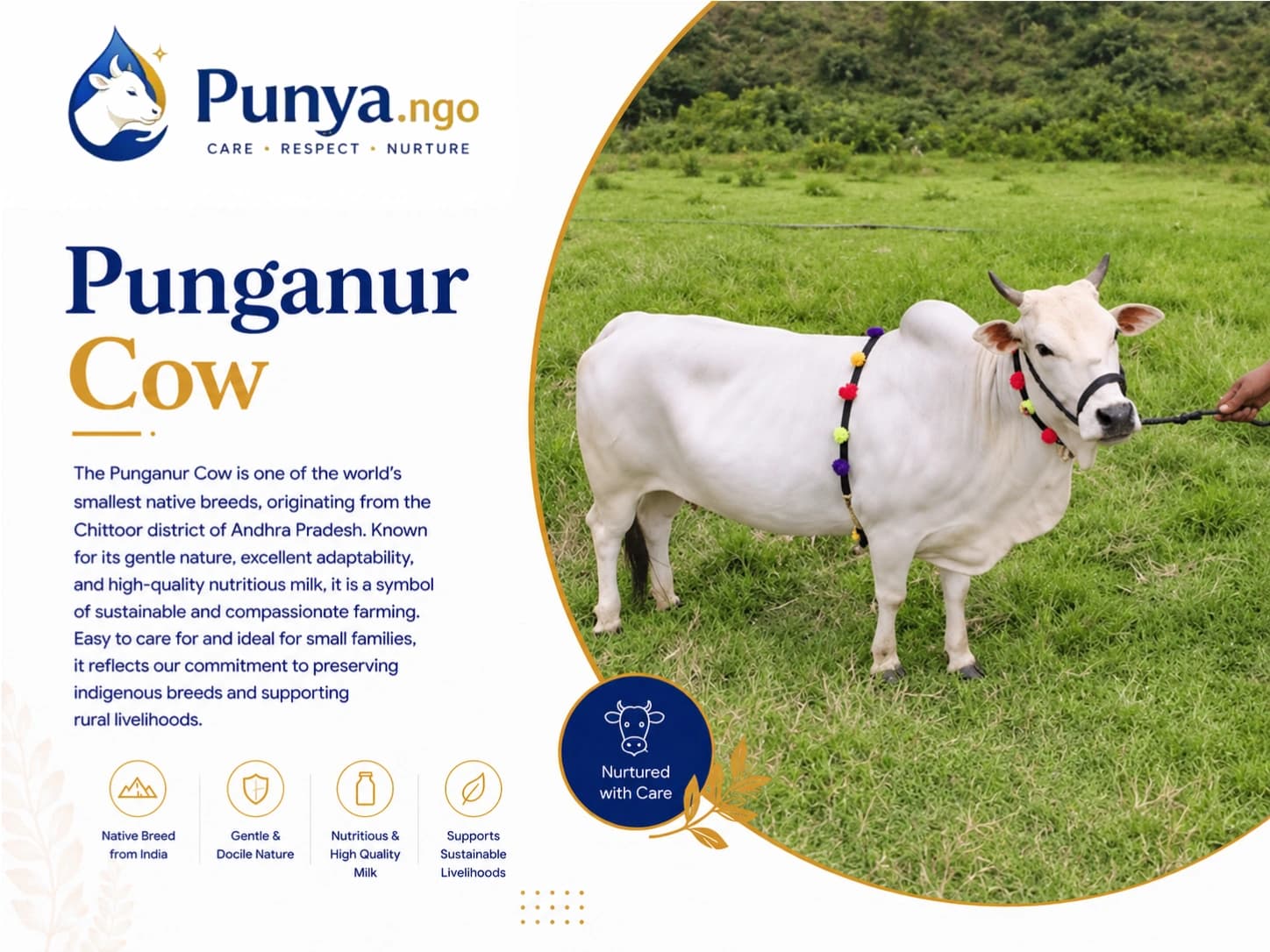
Punganur Cow Breed in India is one of the smallest and most unique indigenous cattle breeds found in the country. Native to Andhra Pradesh, this rare desi cow is valued for its compact size, adaptability, manageable feeding requirements, and cultural importance. Although it is not a high-yield commercial dairy breed, it remains highly relevant for small farmers, conservation programs, and traditional livestock systems.
The breed represents the strength of indigenous Indian cattle that have adapted naturally to local environments over generations. Its ability to thrive under limited resources makes it particularly attractive for rural farming households.
Takeaway: Punganur Cow Breed in India is a rare indigenous cattle breed known for its miniature size, adaptability, and suitability for low-input farming systems.
What is Punganur Cow Breed in India?
The Punganur Cow Breed in India is a native cattle breed originating from the Punganur region of Andhra Pradesh. It is widely recognized as one of the smallest cattle breeds in the world.
Unlike specialized dairy breeds developed primarily for high milk production, Punganur cattle are appreciated for their easy management, adaptability, and usefulness in small-scale farming environments.
Today, the breed is considered an important genetic resource among Indian cattle breeds and is actively promoted through conservation efforts.
Takeaway: The Punganur breed is a miniature indigenous cow breed valued for adaptability, sustainability, and preservation of native cattle genetics.
Origin and Native Region
The Punganur Cow Breed in India takes its name from Punganur town in the Chittoor district of Andhra Pradesh.
Breed Origin Overview
| Feature | Details |
|---|---|
| Breed Name | Punganur |
| Origin State | Andhra Pradesh |
| Native Region | Punganur, Chittoor District |
| Category | Indigenous Breed |
| Primary Utility | Milk Production & Household Farming |
| Farming System | Smallholder & Traditional |
The breed evolved under local climatic conditions and became naturally suited to the semi-arid regions of southern India.
Due to declining population numbers in the past, conservation initiatives have become increasingly important for protecting the breed.
Takeaway: The Punganur breed originated in Andhra Pradesh and remains deeply connected to traditional farming communities.
Physical Characteristics
One of the most remarkable features of Punganur Cow Breed in India is its exceptionally small stature.
Key Physical Features
- Very small and compact body
- Short, sturdy legs
- Broad forehead
- Small hump
- Well-developed udder
- Curved horns
- Strong body structure despite miniature size
- Multiple coat color variations
Physical Characteristics at a Glance
| Characteristic | Description |
|---|---|
| Body Size | Very Small |
| Build | Compact |
| Horns | Short to Medium |
| Coat Color | White, Grey, Brown, Black, Mixed |
| Temperament | Calm |
| Adaptability | High |
Despite being small, the breed demonstrates good resilience and can adapt well to village farming conditions.
Takeaway: The miniature body size is the most distinctive feature of the Punganur breed.
Milk Production and Dairy Value
Punganur Cow Breed in India is generally classified as a low-to-moderate milk-producing indigenous breed.
Milk production varies depending on genetics, nutrition, management practices, and environmental conditions. While milk yield is lower than specialized dairy breeds, many farmers value the breed because maintenance costs are also significantly lower.
Dairy Value of Punganur Cattle
- Suitable for household milk needs
- Lower feeding expenses
- Adapted to local fodder resources
- Useful for small-scale dairy farming
- Supports sustainable livestock systems
The economic value of the breed often comes from balancing moderate milk production with relatively low input costs.
Takeaway: Punganur cattle are most suitable for household and small-scale dairy requirements rather than commercial milk production.
Temperament and Behavior
The Punganur Cow Breed in India is generally known for its calm and manageable nature.
Behavioral Traits
- Gentle temperament
- Easy to handle
- Farmer-friendly
- Suitable for family-operated farms
- Comfortable in stall-feeding systems
- Adaptable to semi-grazing systems
Their small size further reduces handling difficulties, making them practical for farmers with limited labor resources.
Takeaway: Calm behavior and easy handling are major strengths of the Punganur breed.
Climate Adaptability
The Punganur Cow Breed in India has evolved under warm climatic conditions and demonstrates strong adaptability.
Climate Suitability
- Good heat tolerance
- Adapted to tropical environments
- Performs well in semi-arid regions
- Utilizes local feed resources efficiently
- Suitable for many parts of southern India
Like all cattle breeds, they still require adequate water, shade, and balanced nutrition to perform effectively.
Takeaway: The breed is naturally adapted to warm Indian climate and resource-limited farming conditions.
Feeding and Management
Proper feeding and management are essential for maintaining healthy and productive Punganur cattle.
Feeding Requirements
- Green fodder
- Dry fodder
- Crop residues
- Mineral supplements
- Fresh drinking water
- Seasonal nutritional support
Housing Management
- Clean housing area
- Good ventilation
- Dry flooring
- Protection from extreme weather
Health Management
- Routine vaccination
- Deworming schedules
- Veterinary health monitoring
- Preventive disease management
Breeding Management
- Maintain breed purity
- Use healthy breeding stock
- Keep breeding records
- Monitor reproductive performance
Because of their smaller body size, feed requirements are generally lower than larger dairy cattle.
Takeaway: Consistent nutrition and preventive healthcare contribute more to productivity than expensive infrastructure.
Advantages of Punganur Cow Breed in India
1. Small Body Size
Requires less housing space and lower feed intake.
2. Heat Tolerance
Performs well in warm climatic conditions.
3. Indigenous Adaptation
Naturally suited to local environments.
4. Easy Management
Simple handling due to compact size and calm nature.
5. Lower Maintenance Costs
Suitable for resource-limited farmers.
6. Conservation Importance
Preserves valuable indigenous cattle genetics.
7. Suitable for Small Farms
Works well in household and backyard farming systems.
Takeaway: Adaptability, low maintenance, and ease of management are the breed's biggest strengths.
Limitations or Practical Considerations
No cattle breed is perfect, and Punganur Cow Breed in India also has some practical limitations.
Important Considerations
- Lower milk yield than commercial dairy breeds
- Limited suitability for intensive dairy farming
- Breed availability may be restricted
- Conservation concerns remain important
Farmers focused purely on maximizing milk production may find larger dairy breeds more profitable.
Takeaway: The breed excels in sustainability and adaptability but is not designed for high-volume commercial milk production.
Best Use Cases for Farmers
The Punganur Cow Breed in India performs best under specific farming conditions.
Ideal For
- Small farmers
- Marginal farmers
- Household dairy systems
- Indigenous breed conservation
- Low-input farming systems
- Farmers with limited land
Less Suitable For
- Large dairy farms
- Intensive milk production systems
- High-output commercial dairy businesses
Takeaway: The breed is best suited for sustainable, low-input, and small-scale farming operations.
Comparison with Similar Indian Cow Breeds
Punganur vs Gir Cow
| Feature | Punganur | Gir |
|---|---|---|
| Origin | Andhra Pradesh | Gujarat |
| Body Size | Very Small | Large |
| Milk Yield | Lower | Higher |
| Feed Requirement | Lower | Higher |
| Heat Tolerance | Good | Excellent |
| Management Ease | Easy | Moderate |
| Commercial Dairy Potential | Limited | High |
The Gir breed is generally preferred for commercial dairy production because of its higher milk yield. However, Punganur cattle offer advantages where land, feed, and management resources are limited.
Takeaway: Gir is better for commercial milk production, while Punganur is better for low-input and space-constrained farming.
Conclusion
Punganur Cow Breed in India remains one of the most unique indigenous cattle breeds in the country. Its miniature size, adaptability, manageable feeding requirements, calm temperament, and cultural significance make it valuable for traditional farming systems.
Although it cannot compete with specialized dairy breeds in terms of milk volume, its ability to thrive under limited resources gives it a unique role in sustainable livestock farming. For farmers seeking a hardy desi cow suited to household dairy needs and low-input agriculture, the Punganur breed remains a practical and meaningful choice.
Takeaway: The Punganur breed is best appreciated for sustainability, adaptability, and conservation value rather than maximum milk production.
FAQs About Punganur Cow Breed in India
1. What is special about Punganur Cow Breed in India?
It is one of the smallest indigenous cattle breeds in the world and is known for its adaptability and low maintenance requirements.
2. Where did the Punganur breed originate?
The breed originated in the Punganur region of Andhra Pradesh.
3. Is Punganur cow suitable for dairy farming?
Yes, it is suitable for household and small-scale dairy farming, although it is not a high-yield commercial dairy breed.
4. Does the Punganur breed tolerate hot weather?
Yes, the breed has good heat tolerance and adapts well to tropical and semi-arid climates.
5. What type of farmers benefit most from this breed?
Small farmers, marginal farmers, and low-input farming households benefit the most.
6. Is Punganur an indigenous Indian cattle breed?
Yes, it is a recognized indigenous breed native to India.
7. Does the breed require a large quantity of feed?
No. Due to its small body size, feed requirements are generally lower than those of larger dairy breeds.
8. Why is conservation of the Punganur breed important?
Conservation helps preserve valuable indigenous cattle genetics and protects an important part of India's livestock heritage.