Red Kandhari Cow Breed in India | Guide
Learn about the Red Kandhari Cow Breed in India, including origin, characteristics, milk yield, adaptability, advantages, and farming uses.
Red Kandhari Cow Breed in India: Origin, Characteristics, Milk Production, and Farming Value
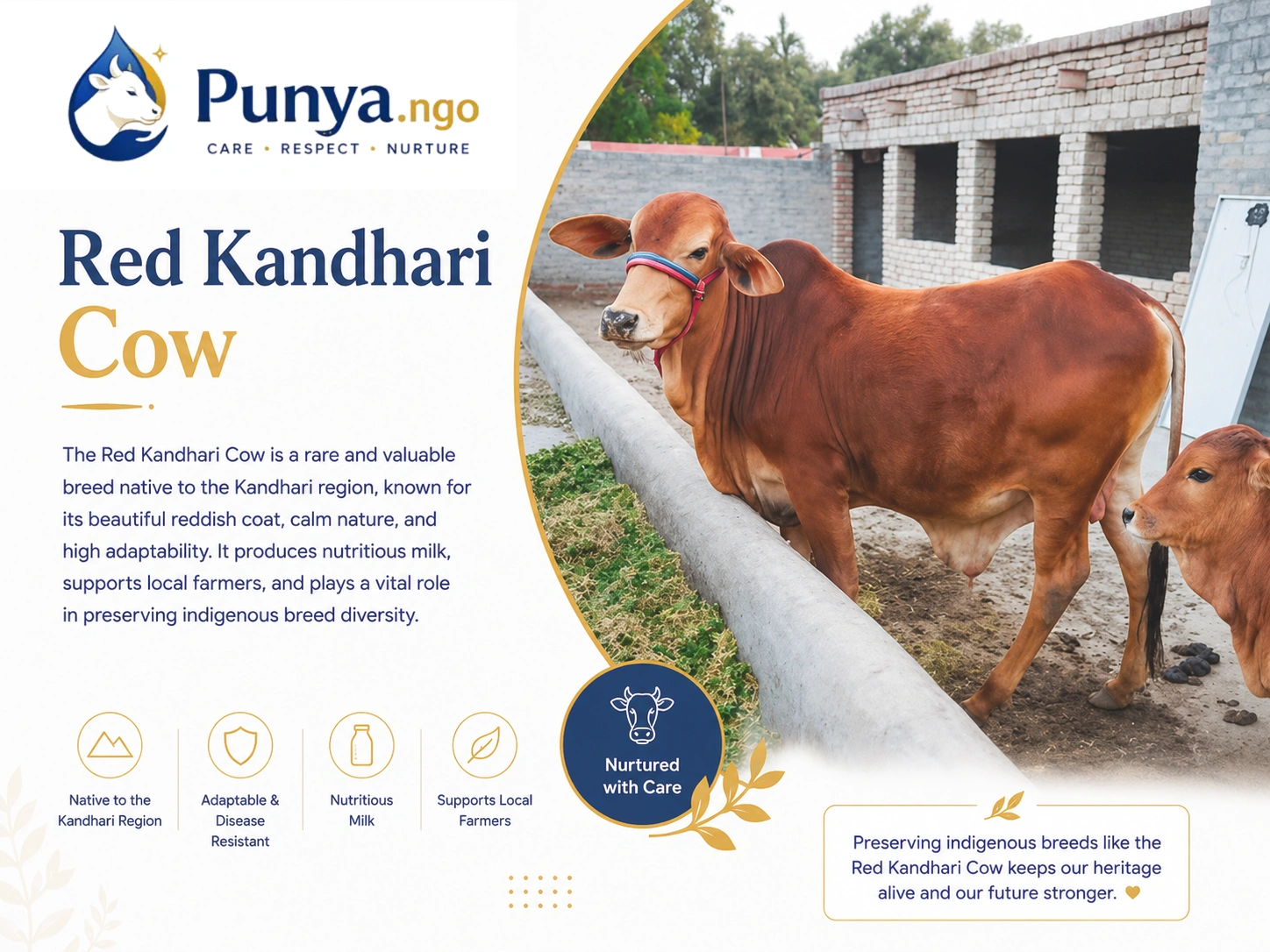
Red Kandhari Cow Breed in India is an indigenous cattle breed native to Maharashtra and is known for its distinctive red coat, strong body structure, and exceptional adaptability to dry climatic conditions. Traditionally valued for agricultural work and rural farming systems, this breed remains an important part of India's native cattle heritage.
Unlike specialized dairy breeds, the Red Kandhari Cow Breed in India is appreciated more for its strength, endurance, and ability to thrive under low-input farming conditions. It continues to serve farmers who need resilient cattle capable of performing well in challenging environments.
Takeaway: The Red Kandhari Cow Breed in India is a hardy indigenous breed valued for strength, adaptability, and sustainable farming.
What is Red Kandhari Cow Breed in India?
The Red Kandhari Cow Breed in India is a native zebu cattle breed primarily found in the Marathwada region of Maharashtra. It is traditionally classified as a dual-purpose breed, although it has historically been more recognized for draft work than high milk production.
For generations, farmers relied on Red Kandhari cattle for plowing fields, transporting goods, and supporting agricultural operations. Today, the breed continues to play a role in rural farming and indigenous cattle conservation.
Takeaway: The Red Kandhari Cow Breed in India is a resilient indigenous cattle breed known for agricultural utility and environmental adaptability.
Origin and Native Region
The Red Kandhari Cow Breed in India originated in the Kandhar region of Nanded district in Maharashtra. The breed gradually spread across neighboring districts where dry climatic conditions favored cattle with strong survival abilities.
Native Distribution Areas
- Nanded
- Latur
- Parbhani
- Hingoli
- Beed
- Osmanabad
The breed evolved naturally under semi-arid environmental conditions, developing characteristics that allow it to withstand heat, fodder scarcity, and prolonged field work.
Breed Overview Table
| Feature | Details |
|---|---|
| Breed Name | Red Kandhari |
| Origin State | Maharashtra |
| Native Region | Kandhar, Nanded District |
| Breed Type | Indigenous Zebu Cattle |
| Primary Utility | Draft Work |
| Secondary Utility | Milk Production |
| Climate Suitability | Semi-Arid and Dry Regions |
| Coat Color | Deep Red to Dark Reddish Brown |
Takeaway: Maharashtra's dry farming regions shaped the Red Kandhari Cow Breed in India into a highly adaptable and durable cattle breed.
Physical Characteristics
The Red Kandhari Cow Breed in India has several distinctive physical traits that make it easy to identify.
Key Physical Features
- Deep red to dark reddish-brown coat color
- Medium to large body size
- Strong and muscular frame
- Broad chest and sturdy build
- Prominent hump, especially in males
- Medium-sized drooping ears
- Strong legs and durable hooves
- Long face with alert expression
- Moderately developed udder
The breed's attractive red coloration is one of its most recognizable characteristics and contributes to its identity among Indian cattle breeds.
Takeaway: Strong body structure and a distinctive red coat are defining features of the Red Kandhari Cow Breed in India.
Milk Production and Dairy Value
The Red Kandhari Cow Breed in India is generally considered a moderate milk-producing breed. While it cannot compete with specialized dairy breeds, it offers practical value for rural households and mixed farming systems.
Milk production varies depending on:
- Genetic potential
- Nutrition quality
- Lactation stage
- Farm management
- Environmental conditions
Dairy Performance Summary
| Parameter | General Observation |
|---|---|
| Milk Yield | Moderate |
| Milk Quality | Suitable for Household Use |
| Feed Efficiency | Good |
| Maintenance Cost | Relatively Low |
| Dairy Focus | Secondary Utility |
Farmers often appreciate the breed's ability to produce milk while requiring fewer resources compared to intensive dairy breeds.
Takeaway: The Red Kandhari Cow Breed in India provides moderate milk production with relatively low maintenance requirements.
Temperament and Behavior
The Red Kandhari Cow Breed in India is known for a calm, manageable, and hardworking temperament.
Common Behavioral Traits
- Alert but generally non-aggressive
- Easy to manage under proper handling
- Strong working ability
- Good grazing behavior
- High endurance during field operations
- Adaptable to rural farming systems
Its balanced temperament makes it suitable for both experienced and traditional livestock keepers.
Takeaway: Calm behavior and strong endurance contribute to the practical value of the Red Kandhari Cow Breed in India.
Climate Adaptability
One of the greatest strengths of the Red Kandhari Cow Breed in India is its remarkable ability to adapt to harsh environmental conditions.
Adaptation Advantages
- Excellent heat tolerance
- Performs well in dry regions
- Efficient use of local fodder resources
- Resistant to environmental stress
- Suitable for extensive grazing systems
The breed evolved under conditions where high temperatures and seasonal feed shortages were common, helping it develop exceptional resilience.
Takeaway: Climate adaptability is one of the strongest advantages of the Red Kandhari Cow Breed in India.
Feeding and Management
Proper feeding and management significantly influence the health and productivity of the Red Kandhari Cow Breed in India.
Feeding Recommendations
Green Fodder
- Maize fodder
- Sorghum
- Napier grass
- Seasonal green forage
Dry Fodder
- Wheat straw
- Sorghum stover
- Crop residues
Concentrates
- Oil cakes
- Grain mixtures
- Mineral supplements
Management Practices
- Provide clean drinking water daily
- Maintain proper housing hygiene
- Follow vaccination schedules
- Deworm regularly
- Ensure shade during extreme heat
Good management helps maximize both health and productive performance.
Takeaway: Balanced nutrition and preventive healthcare are essential for maintaining healthy Red Kandhari cattle.
Advantages of Red Kandhari Cow Breed in India
The breed offers several practical advantages for farmers operating under diverse conditions.
Major Benefits
- Excellent heat tolerance
- Strong draft capability
- Low maintenance requirements
- Efficient utilization of local fodder
- Adaptability to low-input systems
- Good endurance during field work
- Valuable indigenous genetic resource
- Suitable for sustainable farming
These qualities make the breed particularly useful for traditional and resource-conscious farming systems.
Takeaway: The Red Kandhari Cow Breed in India combines resilience, efficiency, and adaptability for sustainable agriculture.
Limitations or Practical Considerations
Like any livestock breed, the Red Kandhari Cow Breed in India has certain limitations.
Important Considerations
- Lower milk yield than specialized dairy breeds
- Reduced demand for draft animals due to mechanization
- Limited suitability for commercial dairy-focused operations
- Conservation efforts are needed in some regions
Farmers whose primary goal is maximum milk production may find other dairy breeds more appropriate.
Takeaway: The Red Kandhari Cow Breed in India is better suited for balanced farming systems than intensive dairy enterprises.
Best Use Cases for Farmers
The Red Kandhari Cow Breed in India performs particularly well in specific farming situations.
Ideal Applications
- Small-scale farming
- Rural mixed farming systems
- Low-input livestock management
- Semi-arid agricultural regions
- Indigenous breed conservation programs
- Farms requiring hardy grazing animals
Its ability to perform reliably under limited-resource conditions remains one of its greatest strengths.
Takeaway: Farmers seeking durable and low-maintenance cattle often benefit most from the Red Kandhari Cow Breed in India.
Comparison with Similar Indian Cow Breeds
A useful comparison can be made between the Red Kandhari Cow Breed in India and the Gir breed.
| Feature | Red Kandhari | Gir |
|---|---|---|
| Origin | Maharashtra | Gujarat |
| Main Utility | Draft + Moderate Milk | Dairy |
| Milk Yield | Moderate | Higher |
| Heat Tolerance | Excellent | Excellent |
| Feed Requirement | Lower | Moderate |
| Maintenance Cost | Lower | Moderate |
| Rural Suitability | Very High | High |
The Gir breed is generally preferred for dairy production, while Red Kandhari is often chosen for its resilience and lower management requirements.
Takeaway: Gir cattle generally excel in milk production, while the Red Kandhari Cow Breed in India offers greater hardiness and lower upkeep costs.
Conclusion
The Red Kandhari Cow Breed in India represents an important component of India's indigenous cattle diversity. Developed in Maharashtra's semi-arid regions, the breed is recognized for its strength, heat tolerance, adaptability, and usefulness in traditional farming systems.
Although it is not among India's highest milk-producing breeds, its resilience, low maintenance needs, and ability to perform under challenging conditions make it a valuable option for many farmers. As interest in sustainable and climate-resilient agriculture grows, preserving indigenous breeds like Red Kandhari remains increasingly important.
Takeaway: The Red Kandhari Cow Breed in India offers long-term value through resilience, adaptability, and suitability for sustainable rural farming.
FAQs About Red Kandhari Cow Breed in India
1. What is the origin of the Red Kandhari cow breed?
The Red Kandhari Cow Breed in India originated in the Kandhar region of Nanded district, Maharashtra.
2. Is Red Kandhari a dairy breed?
It is primarily a draft-oriented indigenous breed with moderate milk production capability.
3. What color is a Red Kandhari cow?
The breed is known for its deep red to dark reddish-brown coat color.
4. Is Red Kandhari suitable for hot climates?
Yes. The Red Kandhari Cow Breed in India has excellent heat tolerance and performs well in semi-arid regions.
5. What is the main use of Red Kandhari cattle?
Traditionally, the breed has been used for agricultural work, transportation, and household milk production.
6. Is Red Kandhari suitable for small farmers?
Yes. Its low maintenance requirements make it suitable for small and medium-scale farmers.
7. How does Red Kandhari compare with Gir cattle?
Gir cattle generally produce more milk, while Red Kandhari cattle are valued for hardiness, endurance, and adaptability.
8. Why is conservation of Red Kandhari important?
Conservation helps preserve valuable indigenous genetics that support biodiversity, climate resilience, and sustainable livestock farming.