Red Sindhi Cow Breed in India | Complete Care Guide
Learn about the Red Sindhi Cow Breed in India, including origin, milk yield, characteristics, feeding, climate suitability, and farming benefits.
Red Sindhi Cow Breed in India: Characteristics, Milk Yield, Benefits and Farming Value
The Red Sindhi Cow Breed in India is one of the most respected indigenous dairy cattle breeds known for its reliable milk production, strong heat tolerance, and adaptability to tropical conditions. Originally associated with the Sindh region, this desi cow has earned a place in Indian dairy farming because it performs well even under challenging climatic conditions. Farmers value the breed for its utility, manageable temperament, and ability to produce milk with relatively modest management inputs.
Takeaway: The Red Sindhi is a proven indigenous dairy breed valued for milk production, adaptability, and resilience in Indian farming systems.
What is Red Sindhi Cow Breed in India?
The Red Sindhi Cow Breed in India is an indigenous cattle breed primarily recognized for dairy purposes. It belongs to the group of Indian cattle breeds that have evolved to withstand hot climates while maintaining productive performance.
The breed is widely appreciated among dairy farmers because it combines decent milk yield with strong disease resistance and environmental adaptability. It is often used in both pure breeding and cattle improvement programs.
Takeaway: Red Sindhi is primarily a dairy-focused indigenous breed known for balancing productivity with adaptability.
Origin and Native Region
The Red Sindhi breed traces its roots to the Sindh region, which is now part of Pakistan. Over time, the breed spread to different parts of India due to its reputation as a dependable milk producer.
Today, Red Sindhi cattle can be found in several Indian states where dairy farming is an important livelihood activity. Government breeding farms and livestock development programs have also contributed to preserving and promoting the breed.
Historical Importance
The breed gained recognition because it adapted well to tropical environments while producing useful quantities of milk. This made it valuable for rural farming systems where environmental conditions can be demanding.
Takeaway: Although originally from the Sindh region, Red Sindhi cattle have become an important part of India's indigenous dairy landscape.
Physical Characteristics
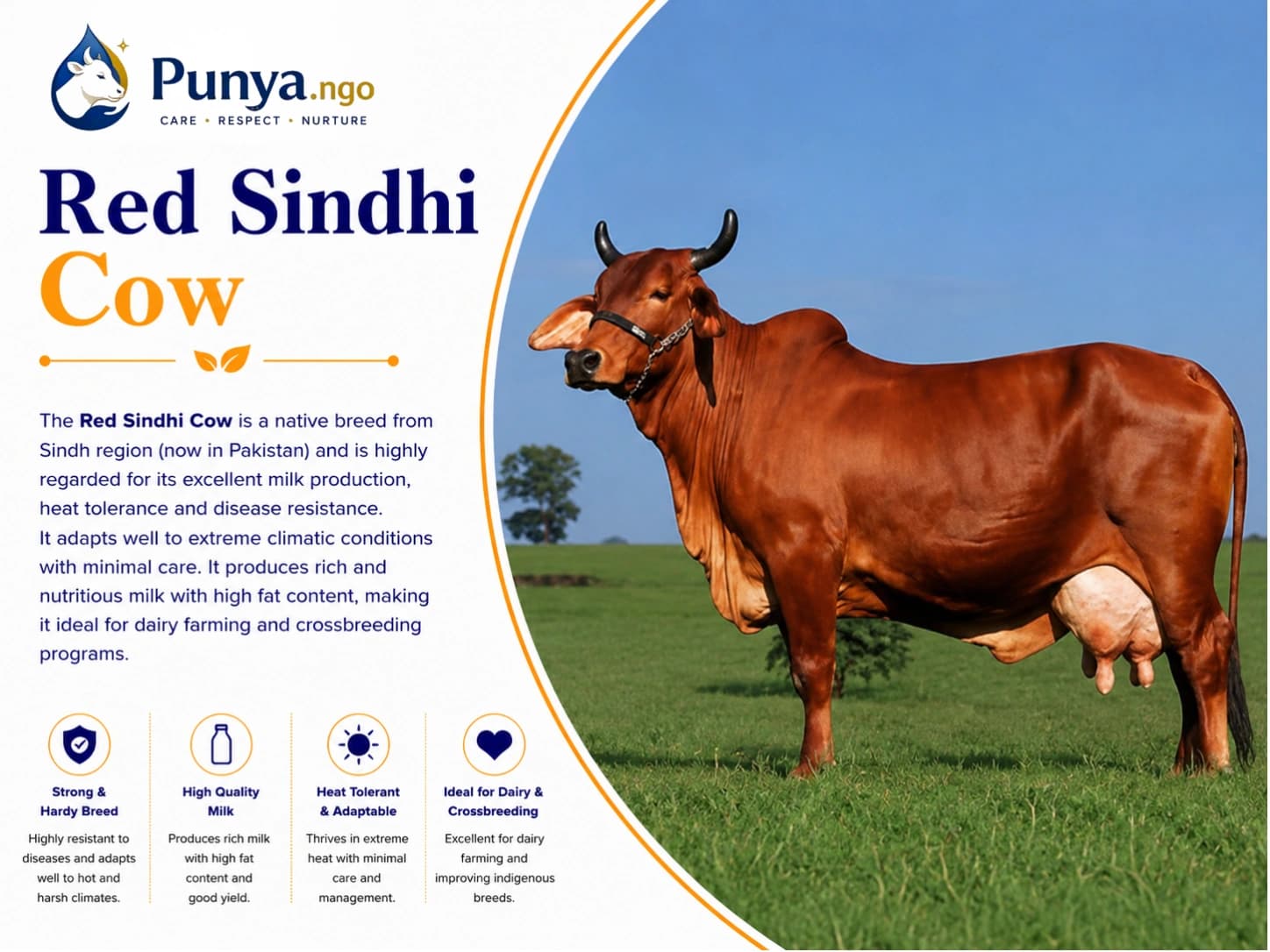
The Red Sindhi breed has a distinctive appearance that makes it relatively easy to identify.
Common Physical Traits
- Coat color ranges from deep red to reddish-brown.
- Some animals may display darker shades on the neck, shoulders, or limbs.
- Medium-sized body with a compact and strong frame.
- Well-developed udder in productive dairy cows.
- Moderate hump typical of Indian cattle.
- Alert eyes and a balanced body structure.
Body Build
The breed is neither extremely large nor excessively small. Its moderate body size contributes to easier maintenance and efficient feed utilization.
Takeaway: Red Sindhi cattle are recognized by their reddish coat, medium build, and dairy-oriented body structure.
Milk Production and Dairy Value
Milk production is the primary reason farmers choose the Red Sindhi Cow Breed in India.
Under proper feeding and management, cows can produce satisfactory quantities of milk suitable for small and medium-scale dairy operations. Milk quality is generally appreciated for household consumption as well as commercial dairy use.
Why Dairy Farmers Prefer Red Sindhi
- Consistent milk production.
- Good performance under hot conditions.
- Lower stress sensitivity compared to some exotic breeds.
- Useful for crossbreeding programs.
Milk Yield Considerations
Actual milk yield varies depending on genetics, nutrition, health care, and farm management practices. Well-managed animals generally perform better than those maintained under poor feeding conditions.
Takeaway: Red Sindhi is valued mainly for dependable dairy performance rather than extremely high milk production.
Temperament and Behavior
The Red Sindhi breed is generally known for a calm and manageable temperament.
Farmers often find these animals easier to handle during feeding, milking, and routine management activities. Proper training and regular human interaction further improve behavior.
Behavioral Traits
- Generally docile.
- Adaptable to farm environments.
- Suitable for family-operated dairy farms.
- Comfortable under routine management systems.
Takeaway: A calm nature makes Red Sindhi cattle practical for both experienced and small-scale farmers.
Climate Adaptability
One of the strongest advantages of the Red Sindhi Cow Breed in India is its ability to thrive in hot and humid environments.
Heat Tolerance
The breed has naturally developed traits that help it cope with high temperatures. This characteristic makes it particularly suitable for tropical and subtropical regions.
Environmental Adaptation
Red Sindhi cattle can perform reasonably well under varying farming conditions, provided their basic nutritional and health requirements are met.
Takeaway: Excellent heat tolerance is one of the breed's biggest strengths in Indian conditions.
Feeding and Management
Like all dairy cattle, Red Sindhi cows require balanced nutrition to achieve their productive potential.
Feeding Recommendations
- Green fodder as the foundation of the diet.
- Dry fodder for fiber requirements.
- Concentrate feed based on milk production level.
- Adequate clean drinking water.
- Mineral mixture and salt supplementation.
Management Practices
- Regular vaccination schedules.
- Timely deworming.
- Clean housing.
- Proper milking hygiene.
- Routine health monitoring.
Practical Observation
Many farmers appreciate Red Sindhi cattle because they can maintain acceptable productivity even when management resources are not highly intensive.
Takeaway: Balanced feeding and basic preventive care are essential for maintaining milk production and animal health.
Advantages of Red Sindhi Cow Breed in India
The breed offers several practical benefits for dairy farmers.
Key Advantages
- Strong heat tolerance.
- Good adaptability to Indian climates.
- Reliable milk production.
- Indigenous genetic strength.
- Useful in breeding programs.
- Manageable temperament.
- Suitable for rural farming systems.
- Relatively efficient under moderate-input conditions.
Long-Term Value
Because of its resilience, the breed can be a sustainable choice for farmers seeking dependable dairy animals rather than maximum production alone.
Takeaway: The breed combines adaptability, resilience, and useful milk production in a practical package.
Limitations or Practical Considerations
No cattle breed is perfect, and Red Sindhi is no exception.
Potential Limitations
- Milk yield may be lower than specialized exotic dairy breeds under intensive systems.
- Availability of high-quality breeding stock can vary by region.
- Productivity still depends heavily on nutrition and management.
Honest Perspective
Farmers looking solely for maximum milk output may compare Red Sindhi with high-producing exotic breeds. However, the breed often compensates through adaptability and lower environmental stress.
Takeaway: Red Sindhi prioritizes balanced performance and resilience rather than record-breaking milk production.
Best Use Cases for Farmers
The Red Sindhi Cow Breed in India fits particularly well in certain farming situations.
Ideal For
- Small dairy farms.
- Rural farming households.
- Indigenous breed conservation programs.
- Tropical and semi-tropical regions.
- Farmers seeking hardy dairy animals.
- Mixed farming systems.
Who Benefits Most?
Farmers who value stability, adaptability, and manageable production often find Red Sindhi cattle a practical choice.
Takeaway: Red Sindhi performs best where adaptability and sustainability matter as much as production.
Comparison with Similar Indian Cow Breeds
Red Sindhi vs Sahiwal
Both are respected indigenous dairy breeds.
Red Sindhi
- Strong heat tolerance.
- Adaptable to varied conditions.
- Good dairy utility.
- Medium-sized body.
Sahiwal
- Often recognized for higher milk production potential.
- Larger body size.
- Popular in organized dairy systems.
Which One is Better?
There is no universal winner. The better breed depends on local climate, feed availability, management level, and farmer goals.
Takeaway: Sahiwal may offer higher production potential, while Red Sindhi is often appreciated for its adaptability and balanced performance.
Conclusion
The Red Sindhi Cow Breed in India remains one of the country's most valuable indigenous dairy cattle breeds. Its combination of milk production, climate adaptability, heat tolerance, manageable temperament, and suitability for rural farming makes it a practical choice for many farmers.
While it may not always match specialized exotic breeds in peak milk output, it delivers something equally important: dependable performance under real-world Indian conditions. For farmers seeking a hardy desi cow with strong dairy utility and long-term sustainability, Red Sindhi continues to be a relevant and trusted option.
Takeaway: Red Sindhi is a dependable indigenous dairy breed that offers a strong balance of productivity, adaptability, and sustainability.
FAQs
What is the primary use of the Red Sindhi Cow Breed in India?
The breed is mainly used for milk production and dairy farming.
Takeaway: Red Sindhi is primarily a dairy breed.
Is Red Sindhi an indigenous Indian cattle breed?
It is an indigenous breed of the Indian subcontinent and is widely maintained in India.
Takeaway: Red Sindhi is recognized as a valuable indigenous cattle breed.
How is the milk production of Red Sindhi cows?
Milk production is generally considered good and reliable under proper management.
Takeaway: Consistent milk yield is one of the breed's strengths.
Can Red Sindhi cattle tolerate hot weather?
Yes. The breed is known for excellent heat tolerance and tropical adaptability.
Takeaway: Red Sindhi performs well in hot climates.
Are Red Sindhi cows suitable for small farmers?
Yes. Their adaptability and manageable temperament make them suitable for small and medium-scale dairy farms.
Takeaway: The breed fits well into rural and family-operated dairy systems.
What color is a Red Sindhi cow?
Most animals display shades of red or reddish-brown, sometimes with darker markings.
Takeaway: The breed is known for its distinctive red coat.
How does Red Sindhi compare with Sahiwal?
Sahiwal may have higher milk production potential, while Red Sindhi is widely appreciated for adaptability and resilience.
Takeaway: The choice depends on farming goals and local conditions.
Why is Red Sindhi important in dairy farming?
It combines milk production, environmental adaptability, and indigenous genetic strength, making it valuable for sustainable dairy systems.
Takeaway: Red Sindhi offers a practical balance of productivity and resilience.