
Sahiwal Cow Breed in India | Complete Guide to Indian Cattle
Learn about the Sahiwal Cow Breed in India, its origin, milk yield, heat tolerance, temperament, care, and value for dairy farming.
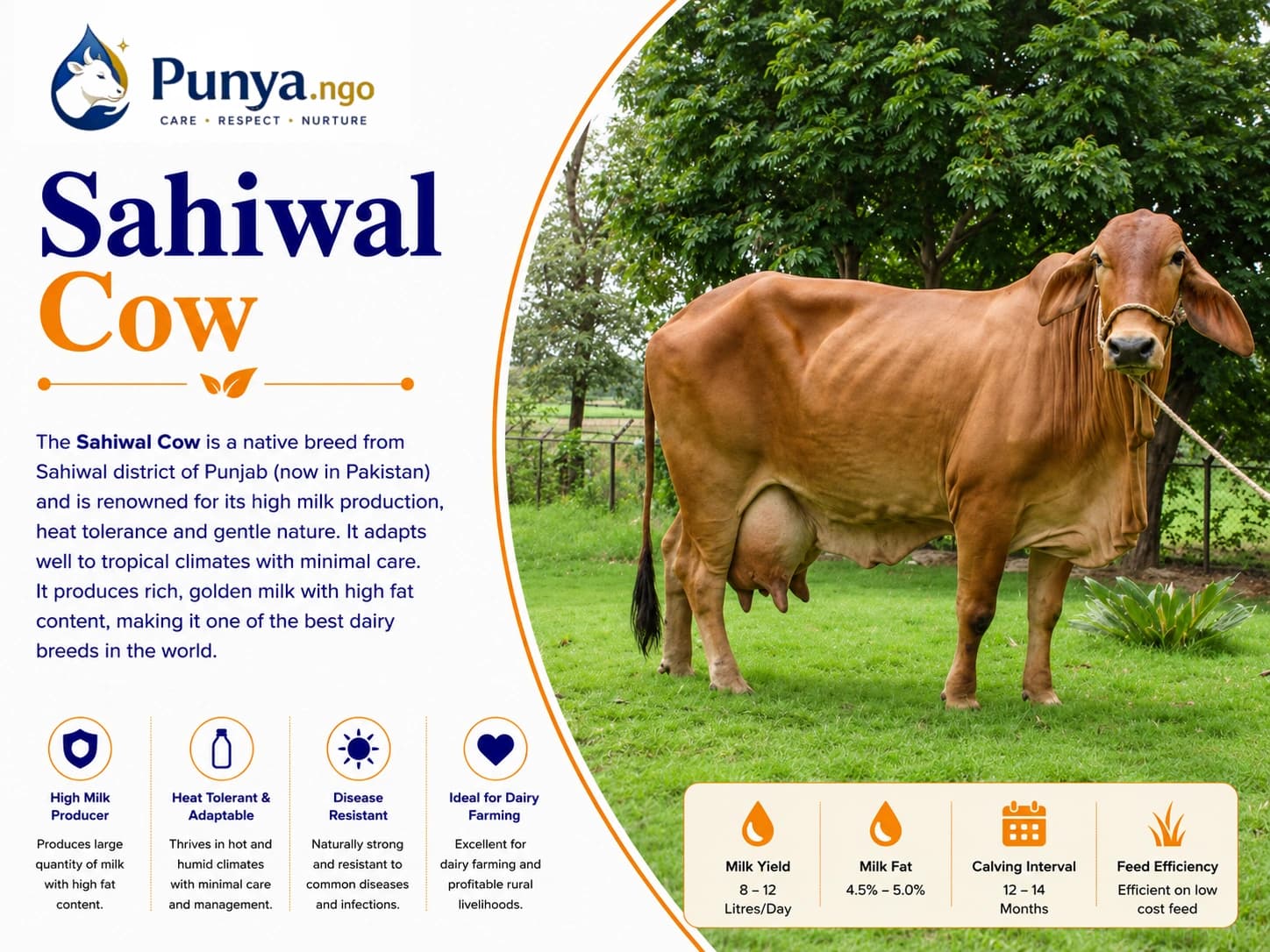
Sahiwal Cow Breed in India: Characteristics, Milk Production, Benefits and Farming Value
Sahiwal Cow Breed in India is one of the most valued indigenous cow breeds for dairy farming because it combines good milk production, strong heat tolerance, and practical usefulness in rural conditions. It is not a high-pressure commercial breed that needs intensive care. Instead, it is a hardy desi cow that fits well into Indian farming systems, especially where climate stress, limited feed resources, and lower input costs matter.
Farmers often prefer the Sahiwal because it is reliable, manageable, and better suited to Indian weather than many exotic dairy cattle. It is especially respected in Punjab, Haryana, Rajasthan, and nearby regions, where heat and dry conditions can affect milk animals quickly.
Takeaway: The Sahiwal is a dependable Indian dairy cow valued for its balance of milk, hardiness, and climate adaptability.
What is Sahiwal Cow Breed in India?
The Sahiwal Cow Breed in India is an indigenous dairy breed known for its milking ability, calm nature, and ability to perform in hot climates. It belongs to the zebu-type Indian cattle group and is considered one of the best milch breeds among desi cows.
Unlike animals selected mainly for very high milk output under controlled farm conditions, the Sahiwal has been shaped by rural farming needs. That means it can handle heat, irregular feeding, walking long distances, and basic management better than many imported dairy breeds.
In simple terms, the Sahiwal is a practical cow breed for Indian farmers who want useful milk production without highly demanding care.
Takeaway: Sahiwal is a native dairy breed built for Indian conditions, not for fragile high-input farming systems.
Origin and Native Region
The Sahiwal Cow Breed in India comes from the broader Punjab region, especially areas that are now part of Pakistan and India. The breed is named after the Sahiwal area, where it developed over time as a strong milking cow for local agriculture.
Historically, it was valued in dry and semi-arid zones because it could tolerate heat, survive on moderate feed, and still produce milk with reasonable consistency. In India, it is associated with Punjab, Haryana, Rajasthan, and other northwestern farming belts where indigenous cattle have long supported rural households.
Its origin matters because it explains why the breed still performs well in Indian summers and under less-than-perfect farm conditions.
Takeaway: The Sahiwal’s native region shaped it into a heat-tolerant, practical dairy breed for Indian rural life.
Physical Characteristics
The Sahiwal Cow Breed in India has a distinct look that makes it easy to recognize once you become familiar with it.
It is usually medium to large in size, with a strong body, loose skin, and a well-developed udder in good milk animals. Coat color is commonly reddish brown, though shades can vary from light tan to deeper red. Some animals may have white markings on the legs, face, or switch.
Its horns are generally short and stubby or moderately developed. The head is broad, the forehead is slightly prominent, and the body is built for endurance rather than showy appearance. The ears are often medium-sized and drooping.
Sahiwal cows are known for a calm frame and a functional dairy body type. They are not overly delicate, and that is one reason they are useful in rural farming.
Takeaway: The Sahiwal has a strong, practical body type that supports milk production and durability in tough conditions.
Milk Production and Dairy Value
The main reason farmers keep the Sahiwal Cow Breed in India is milk. It is widely regarded as one of the best indigenous dairy breeds for consistent milk yield under Indian conditions.
Milk production can vary based on feeding, health, management, and stage of lactation. Under good care, a Sahiwal cow can produce useful commercial milk quantities, though it usually does not match the peak output of high-yield exotic dairy breeds in intensive systems. Its real strength is not just the volume of milk, but the balance between production, resilience, and maintenance cost.
Sahiwal milk is appreciated for its quality, and many farmers value it for being a reliable source of dairy income in small and medium farming systems. For households, it is also a respected desi cow breed because it fits into mixed farming where dung, milk, and breeding value all matter.
In dairy farming, that balance is important. A cow that gives moderate-to-good milk with fewer health problems can sometimes be more profitable than a breed that needs more expense and attention.
Takeaway: The Sahiwal offers practical milk value, especially where farmers want steady output with manageable cost.
Temperament and Behavior
The Sahiwal Cow Breed in India is generally known for a calm and manageable temperament. This is one of the reasons farmers like it. A stable behavior pattern makes daily feeding, milking, cleaning, and handling easier.
Compared with more nervous or high-strung animals, Sahiwals are usually easier to manage in village settings. They are suitable for households and farms where labor may be limited and animals are handled manually rather than with advanced systems.
At the same time, temperament can vary from animal to animal. Good handling from a young age still matters. A cow that is treated gently, kept clean, and fed properly will usually behave better and adapt more smoothly to routine management.
Takeaway: The Sahiwal’s calm nature makes it a practical choice for everyday dairy farming.
Climate Adaptability
One of the biggest strengths of the Sahiwal Cow Breed in India is climate suitability. It handles heat better than many exotic dairy breeds and is more comfortable in hot, dry, and semi-arid environments.
This heat tolerance makes it valuable in regions where summer stress can reduce feed intake, lower milk yield, and increase disease risk in less adapted cattle. Sahiwals also tend to perform better in local Indian weather because they are genetically suited to the environment.
That does not mean they need no protection. Shade, clean water, proper housing, and summer care are still important. But compared with many non-native breeds, the Sahiwal is far more forgiving when temperatures rise.
For Indian farmers, this is a major advantage because climate stress is one of the most common problems in dairy farming.
Takeaway: The Sahiwal is one of the most climate-resilient indigenous cow breeds in India.
Feeding and Management
Good feeding and management are essential for getting the best from the Sahiwal Cow Breed in India. Even a hardy breed cannot perform well on poor nutrition alone.
A balanced ration should include green fodder, dry fodder, and adequate concentrate according to milk stage and body condition. Clean drinking water is non-negotiable, especially in summer. Minerals, salt, and regular deworming also support health and productivity.
Housing should be dry, shaded, and ventilated. The floor should be easy to clean. A wet or dirty shed increases the risk of mastitis, hoof issues, and general stress. Regular grooming and udder care are also important.
For rural farming, the Sahiwal is often best managed as part of a mixed system rather than as a highly industrial dairy animal. It responds well to attention, but it does not demand luxury-level care. That is one reason it remains useful in traditional Indian cattle farming.
Takeaway: With balanced feed, clean housing, and routine care, the Sahiwal performs well in ordinary farm conditions.
Advantages of Sahiwal Cow Breed in India
The Sahiwal Cow Breed in India has several practical advantages that make it attractive to farmers.
First, it is an indigenous breed with strong heat tolerance. Second, it is generally hardy and less sensitive to stress than many exotic dairy animals. Third, it is well suited to rural farming conditions where resources may be limited. Fourth, it offers useful milk production without excessive maintenance costs. Fifth, its calm temperament makes handling easier.
It is also valuable in sustainable dairy farming because it fits Indian climate and local management systems better than many imported alternatives. For farmers who want a dependable cow rather than a fragile high-maintenance animal, the Sahiwal is a sensible choice.
Takeaway: The Sahiwal’s biggest advantage is practical reliability under Indian farming conditions.
Limitations or Practical Considerations
The Sahiwal Cow Breed in India is not perfect, and it is better to be realistic about that.
One limitation is that its milk yield, while good for an indigenous breed, may be lower than that of top exotic dairy breeds kept under intensive feeding systems. Another practical point is that farmers still need proper breeding management, health care, and nutrition to get consistent results. A hardy breed is not the same as a low-care breed.
Also, performance can vary from animal to animal and from farm to farm. Poor feeding, weak veterinary support, and careless breeding can reduce the breed’s potential. So the Sahiwal should be seen as a strong breed, but not a magical one.
Takeaway: The Sahiwal is resilient, but it still needs proper feeding, breeding, and health management to perform well.
Best Use Cases for Farmers
The Sahiwal Cow Breed in India is especially useful for small and medium farmers, rural households, and dairy keepers working in hot regions.
It is a strong option for farmers who want a cow breed that fits local conditions, gives usable milk, and does not require highly expensive management. It also works well in mixed farming systems where animals support household nutrition and farm income.
The breed can suit farmers who value long-term practicality over extreme production numbers. That makes it a sensible choice in villages, semi-arid areas, and regions where weather stress is a major concern.
For farmers focused on indigenous cattle and desi cow conservation, the Sahiwal also has breeding value and cultural importance.
Takeaway: The Sahiwal is best for farmers who want dependable dairy value in real-world Indian conditions.
Comparison with Similar Indian Cow Breeds
When comparing the Sahiwal Cow Breed in India with another well-known indigenous breed such as the Gir cow, the difference is usually in regional suitability and breed emphasis.
Gir cattle are strongly associated with western India and are also valued for milk and adaptability. Sahiwal, however, is often especially praised for its heat tolerance, calm temperament, and practical performance in the northwestern plains. Both are respected Indian cattle breeds, but the best choice often depends on local climate, feeding system, and farm goals.
If a farmer works in a hot, dry area and wants a breed with strong dairy utility and manageable behavior, the Sahiwal is often a very logical option. If the focus is on a different regional system or a different farming style, another indigenous breed may be more suitable.
The key point is not that one breed is universally better, but that the Sahiwal is among the most reliable indigenous dairy breeds for Indian conditions.
Takeaway: Compared with similar Indian breeds, the Sahiwal stands out for heat tolerance, calmness, and practical dairy usefulness.
Conclusion
The Sahiwal Cow Breed in India is one of the most important indigenous cow breeds for farmers who value utility, resilience, and steady milk production. It has earned its place in Indian dairy farming because it suits the climate, handles rural conditions well, and offers real farming value without unnecessary complexity.
It may not be the highest-yielding cow in an intensive commercial setup, but it is often one of the most sensible choices for Indian farmers who think in terms of durability, low stress, and long-term usefulness. That is what makes the Sahiwal more than just a breed name. It is a practical dairy solution shaped by Indian agriculture itself.
For farmers, breeders, and cattle keepers looking for a dependable desi cow, the Sahiwal remains a strong and respected option.
Takeaway: The Sahiwal is a proven Indian dairy breed that combines milk value, hardiness, and real farming practicality.
FAQs
1. What is the Sahiwal Cow Breed in India?
The Sahiwal is an indigenous Indian dairy cow breed known for good milk production, heat tolerance, and adaptability to rural farming conditions.
2. Where did the Sahiwal cow originate?
It originated in the Punjab region, especially around the Sahiwal area, which gave the breed its name.
3. Is the Sahiwal cow good for milk production?
Yes, it is one of the best indigenous milk breeds in India and is valued for practical, consistent dairy output.
4. Why is the Sahiwal cow popular among farmers?
Farmers like it because it is hardy, calm, heat tolerant, and suitable for Indian weather and small to medium dairy systems.
5. Can Sahiwal cows handle hot climates?
Yes, heat tolerance is one of the breed’s strongest traits, which is why it performs well in hot and dry regions.
6. What kind of feed does a Sahiwal cow need?
It needs balanced green fodder, dry fodder, clean water, minerals, and proper concentrate according to milk stage and body condition.
7. Is the Sahiwal better than exotic dairy cows?
Not always in sheer milk volume, but it can be better in practical farming situations because it is more suited to Indian conditions and often easier to manage.
8. What is the main limitation of the Sahiwal breed?
Its milk yield may be lower than that of some exotic breeds in intensive systems, so proper management is still important.