Siri Cow Breed in India | Origin, Traits & Farming Value
Learn about the Siri Cow Breed in India, including its origin, physical traits, milk production, climate adaptability, feeding, management, and farming benefits.
Siri Cow Breed in India
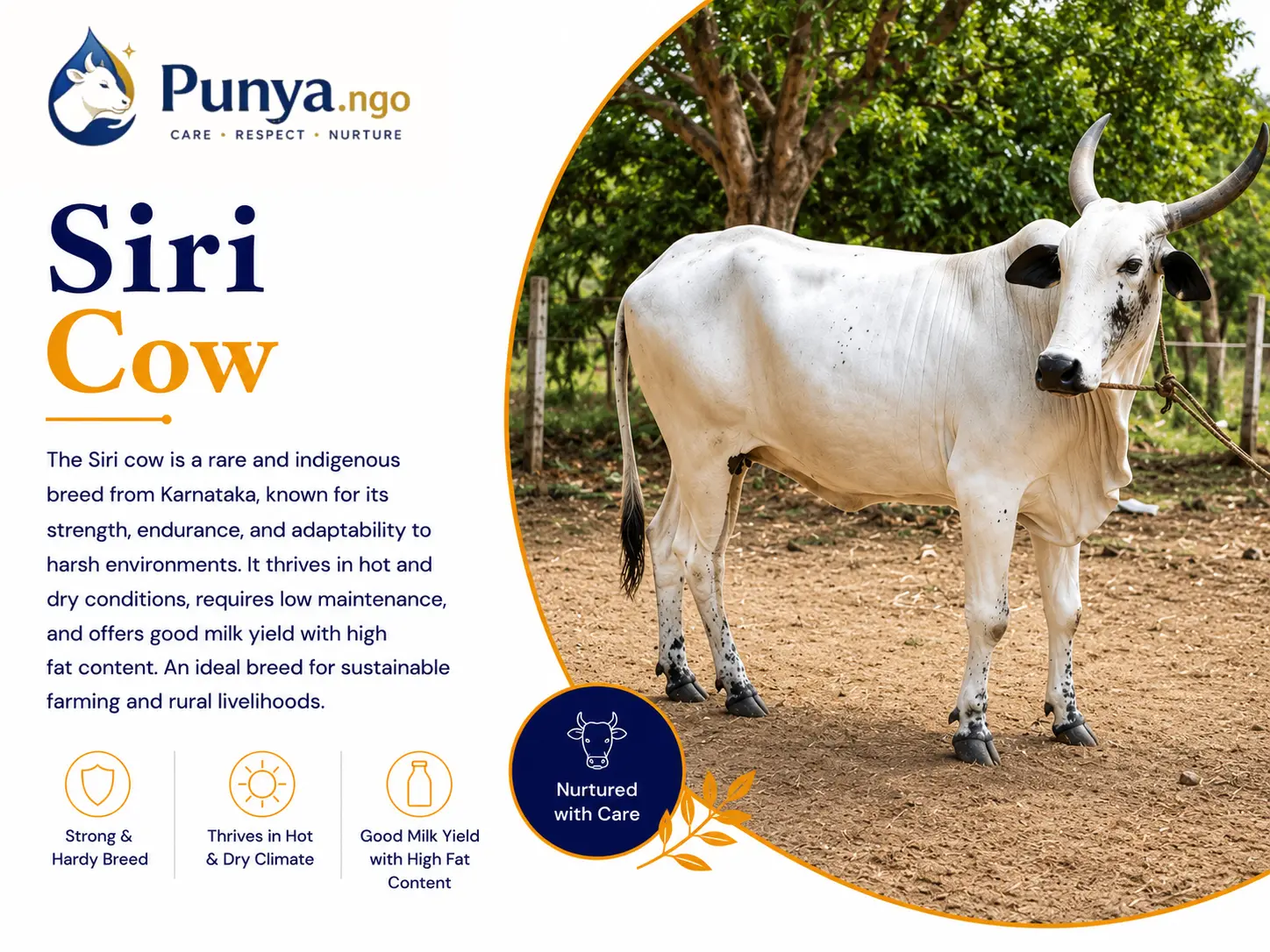
Siri Cow Breed in India is a hardy indigenous cattle breed primarily found in the eastern Himalayan region, especially in Sikkim and parts of West Bengal. Known for its adaptability to mountainous terrain and challenging climatic conditions, this breed has traditionally supported rural farming communities through milk production, draught work, and manure production.
Unlike specialized dairy breeds, the Siri cow is valued for its overall utility and resilience. It performs well in low-input farming systems and remains an important part of traditional livestock management in hilly regions.
Takeaway: Siri Cow Breed in India is a practical and resilient indigenous breed suited to mountain farming and mixed agricultural systems.
What is Siri Cow Breed in India?
The Siri Cow Breed in India is a dual-purpose cattle breed known for providing moderate milk production while also serving as a reliable work animal. It belongs to the group of indigenous cattle that have adapted naturally to local environmental conditions over generations.
Farmers value Siri cattle because they can survive and perform in areas where many high-producing commercial breeds may struggle.
Takeaway: Siri Cow Breed in India is a dual-purpose indigenous breed valued for both milk and farm utility.
Origin and Native Region
The Siri breed is believed to have originated in the Himalayan region, particularly in Bhutan, from where it spread into India. Today, its primary breeding tract includes:
- Sikkim
- Darjeeling region of West Bengal
- Nearby Himalayan foothill areas
The breed evolved under cold temperatures, steep slopes, high rainfall, and rugged terrain. These environmental factors shaped its physical strength and adaptability.
Quick Overview Table
| Feature | Details |
|---|---|
| Breed Name | Siri |
| Breed Type | Dual-purpose |
| Origin | Himalayan Region |
| Major Indian Regions | Sikkim, West Bengal |
| Primary Utility | Milk and Draught Work |
| Climate Suitability | Cold and Humid Hills |
| Farming System | Smallholder and Rural Farming |
Takeaway: The natural home of Siri Cow Breed in India is the eastern Himalayan belt where it thrives under challenging conditions.
Physical Characteristics
The Siri Cow Breed in India has a distinctive appearance that reflects its adaptation to mountain environments.
Key Physical Traits
- Small to medium-sized body
- Strong and compact frame
- Thick hair coat
- Well-developed legs and hooves
- Broad forehead
- Moderately developed udder
- Strong shoulders
- Horns generally point forward
Coat Color
Common coat patterns include:
- Black and white
- Brown and white
- Dark brown
- Black patches on a lighter background
The thick coat helps protect the animal against cold weather and heavy rainfall.
Takeaway: Siri cattle have a sturdy body structure designed for strength, endurance, and survival in hill regions.
Milk Production and Dairy Value
Milk production from Siri Cow Breed in India is considered moderate when compared with specialized dairy breeds.
Milk Production Highlights
| Factor | Typical Range |
|---|---|
| Daily Milk Yield | Moderate |
| Lactation Yield | Moderate |
| Milk Fat Content | Good for household use |
| Dairy Purpose | Family and Small-Scale Farming |
The breed is generally not selected for intensive commercial dairy operations. However, its milk production is often sufficient for household consumption and local sales.
The relatively good fat content can make the milk suitable for traditional dairy products such as:
- Ghee
- Curd
- Butter
- Local dairy preparations
Takeaway: Siri Cow Breed in India provides moderate milk production that suits rural and small-scale dairy farming.
Temperament and Behavior
One reason many traditional farmers appreciate Siri cattle is their practical working nature.
Behavioral Traits
- Calm temperament
- Adaptable to local handling systems
- Strong work ethic
- Good mobility on hilly terrain
- Capable of handling difficult landscapes
The bulls are especially known for their usefulness in agricultural operations within mountainous areas.
Takeaway: Siri cattle are generally manageable animals that fit well into traditional farming environments.
Climate Adaptability
Climate adaptability is one of the biggest strengths of Siri Cow Breed in India.
Adaptation Features
- Tolerates cold temperatures
- Handles heavy rainfall
- Performs well in high-altitude regions
- Capable of grazing on steep slopes
- Resistant to environmental stress common in hill areas
Because the breed evolved naturally in the Himalayas, it can maintain productivity under conditions that may challenge other cattle breeds.
Heat Tolerance
While Siri cattle can adjust to varying conditions, they are naturally better suited to cooler climates than extremely hot plains.
Takeaway: Siri Cow Breed in India excels in cold, humid, and mountainous regions.
Feeding and Management
The feeding requirements of Siri Cow Breed in India are generally straightforward.
Feeding Practices
- Green fodder
- Dry fodder
- Local grasses
- Crop residues
- Seasonal forage
Management Tips
Housing
- Provide dry shelter during heavy rains
- Ensure proper ventilation
- Maintain clean flooring
Water
- Continuous access to clean drinking water
Health Care
- Routine vaccination
- Deworming schedule
- Regular veterinary checkups
Nutrition
- Additional mineral supplementation when required
- Better feeding during lactation and pregnancy
The breed generally performs well under low-input management systems.
Takeaway: Consistent feeding and basic preventive healthcare are usually sufficient for maintaining healthy Siri cattle.
Advantages of Siri Cow Breed in India
1. Excellent Hill Adaptation
The breed is naturally suited to mountainous terrain.
2. Strong Draught Ability
Bulls are useful for agricultural work in difficult landscapes.
3. Low-Input Management
Farmers can raise Siri cattle without highly intensive feeding programs.
4. Indigenous Genetic Resource
The breed represents valuable native cattle genetics.
5. Multi-Purpose Utility
Provides:
- Milk
- Manure
- Draught power
6. Suitable for Small Farmers
Fits well into traditional mixed-farming systems.
Takeaway: The biggest strength of Siri Cow Breed in India is its balance between productivity, adaptability, and utility.
Limitations or Practical Considerations
Every cattle breed has limitations, and Siri cattle are no exception.
Lower Milk Yield
Compared to specialized dairy breeds, milk production is relatively modest.
Limited Commercial Dairy Potential
Farmers focused purely on maximizing milk sales may prefer specialized dairy breeds.
Regional Adaptation
The breed performs best in hill ecosystems and may not express its full potential in very hot lowland regions.
Population Concerns
Like many indigenous breeds, maintaining breed purity remains important for long-term conservation.
Takeaway: The primary limitation of Siri Cow Breed in India is lower milk production compared to specialized dairy cattle.
Best Use Cases for Farmers
The Siri Cow Breed in India is most suitable for:
- Hill farmers
- Smallholder dairy operations
- Mixed farming systems
- Organic farming setups
- Indigenous breed conservation programs
- Farmers needing both milk and draught utility
For households seeking a reliable, low-maintenance cattle breed, Siri cattle can be a practical choice.
Takeaway: Siri cattle work best where resilience and utility matter more than maximum milk output.
Comparison with Similar Indian Cow Breeds
Siri vs Sahiwal
| Feature | Siri | Sahiwal |
|---|---|---|
| Primary Region | Himalayan Hills | Punjab Region |
| Milk Production | Moderate | High |
| Draught Utility | Good | Limited |
| Climate Preference | Cool Hills | Hot Plains |
| Farming System | Smallholder | Dairy-Oriented |
The comparison highlights an important difference. Sahiwal is generally preferred for higher milk production, while Siri Cow Breed in India is preferred for adaptability and multi-purpose use in mountainous regions.
Takeaway: Sahiwal is stronger as a dairy breed, while Siri is stronger as a hill-adapted utility breed.
Conclusion
Siri Cow Breed in India remains one of the valuable indigenous cattle breeds of the eastern Himalayan region. Its ability to thrive in difficult terrain, tolerate harsh weather, and contribute to both milk production and farm work makes it highly relevant for traditional rural farming systems.
Although it cannot compete with specialized dairy breeds in terms of milk yield, it offers a combination of resilience, adaptability, and practical utility that many farmers still appreciate today. For hill agriculture and low-input farming, Siri cattle continue to be a dependable choice.
Takeaway: Siri Cow Breed in India is a resilient indigenous breed that combines adaptability, utility, and sustainable farming value.
FAQs
1. What is Siri Cow Breed in India?
It is an indigenous dual-purpose cattle breed mainly found in Sikkim and parts of West Bengal.
2. Is Siri a dairy breed?
Yes, but it is primarily considered a dual-purpose breed that provides both milk and draught power.
3. Where is the Siri breed mainly found?
The breed is commonly found in Sikkim, Darjeeling, and nearby Himalayan regions.
4. Is Siri cattle suitable for commercial dairy farming?
It is more suitable for small-scale and traditional farming than intensive commercial dairy operations.
5. What climate is best for Siri cattle?
Cool, humid, and mountainous climates are ideal for the breed.
6. Are Siri cows easy to manage?
Yes. They are generally hardy and adapt well to low-input farming systems.
7. What are the major advantages of Siri cattle?
Their key advantages include climate adaptability, draught ability, hardiness, and multi-purpose utility.
8. Why is the Siri breed important?
It represents an important indigenous cattle resource and supports sustainable farming in Himalayan regions.