Tharparkar Cow Breed in India | Dairy Guide
Learn about Tharparkar Cow Breed in India, its origin, milk value, traits, care, advantages, and farming uses.
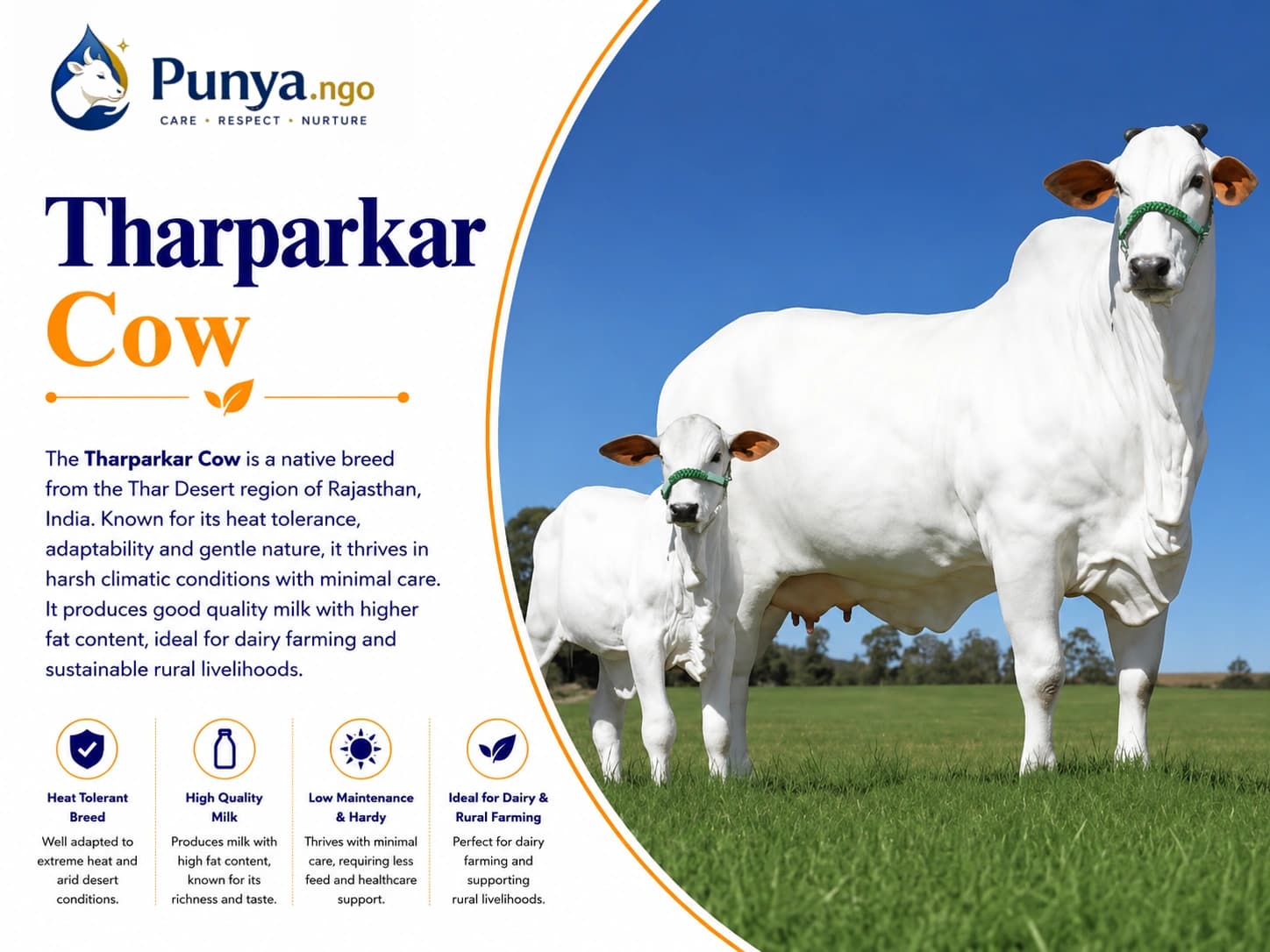
Tharparkar Cow Breed in India
The Tharparkar Cow Breed in India is an important indigenous cattle breed known for its dairy value, hardiness, and ability to perform well in hot, dry regions. It is especially valued by farmers who need a breed that can handle heat, survive on modest feed, and still support milk production and rural farming utility.
This breed matters because it fits Indian conditions better than many high-input commercial options. It is not the most extreme milk producer, but it offers a practical balance of milk, resilience, and utility.
Takeaway: Tharparkar is a dependable Indian cattle breed for farmers who want utility, heat tolerance, and steady milk production.
Quick Facts Table
| Topic | Short Answer |
|---|---|
| Breed type | Indigenous cow breed |
| Main value | Milk and draught utility |
| Native region | Gujarat and Rajasthan |
| Climate fit | Hot, dry, arid areas |
| Temperament | Generally calm, but can be alert |
| Farming strength | Low to moderate input suitability |
| Best use | Small dairy farming and mixed farming |
Takeaway: Tharparkar is a practical breed for arid and semi-arid dairy systems.
What is Tharparkar Cow Breed in India?
The Tharparkar Cow Breed in India is a desi cow breed developed naturally over generations in harsh western Indian conditions. It is considered a dual-purpose breed, which means farmers use it for both milk and draught work.
In simple terms, this is a hardy indigenous cattle breed that can cope with heat, drought, and limited grazing better than many other cattle types. That is why it continues to hold value in rural farming and dairy farming.
Takeaway: Tharparkar is a dual-purpose desi cow bred for tough field conditions and useful milk output.
Origin and Native Region
The Tharparkar Cow Breed in India comes from the desert and semi-desert belt of western India. Its native tract is linked mainly with Rajasthan and neighboring areas, especially the arid zones around Jodhpur and Jaisalmer, and also parts of Gujarat such as Kutch.
The breed evolved where rainfall is low, summer heat is intense, and fodder can be limited. That background explains its strong climate suitability and survival ability.
Takeaway: Tharparkar’s origin explains its biggest strength — it was shaped by harsh desert conditions.
Physical Characteristics
Tharparkar cows are usually medium to large in size with a strong body frame. They often have a white or light grey coat, though the shade can vary. The body is generally deep and well-built, with good legs and feet, which helps them walk and graze efficiently.
A mature Tharparkar animal often looks sturdy rather than delicate. That is a useful sign in an indigenous breed meant for utility, not just appearance.
Common physical traits
- White, grey, or light-coated body
- Strong legs and hooves
- Medium to large frame
- Deep chest and solid build
- Adapted for walking long distances in dry areas
Takeaway: Tharparkar is built like a practical working dairy animal, not a fragile high-maintenance breed.
Milk Production and Dairy Value
The Tharparkar Cow Breed in India is respected for milk production, especially under low-cost farming conditions. Its milk yield is generally seen as moderate to good among indigenous cow breeds.
What makes it valuable is not just volume, but consistency and resilience. A farmer with a Tharparkar cow often benefits from a breed that can keep producing even when the climate is difficult or fodder quality is not ideal.
Dairy value in practical terms
- Suitable for small and medium dairy farming
- Can support household milk needs
- Works well in low-input systems
- Offers better utility than breeds that struggle in heat
Compared with a breed like Sahiwal, Tharparkar is also a strong dairy breed, but the two are often discussed differently depending on region and management style. Sahiwal is widely known for dairy excellence, while Tharparkar is especially appreciated for its arid-zone adaptability and dual-purpose utility.
Takeaway: Tharparkar offers useful milk production with strong farm resilience, which makes it valuable in tough climates.
Temperament and Behavior
Tharparkar cattle are usually manageable, though temperament can vary based on handling. Like many indigenous cattle, they respond well to regular human contact and calm management.
When raised gently, they are easier to work with. When poorly handled, they may become more alert or difficult. That is true for many rural cattle breeds and is not unusual.
Practical behavior notes
- Usually steady and workable
- Better behavior comes with regular handling
- Strong herding and grazing instinct
- Suitable for rural farm routines
Takeaway: Good handling turns Tharparkar into a cooperative and useful farm animal.
Climate Adaptability
One of the biggest strengths of the Tharparkar Cow Breed in India is climate adaptability. It is highly suited to hot, dry, and stressful environments where many other breeds lose productivity.
This breed is especially valuable in areas with high summer temperatures, low rainfall, and limited green fodder. It can maintain utility under heat stress better than many crossbred animals, which is one reason farmers in arid belts continue to prefer it.
Why climate adaptability matters
- Lower stress in hot weather
- Better survival in dry regions
- More reliable in poor grazing conditions
- Useful for climate-resilient farming
Takeaway: Tharparkar is one of the better Indian cattle choices for heat-prone and water-scarce regions.
Feeding and Management
Good feeding and sensible management matter for every cow breed, and Tharparkar is no exception. Even though it is hardy, it still performs better with balanced care.
A practical feeding plan should include green fodder when available, dry fodder, clean water, and a proper mineral mix. Good housing, shade, and hygiene also help maintain health and milk yield.
Simple management guidance
- Feed balanced roughage and fodder
- Provide clean drinking water daily
- Keep shelter cool, dry, and shaded
- Maintain udder hygiene and clean bedding
- Use regular deworming and health checks
- Avoid underfeeding during lactation
The breed is hardy, but hardy does not mean neglect-proof. A Tharparkar cow still needs basic dairy management to stay productive.
Takeaway: Tharparkar is low-maintenance, not no-maintenance; proper feeding still improves results.
Advantages of Tharparkar Cow Breed in India
The Tharparkar Cow Breed in India offers several practical advantages for farmers, especially in regions where climate and feed are major challenges.
Key advantages
- Strong heat tolerance
- Good fit for arid farming systems
- Useful milk production
- Dual-purpose value
- Better survival in harsh conditions
- Suitable for indigenous cattle conservation
- Lower dependence on expensive inputs
For many rural families, these traits matter more than chasing maximum milk output. A breed that survives well, produces steadily, and fits local conditions can be more profitable in real life.
Takeaway: Tharparkar’s real strength is balanced value, not just milk volume.
Limitations or Practical Considerations
No breed is perfect. One honest limitation of the Tharparkar Cow Breed in India is that it may not match the very high milk output of specialized exotic dairy systems under intensive management.
That does not make it weak. It simply means farmers should choose it for the right purpose. If the goal is a low-input, climate-resistant, indigenous dairy animal, Tharparkar is a strong option. If the goal is very high commercial milk volume in an intensive setup, other systems may be preferred.
Practical considerations
- Needs breed purity to retain traits
- Production depends on feeding and care
- Not ideal for careless management
- Better suited to climate-resilient systems than high-cost dairy models
Takeaway: Tharparkar is excellent for the right farming model, but it is not a shortcut to maximum milk output.
Best Use Cases for Farmers
Tharparkar is best used in farms that value resilience, utility, and manageable costs. It works especially well where pasture conditions are limited and summers are harsh.
Best suited for
- Small dairy farmers
- Rural households
- Mixed crop-livestock farms
- Arid and semi-arid regions
- Farmers wanting indigenous cattle
- Climate-resilient livestock systems
For many Indian farmers, this breed fits a practical business model: steady milk, local adaptability, and lower risk in difficult weather.
Takeaway: Tharparkar is ideal for farmers who want a reliable indigenous breed with real-world utility.
Comparison with Similar Indian Cow Breeds
A useful comparison is with Sahiwal.
Tharparkar vs Sahiwal
- Tharparkar: Stronger association with arid-zone tolerance and dual-purpose utility
- Sahiwal: Widely known for strong dairy performance and excellent milch value
- Management need: Both need good care, but Tharparkar is especially valued where heat and dry conditions are severe
- Farming fit: Tharparkar often suits harsher landscapes; Sahiwal is a classic dairy-focused indigenous breed
Both are valuable Indian cattle breeds. The better choice depends on region, feed availability, and the farmer’s goal.
Takeaway: Tharparkar and Sahiwal are both strong breeds, but Tharparkar is especially suited to hot, dry farming conditions.
Conclusion
The Tharparkar Cow Breed in India is one of the most practical indigenous cattle breeds for farmers who work in hot, dry, and resource-limited conditions. It combines milk value, hardiness, and draught utility in a way that makes sense for real Indian farming.
It may not be the highest-output dairy breed in every system, but it is one of the most reliable. For farmers who want a desi cow with climates resilience, manageable temperament, and useful milk production, Tharparkar remains a smart and respectful choice.
Takeaway: Tharparkar is a grounded, farmer-friendly indigenous breed with lasting value in Indian dairy farming.
FAQs
1. What is the Tharparkar Cow Breed in India?
The Tharparkar Cow Breed in India is an indigenous cattle breed known for milk production, hardiness, and suitability for dry regions.
Takeaway: It is a dual-purpose Indian desi cow breed.
2. Where did the Tharparkar cow originate?
It originated in the arid western region of India, mainly linked with Rajasthan and nearby Gujarat areas.
Takeaway: Its native home is India’s dry western belt.
3. Is Tharparkar a good dairy breed?
Yes, it is a useful dairy breed, especially for farmers who want dependable production in difficult climates.
Takeaway: It is a practical milk breed, not just a survival breed.
4. Is Tharparkar cow suitable for hot climates?
Yes, it is one of the better Indian cattle breeds for hot and dry weather.
Takeaway: Heat tolerance is one of its biggest strengths.
5. What type of farmers should choose Tharparkar?
Small dairy farmers, rural households, and farmers in arid or semi-arid regions often benefit most from it.
Takeaway: It suits low-input and climate-stressed farming systems.
6. How is Tharparkar different from exotic dairy cows?
Tharparkar is generally more climate-resilient and easier to manage in harsh Indian conditions, while exotic dairy cows often need more intensive care.
Takeaway: Tharparkar is better aligned with local conditions.
7. Does Tharparkar need special care?
It does not need fancy care, but it still needs proper feeding, clean water, shade, hygiene, and health management.
Takeaway: Simple but consistent care gives the best results.
8. Why is Tharparkar important in India?
It is important because it supports indigenous cattle conservation and offers real farming value in tough climates.
Takeaway: Tharparkar is useful for both farming and breed preservation.